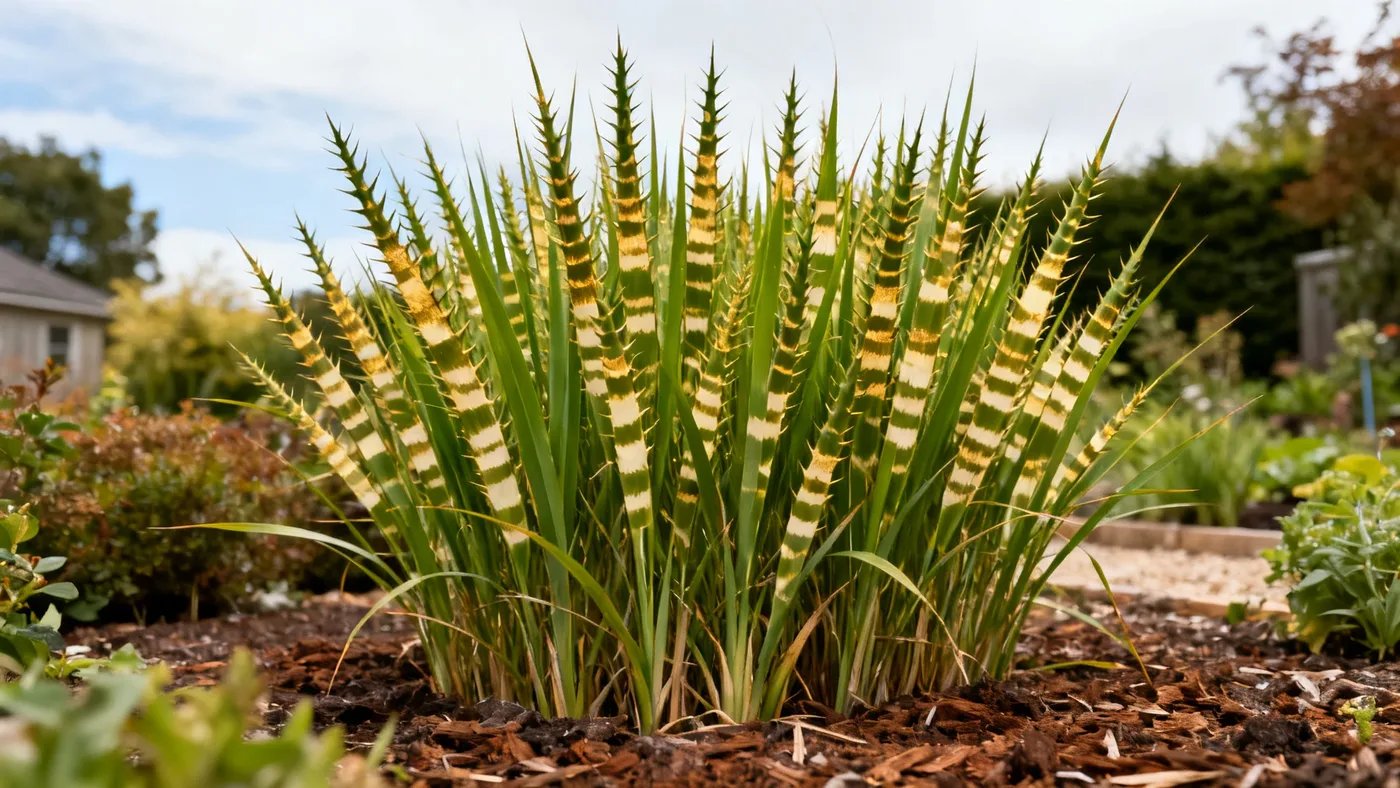
Porcupine Grass vs Zebra Grass: How to Tell Them Apart
Both Porcupine Grass and Zebra Grass are popular ornamental banded miscanthus cultivars that have earned space in gardens across zones 5 through 9. At first glance, they look similar. Both are miscanthus varieties with distinctive horizontal stripes running across their foliage. Both light up late-season gardens with coppery plumes and golden winter texture. But if you look closer, the differences become clear. This guide walks you through the key distinctions so you can choose the cultivar that suits your space.
Quick Visual Comparison
| Attribute | Porcupine Grass (Strictus) | Zebra Grass (Zebrinus) |
|---|---|---|
| Botanical name | Miscanthus sinensis 'Strictus' | Miscanthus sinensis 'Zebrinus' |
| Foliage habit | Stiff, rigidly upright | Broader blades, arching habit |
| Blade character | Narrower, vertical orientation | Broader, more graceful arching |
| Stripe pattern | Irregular horizontal gold-to-cream bands | Horizontal bands (similar) |
| Height (mature) | 5-7 ft including plumes | Varies by region; check local resources |
| Width (clump) | 3-4 ft spread | Varies by region; check local resources |
| USDA zones | 5-9 | 5-9 (typical, verify locally) |
| Growth rate | Moderate to fast; 1-2 ft per year | Similar growth pattern |
The Core Difference: Habit and Form
The biggest distinction between porcupine grass vs zebra grass is their growing habit. Porcupine Grass is bred for a stiff, columnar form. Its narrower blades stay firmly upright, creating an almost architectural silhouette. This makes it excellent for adding vertical accent and structure. It naturally resists flopping, even after rain or in windy sites.
Zebra Grass, by contrast, has broader blades with a more graceful, arching habit. This gives it a softer, more flowing appearance. Where Porcupine Grass stands like a sentinel, Zebra Grass sways and moves. Which one you choose depends on whether you want rigid form or gentle motion in your landscape.
Foliage and Banding Pattern
Both cultivars display the horizontal gold-to-cream banding that makes banded miscanthus so striking. The striping runs across the blade, not along its length, creating distinctive bands that shift in tone as light moves across the foliage throughout the day.
With Porcupine Grass, the banding stands out particularly well in full sun. The upright habit and narrow blade width make each stripe clearly visible. The irregular pattern adds visual interest without looking too formal. In part shade, the stripes become less distinct, so this cultivar performs best in a minimum of 6 hours of direct sun for optimal color.
Zebra Grass displays similar striping patterns, but the broader, arching blades create a different visual effect. The same bands appear softer and more flowing, especially as the foliage moves with wind. Zebra Grass tolerates light shade better than Porcupine Grass, though both prefer full sun for the most pronounced color display.
Bloom Time and Late-Season Interest
Both miscanthus striped varieties produce coppery-pink to reddish plumes that mature to silvery-white or tan in late summer into fall. This typically occurs from August through October, adding several months of textural interest to the late-season garden. Both cultivars retain dried foliage and seed plumes through winter, providing consistent landscape structure even after frost.
With Porcupine Grass, the upright habit means the plumes stand proudly above the foliage column, visible from a distance. This makes it especially striking in large mass plantings or when used as a seasonal privacy screen. The stiff stems hold the dried plumes firmly through winter storms, maintaining that architectural presence.
Zebra Grass plumes arch gracefully outward as the plant matures, creating a more naturalistic, fountain-like appearance. The combination of arching foliage and cascading plumes gives the impression of movement even on still days. This aesthetic appeals to gardeners seeking a less formal, more flowing composition.
Growth Rate and Time to Maturity
Both Porcupine Grass and Zebra Grass grow at moderate to fast rates once established. A young plant sold in a quart container will typically gain 1 to 2 feet of height per growing season until the clump reaches full size by the second or third year in the landscape.
Porcupine Grass spacing is typically 3 to 4 feet apart for mass plantings or informal hedging. This accounts for mature clump width of 3 to 4 feet. Plan similar spacing with Zebra Grass, though exact spread may vary slightly by region and climate. In zones 5 to 6, expect more compact plants. In zone 8 or 9, plants may reach the larger end of their size range.
Advantages of Porcupine Grass
- Stiff, upright form creates strong architectural presence in any garden design
- Resists flopping in established clumps, even in windy locations or after heavy rain
- Narrow foliage makes horizontal striping easy to see and photograph from a distance
- Excellent for creating seasonal privacy screens and defined borders
- Winter form remains bold and structural, providing consistent interest in the dormant landscape
- Deer resistant and not a significant food source for wildlife damage
- Can anchor a contemporary or modern landscape aesthetic
Considerations for Porcupine Grass
- Less graceful movement in the garden; more formal appearance
- Requires full sun for best foliage banding and upright habit
- Can look rigid or overly structured in naturalistic garden settings
- Foliage stripes become less distinct in part shade conditions
- Not the best choice if you want gentle, flowing forms in a mixed perennial border
Advantages of Zebra Grass
- Graceful, arching habit adds natural movement and flow to plantings
- Broader blades create a lush, full appearance in the garden
- Tolerates light to part shade better than Porcupine Grass
- Naturalistic aesthetic integrates well with informal and cottage garden styles
- Softer silhouette complements other perennials without dominating the visual space
- Plumes arch outward in an ornamental, fountain-like form
Considerations for Zebra Grass
- May flop open in the centers of established clumps over several years
- Broader foliage means horizontal banding is sometimes less pronounced than on Porcupine Grass
- Winter form is less structurally bold than the upright Porcupine Grass
- Performs best in full sun for consistent stripe visibility
- Graceful, arching habit may not work in tight urban spaces or formal gardens requiring vertical emphasis
Best For: Use Cases and Recommendations
Choose Porcupine Grass if you want:
- A vertical screen or hedge with strong, defined edges through all seasons
- Architectural accent plants that hold their form reliably year-round
- Prominent horizontal striping that's easy to see and appreciate from a distance
- A specimen plant that commands attention in a mixed perennial border
- Reliable structure in windy sites or exposed locations
- A contemporary or modern landscape aesthetic with clean lines
- Plants that won't require staking or division to prevent flopping
Choose Zebra Grass if you want:
- Graceful, flowing movement in a naturalistic or woodland-edge planting
- A softer, cottage-garden style composition with gentle curves
- Broader foliage that feels lush and full in the landscape
- A plant that tolerates light to partial shade conditions better
- Plumes that cascade and arch rather than stand rigidly upright
- A cultivar that integrates softly with hostas, astilbes, and other shade-tolerant perennials
- Plants that create a naturalistic, less manicured garden appearance
Growing Conditions Both Need
Both Porcupine Grass and Zebra Grass thrive in USDA zones 5 through 9. Both prefer full sun, though Zebra Grass tolerates light shade reasonably well. Both need average, consistent moisture. Established plants tolerate short dry spells, but perform best without prolonged drought stress.
Both adapt to most soils, including heavy clay, though well-drained, moist soil is ideal. Neither cultivar is a heavy feeder. Apply a single balanced fertilizer (such as 10-10-10) in spring. Over-fertilizing causes floppy growth, so restrain yourself.
Both benefit from late-winter pruning. Cut all foliage back to 4 to 6 inches above ground in early spring before new shoots emerge. This timing preserves winter interest while promoting vigorous spring regrowth. Never prune in fall, as this reduces winter texture and can invite crown rot.
For detailed care instructions, timing, and troubleshooting, see our complete Porcupine Grass care guide.
The Verdict
Choosing between porcupine grass vs zebra grass comes down to form and function. The miscanthus strictus vs zebrinus comparison is ultimately about what role you want these plants to play in your landscape.
If your garden needs a bold, vertical accent that holds its structure all year, Porcupine Grass is your answer. Its narrow, stiff blades and upright habit create architectural interest without apology. It won't soften in the center over time. It won't bend dramatically in wind. It will stand exactly where you plant it, creating clean lines and strong presence.
If you're after graceful movement, softer edges, and a more naturalistic feel, Zebra Grass delivers. Its arching foliage and broader blades create a gentler presence. It plays beautifully with cottage perennials and shaded woodland edges. It moves with the wind. It bows rather than stands at attention.
Both are excellent plants. Both display the same banding that gardeners have loved for decades. Both bloom at the same time and offer winter interest. The choice is personal. Consider your space, your overall landscape style, and whether you want architectural structure or flowing movement. Either way, you're adding a distinctive ornamental grass with proven performance across a wide range of growing conditions.
Quick Reference Checklist
| Feature | Porcupine Grass | Zebra Grass |
|---|---|---|
| Best for vertical accent | Yes | No |
| Resists flopping | Yes | Occasional in centers |
| Tolerates part shade | Minimal | Better |
| Formal, structured look | Yes | No |
| Graceful, flowing habit | No | Yes |
| Strong winter structure | Yes | More arching |
| Easy to see banding | Yes | Broader blades |
| USDA zones 5-9 | Yes | Yes |
| Mature height | 5-7 ft | Varies (check local) |
| Mature spread | 3-4 ft | Similar (check local) |
| Growth rate | 1-2 ft per year to maturity | Similar growth pattern |
| Spacing | 3-4 ft apart | 3-4 ft apart (typical) |