Porcupine Grass
Stiff golden grass that towers 5 to 7 feet tall
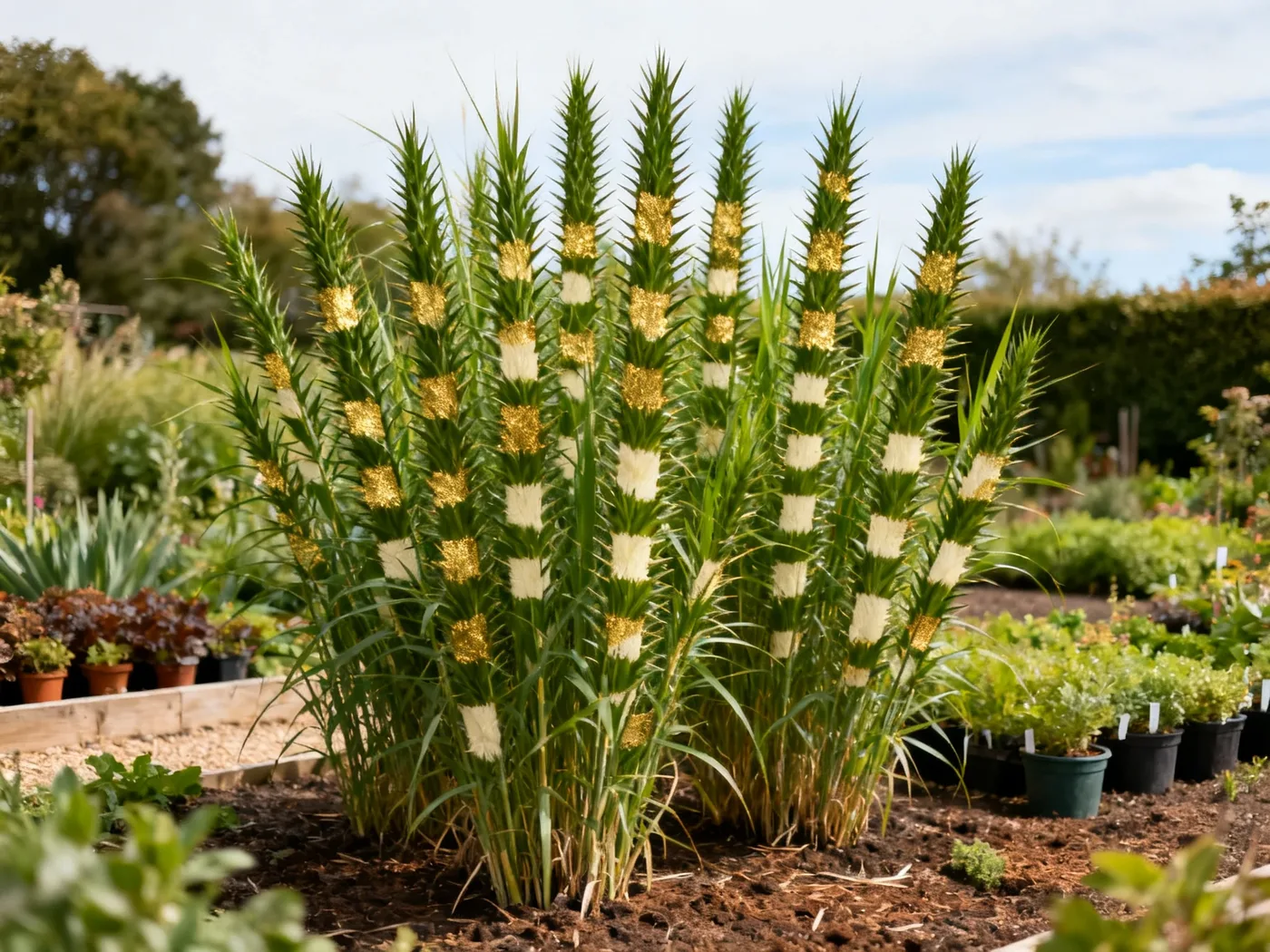
About Porcupine Grass
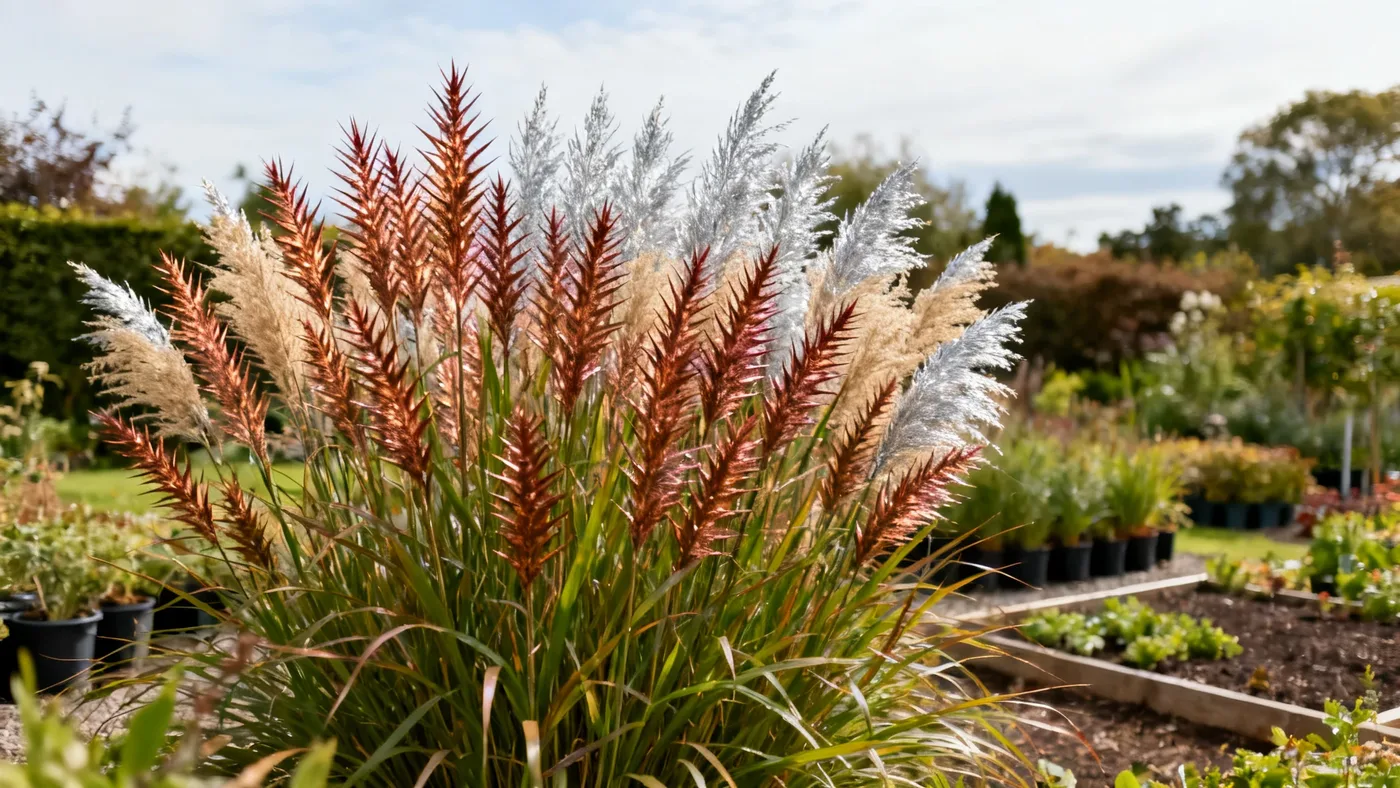
Porcupine grass is a warm-season ornamental grass that reaches 5 to 7 feet tall with distinctive stiff, upright blades banded in gold. People grow it for vertical architecture in borders, as an informal privacy screen, and for its dramatic coppery plumes that age to silvery white through the fall season.
This guide covers everything to grow porcupine grass well. You'll find planting instructions, sun and water needs, the seasonal care cycle including hard late-winter cutbacks, common problems, and buying tips. We explain how to keep stems upright and prevent the floppy sprawl that happens in part shade, and when to divide established clumps.
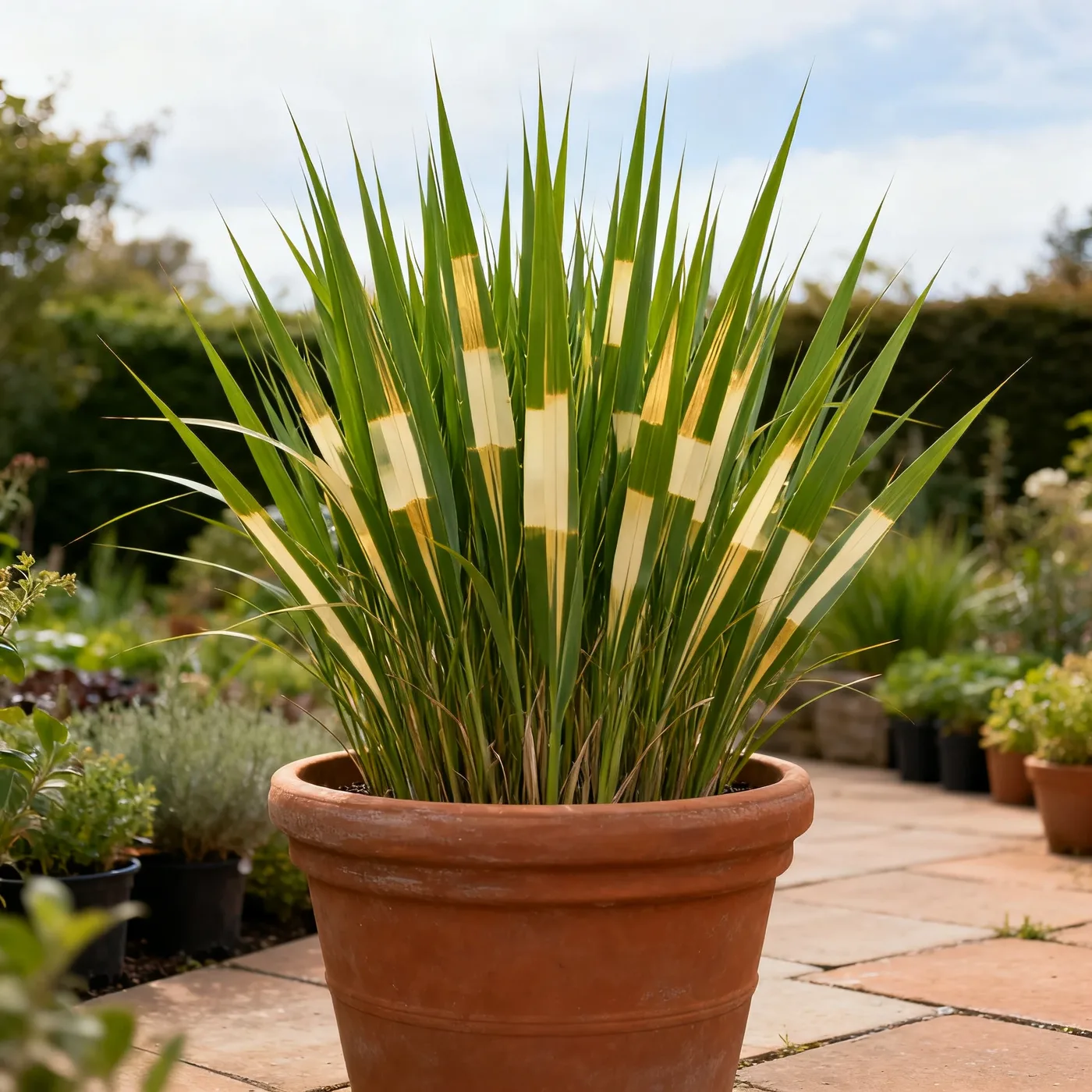
Buy Porcupine Grass
Nursery-grown plants shipped in their container, with our planting and care guides to go with them.
From $19.99
Sizes: Quart, #1, #3
Shop Porcupine GrassQuick facts
- USDA zones
- 5-9
- Mature height
- 5-7 ft including flower plumes (up to 7-8 ft in bloom); can run smaller (4-5 ft) in cooler
- Mature width
- 3-4 ft clump spread
- Sun
- full sun for best color, flowering, and upright habit; tolerates light/part shade but foli
- Water
- average, consistent moisture; established plants tolerate short dry spells but perform bes
- Bloom time
- late summer into fall (roughly August-October, cultivar and region dependent)
- Bloom color
- coppery-pink to reddish plumes that mature to silvery-white/tan
- Growth rate
- moderate to fast once established; gains roughly 1-2 ft of height per year until reaching
- Deer resistance
- good - generally deer and rabbit resistant
- Plant type
- ornamental grass (warm-season herbaceous perennial grass)
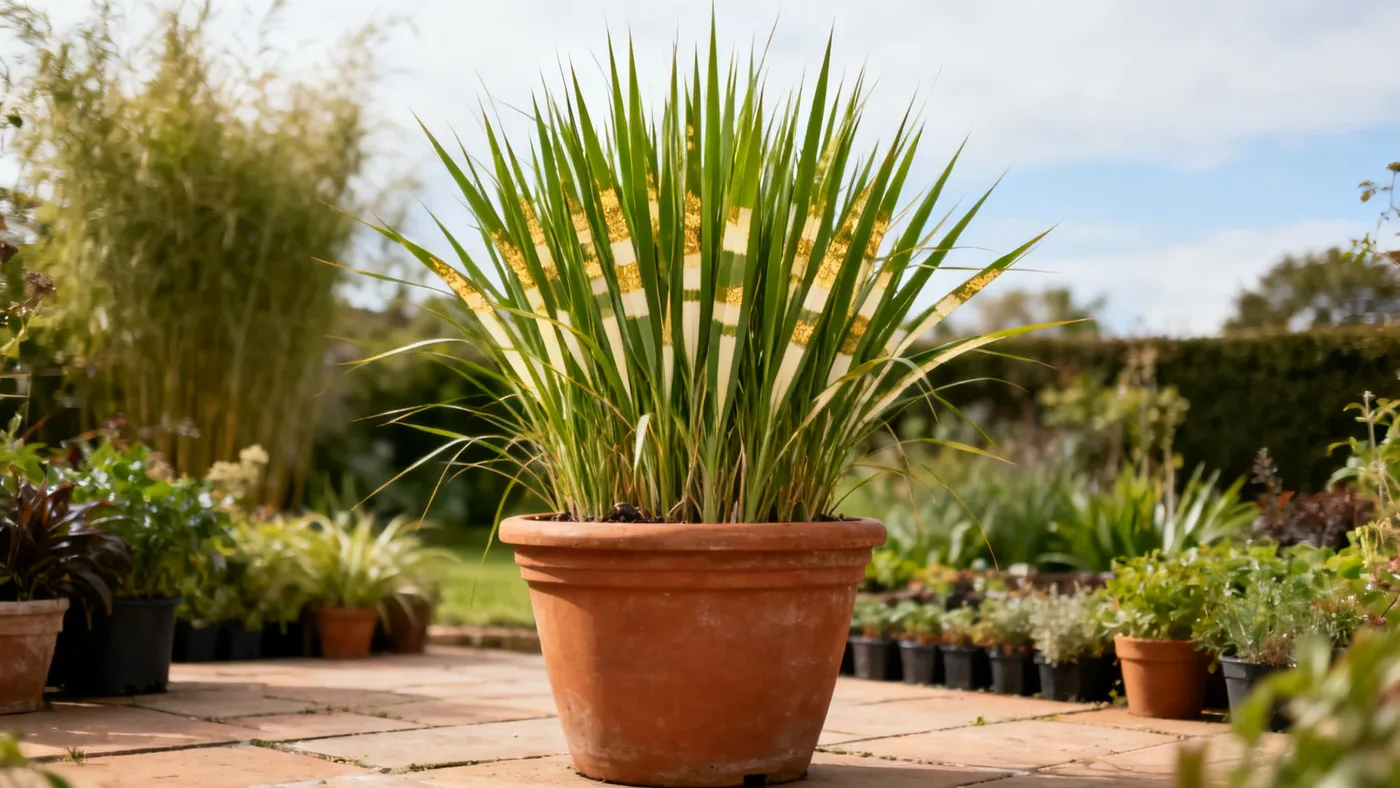
- Named for its stiff, upright blades banded in gold, resembling porcupine quills
- Reaches 5-7 ft tall including its late-season plumes
- Full sun and moist soil give the best color and sturdiest stems
- Cut back hard to a few inches in late winter before new growth starts
- Deer and drought tolerant once established
- Can self-seed aggressively in warm, humid climates - check local invasive plant guidance
- Divide every few years as the center of the clump thins out
Growing guides
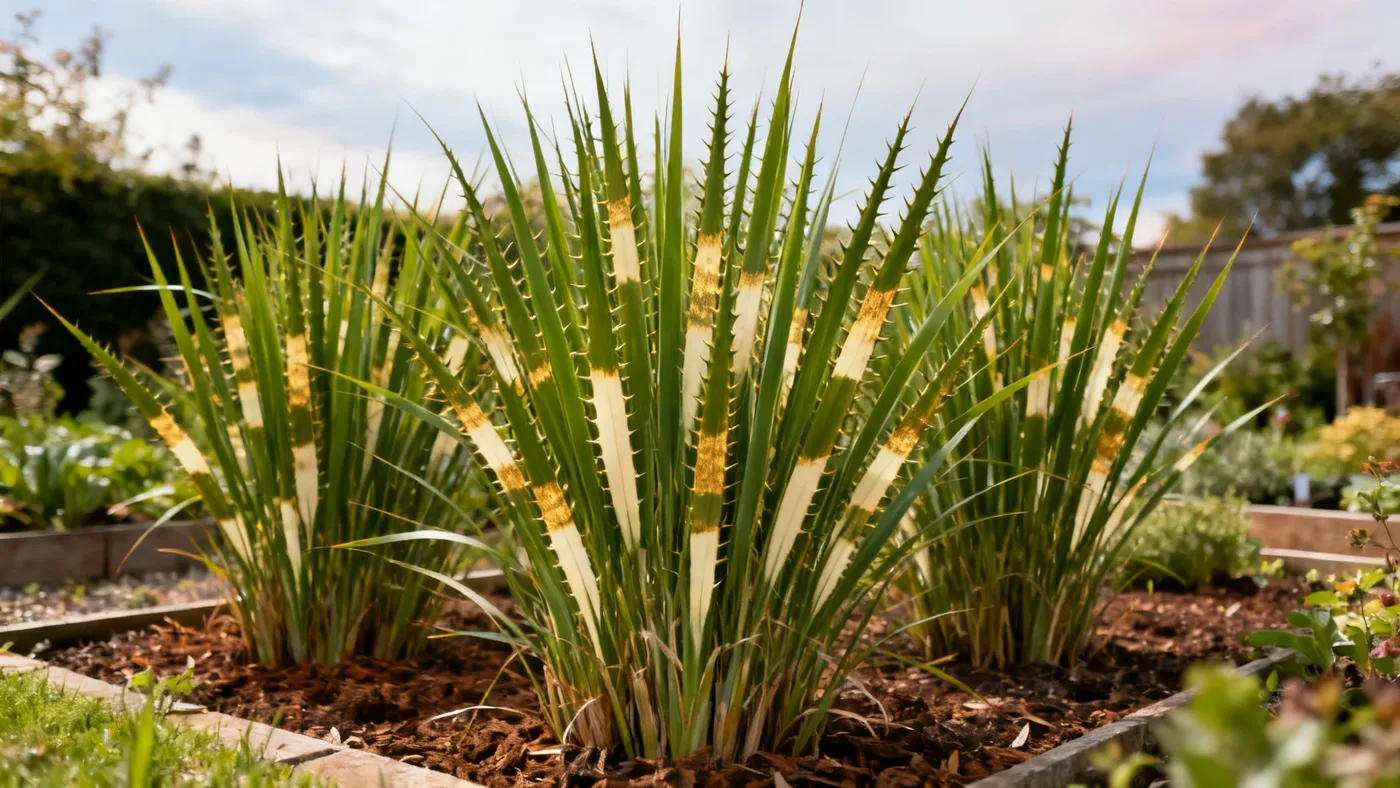 Core guide
Porcupine Grass Care: The Complete Growing Guide
Master Porcupine Grass care with our complete growing guide. Learn planting, watering, pruning, and seasonal care for Miscanthus strictus.
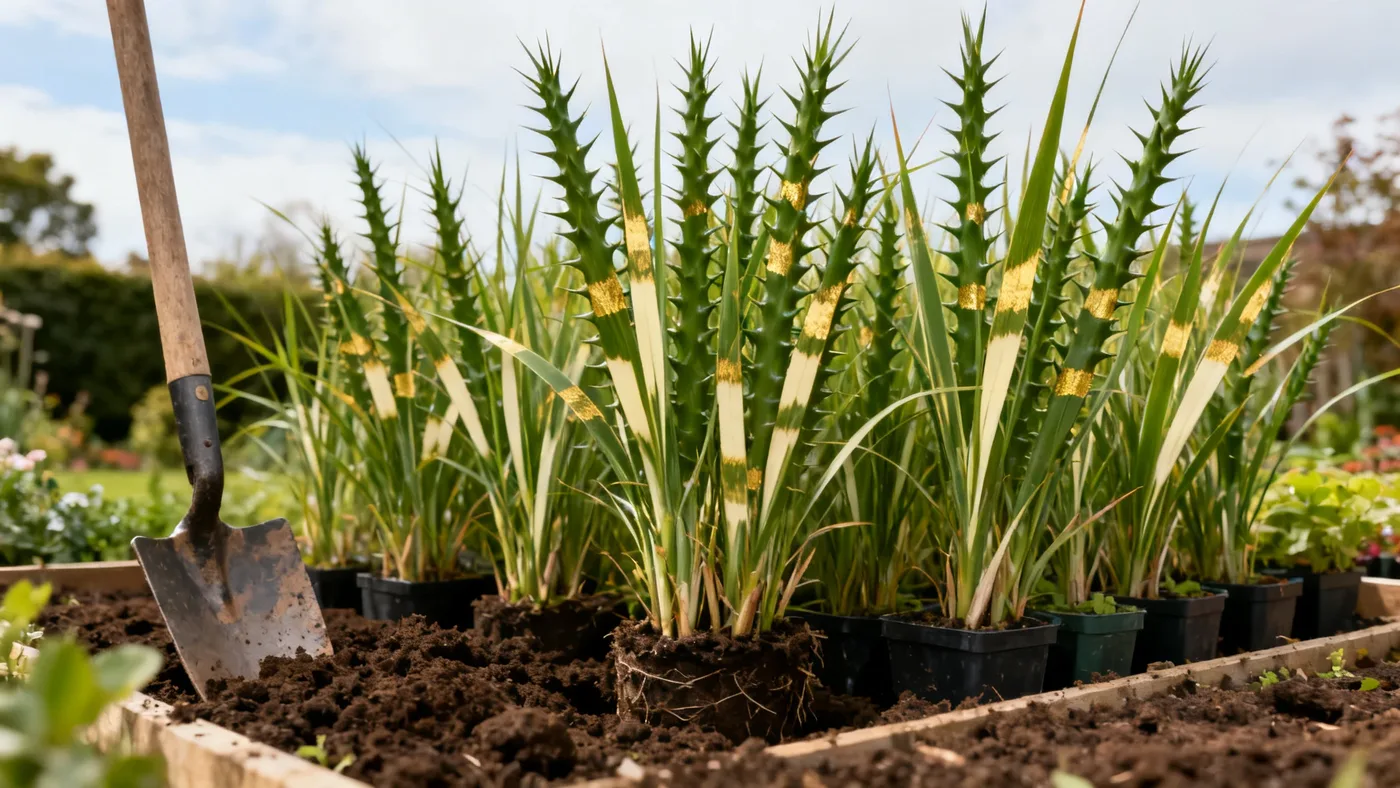 Core guide
How to Plant Porcupine Grass: Site, Timing and First Weeks
Learn how to plant Porcupine Grass (Miscanthus sinensis 'Strictus') with our step-by-step guide covering site selection, timing, spacing, an
 Core guide
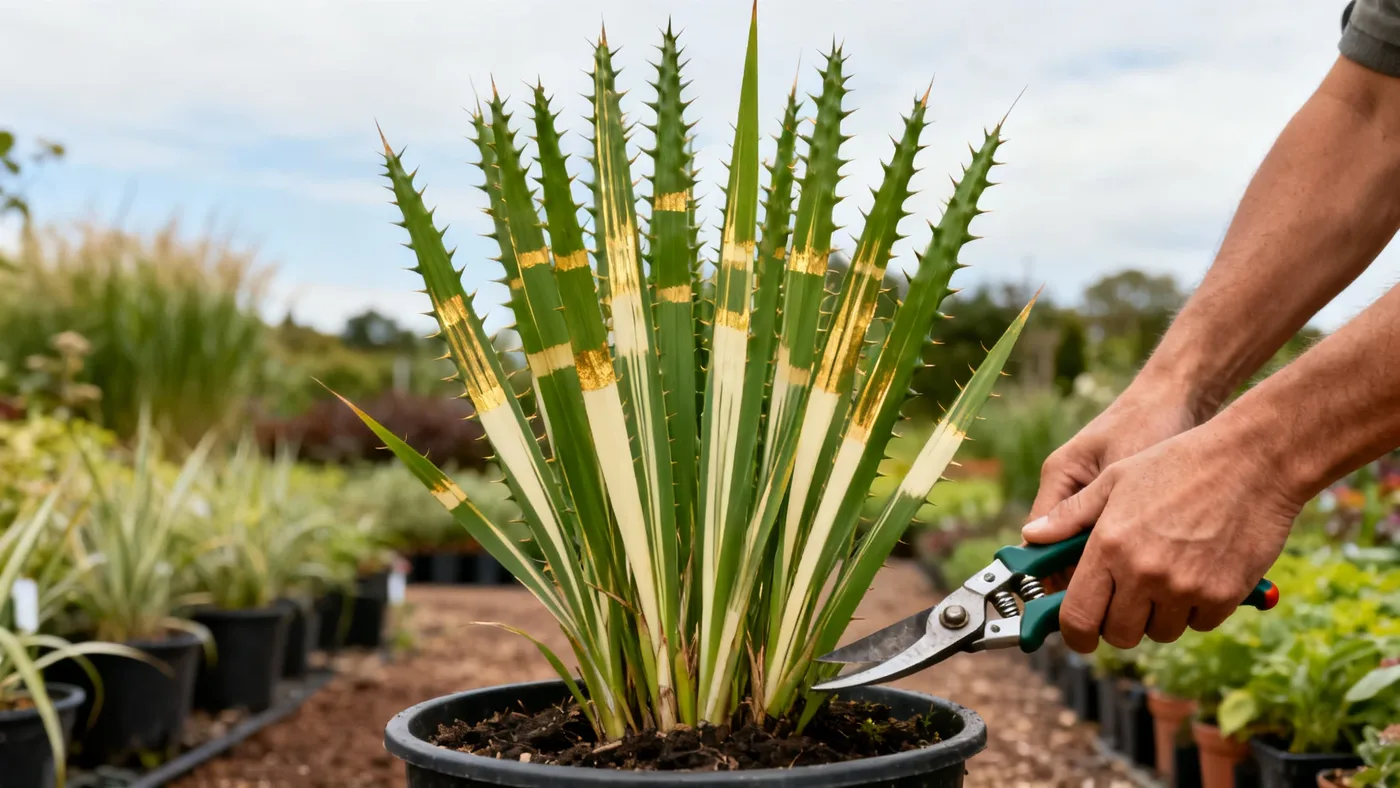
When and How to Cut Back Porcupine Grass Each Year
Learn when and how to cut back Porcupine Grass each year. Step-by-step pruning guide for late winter maintenance of Miscanthus strictus.
 Core guide
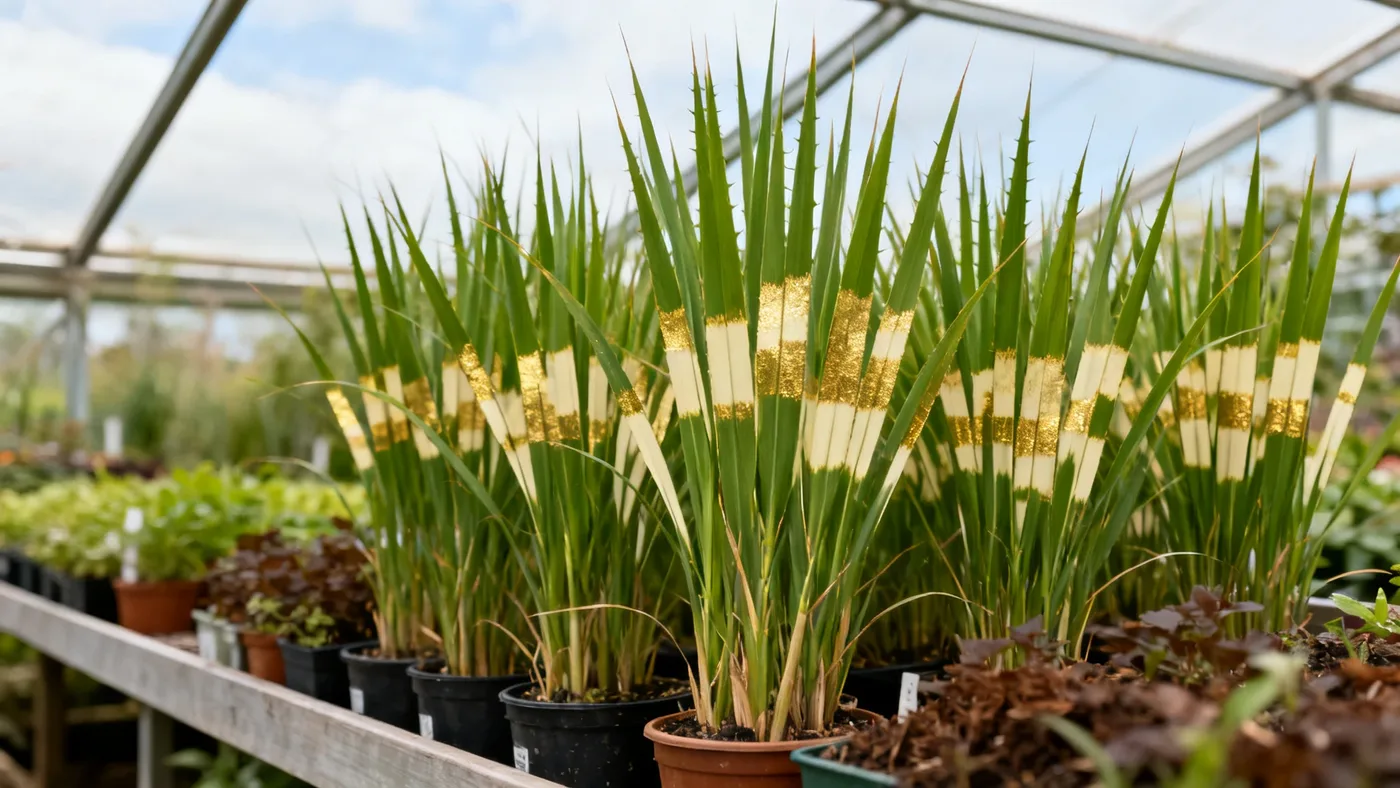
How Big Does Porcupine Grass Get? Size and Growth Rate
Porcupine Grass grows 5-7 ft tall with 3-4 ft spread. Learn mature size, growth rate (1-2 ft/year), and how climate affects Miscanthus stric
 Core guide
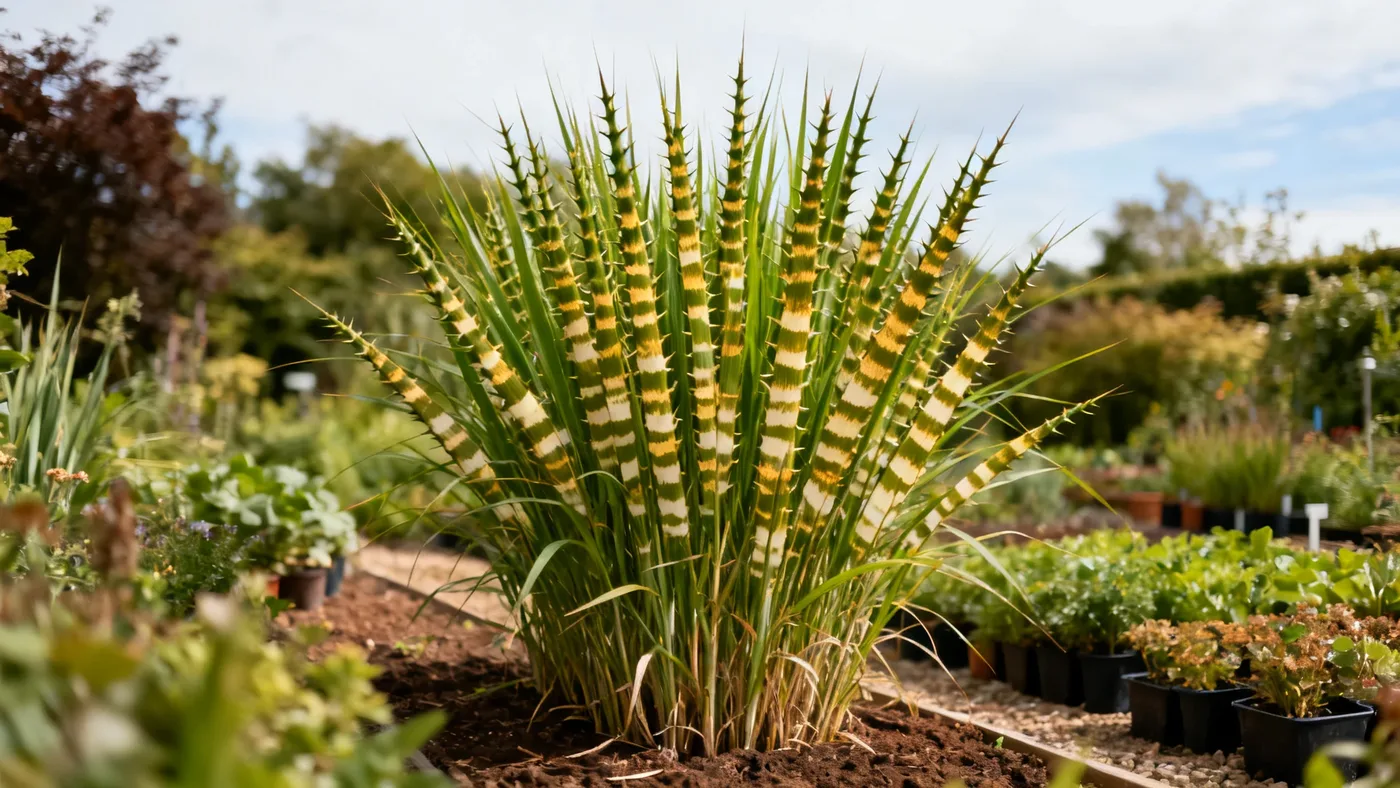
Porcupine Grass Hardiness Zones: Where It Grows Best
Porcupine Grass (Miscanthus sinensis 'Strictus') thrives in USDA zones 5-9. Learn cold hardiness, zone-specific care, planting timing, and w
 Plant specific
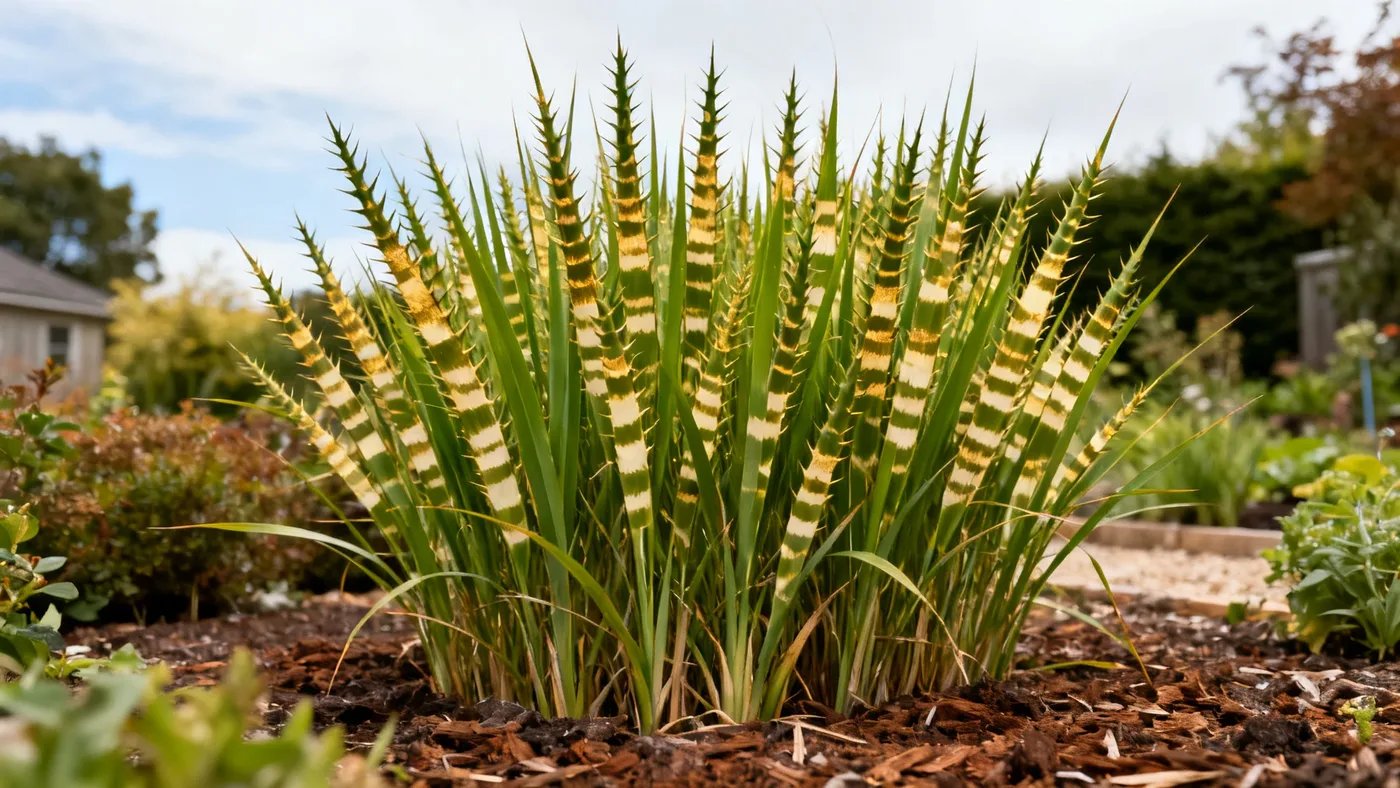
Porcupine Grass vs Zebra Grass: How to Tell Them Apart
Comparing Porcupine Grass and Zebra Grass: differences in growth habit, foliage, and which striped miscanthus cultivar suits your garden bes
 Core guide
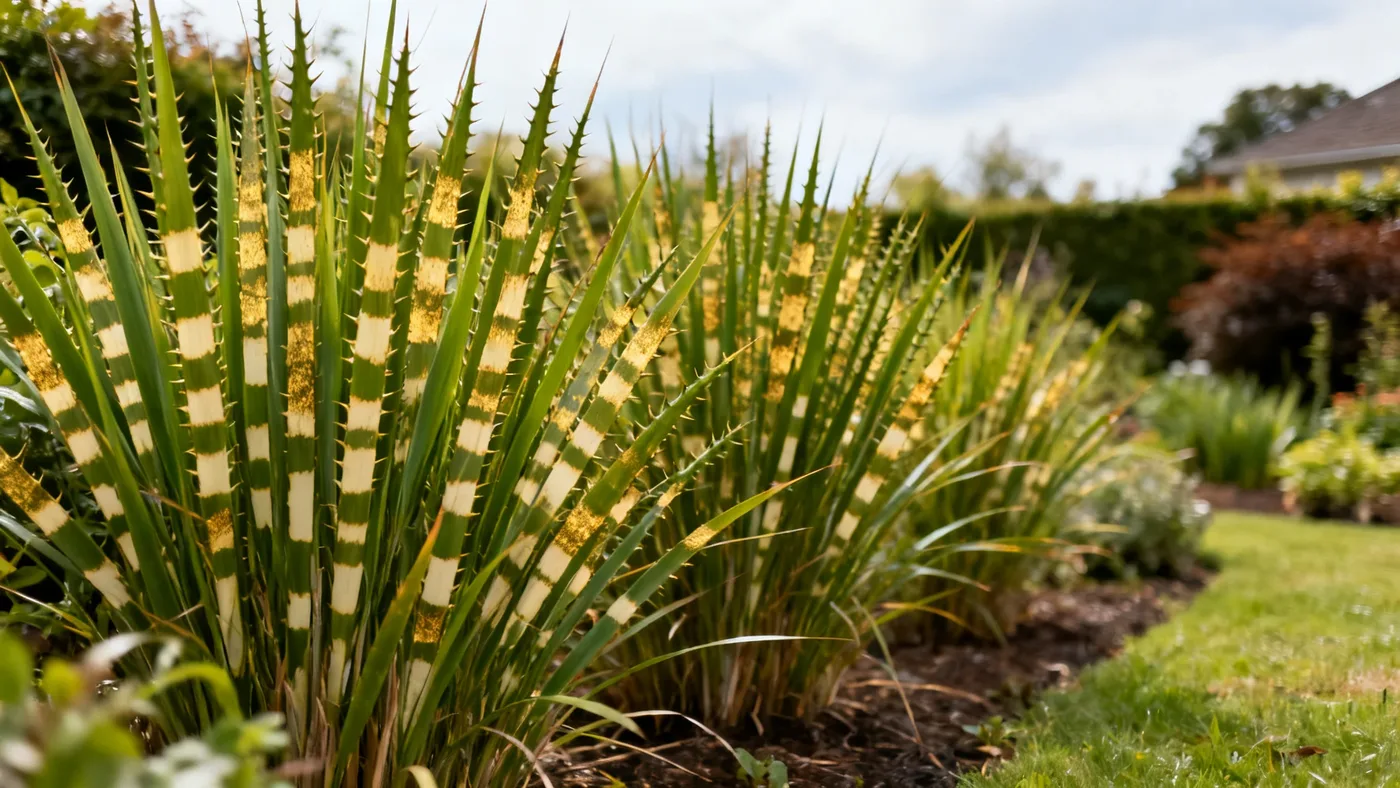
Porcupine Grass Sun Requirements: Full Sun vs Part Shade
Learn how much sun Porcupine Grass needs to thrive. Full sun delivers best color and upright growth; it tolerates part shade but may flop.
 Core guide
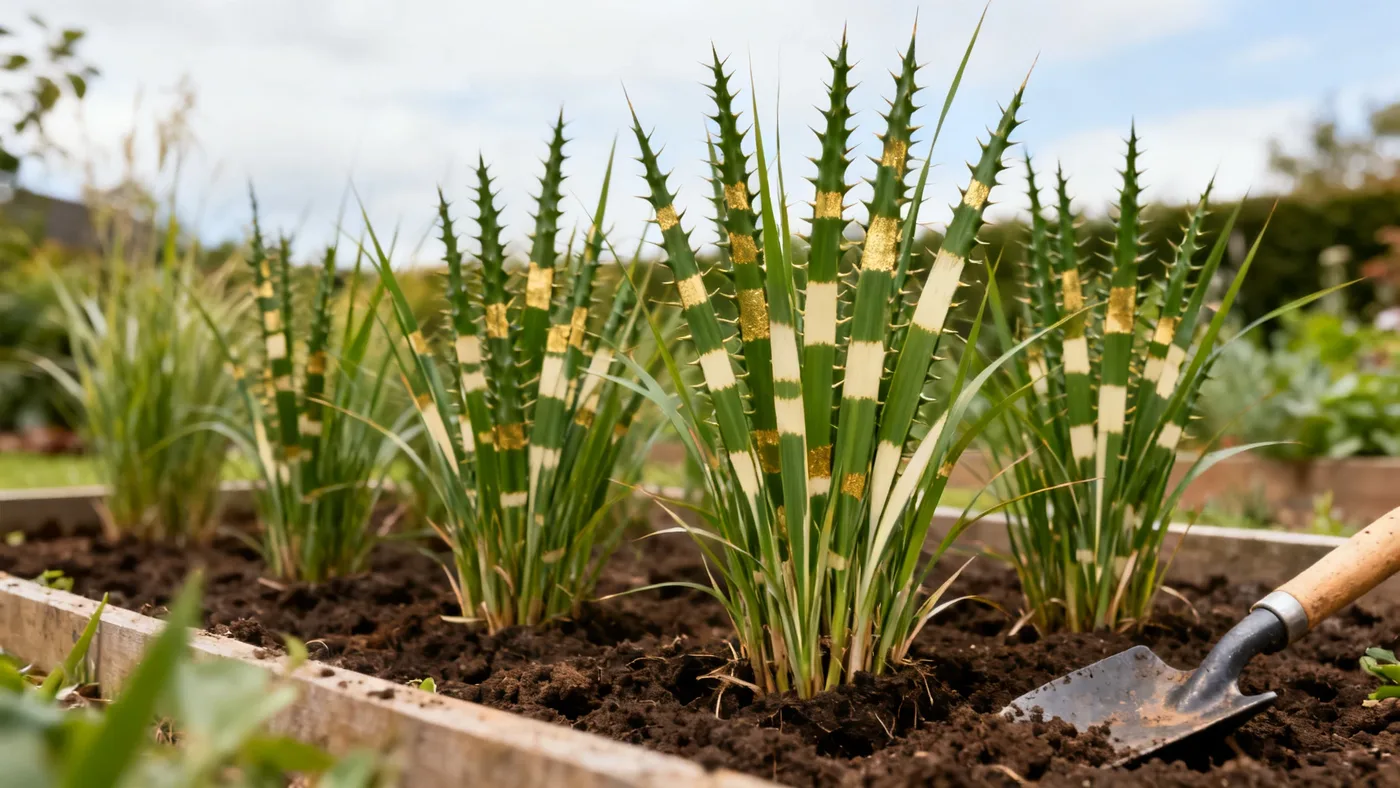
Watering Porcupine Grass: From New Planting to Mature Clump
Learn how often to water Porcupine Grass and master watering techniques from new planting through maturity. Includes step-by-step instructio
 Core guide
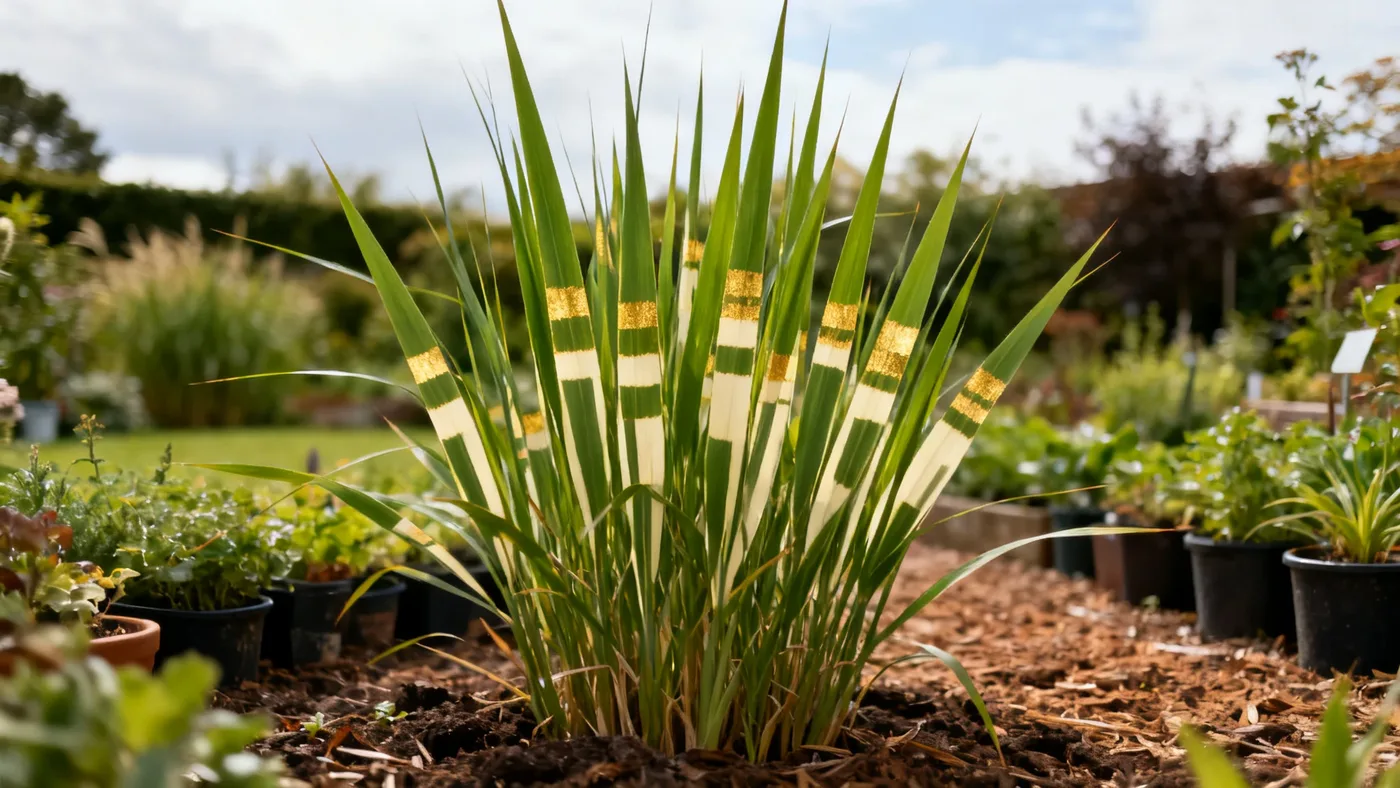
9 Common Porcupine Grass Problems and How to Fix Them
Fix the 9 most common Porcupine Grass problems: rust, pests, flopping stems, and more. Practical solutions from spacing to division.
 Core guide
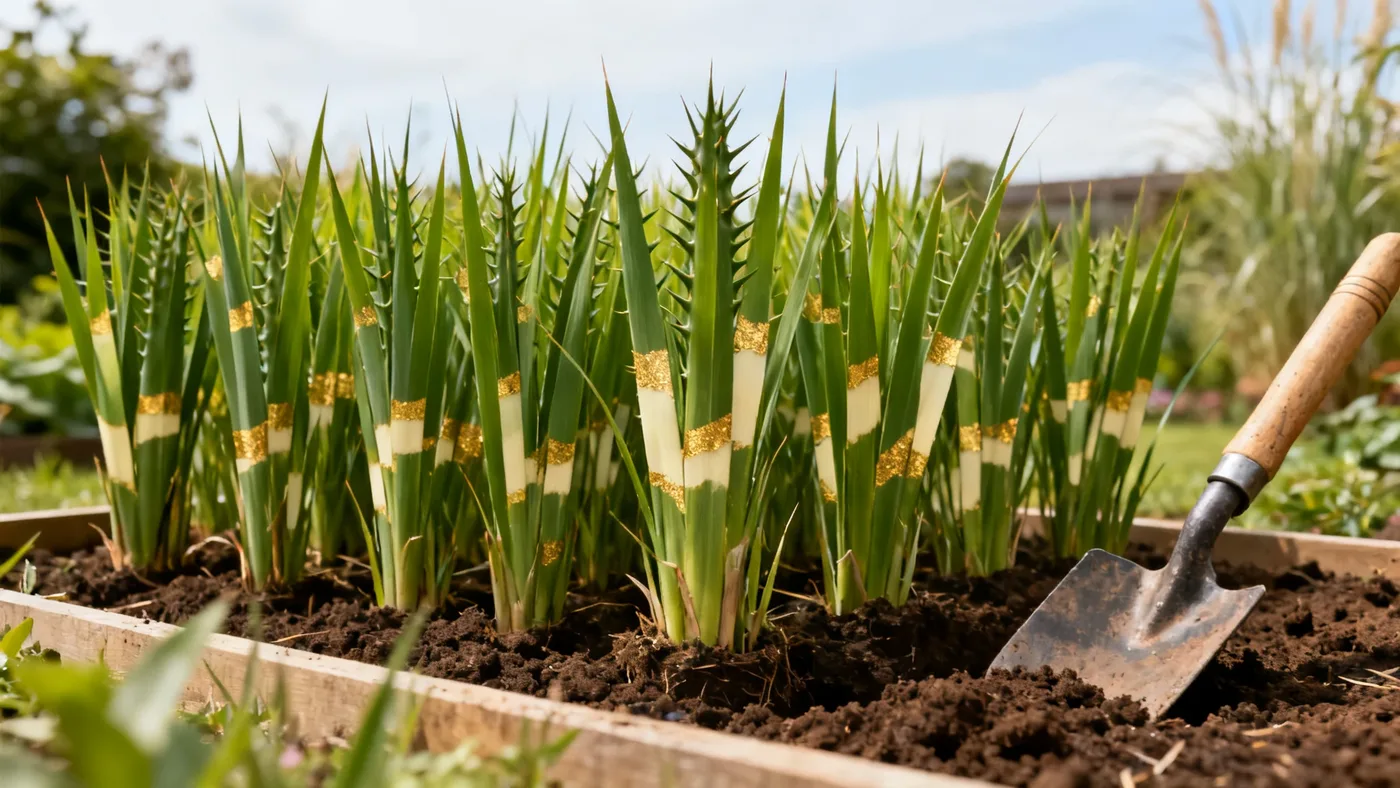
12 Best Landscape Uses and Companion Plants for Porcupine Grass
Discover 12 landscape uses and companion plants for Porcupine Grass, with spacing, bloom times, and practical planting tips for zones 5–9.
 Core guide
Buying Porcupine Grass: Container Sizes and What to Look For
Learn what to look for when buying Porcupine Grass. Compare container sizes, spot quality indicators, and find the right plant for your land
 Plant specific
Porcupine Grass Bloom Time: Plume Color and How Long It Lasts
Learn when Porcupine Grass blooms and how long the plumes last. Zone-specific timing, color progression, and care tips for peak flowering.
Porcupine Grass questions
Is Porcupine Grass the same as Zebra Grass?
They're closely related cultivars of Miscanthus sinensis with similar gold-banded foliage, but Porcupine Grass ('Strictus') has stiffer, narrower, upright blades, while Zebra Grass ('Zebrinus') has a looser, more arching habit.
When should I cut back Porcupine Grass?
Leave the dried foliage and plumes standing through winter for interest, then cut the clump back to 4-6 inches above the ground in late winter or very early spring before new shoots appear.
Is Porcupine Grass invasive?
The species it belongs to, Miscanthus sinensis, can self-seed into natural areas in warmer, humid parts of the US and is flagged as invasive or a plant of concern in some regions, so it's worth checking local guidance before planting near wild spaces.
How much sun does Porcupine Grass need?
It performs best in full sun, which produces the strongest gold banding and keeps the upright stems from flopping; it tolerates light shade but with less vivid color and looser form.
Can Porcupine Grass be grown in a container?
Yes, it's often sold in quart containers as a young plant and can be grown in a large pot, but its mature size (5+ ft) means it will eventually need a sizable container or transplanting to the ground.