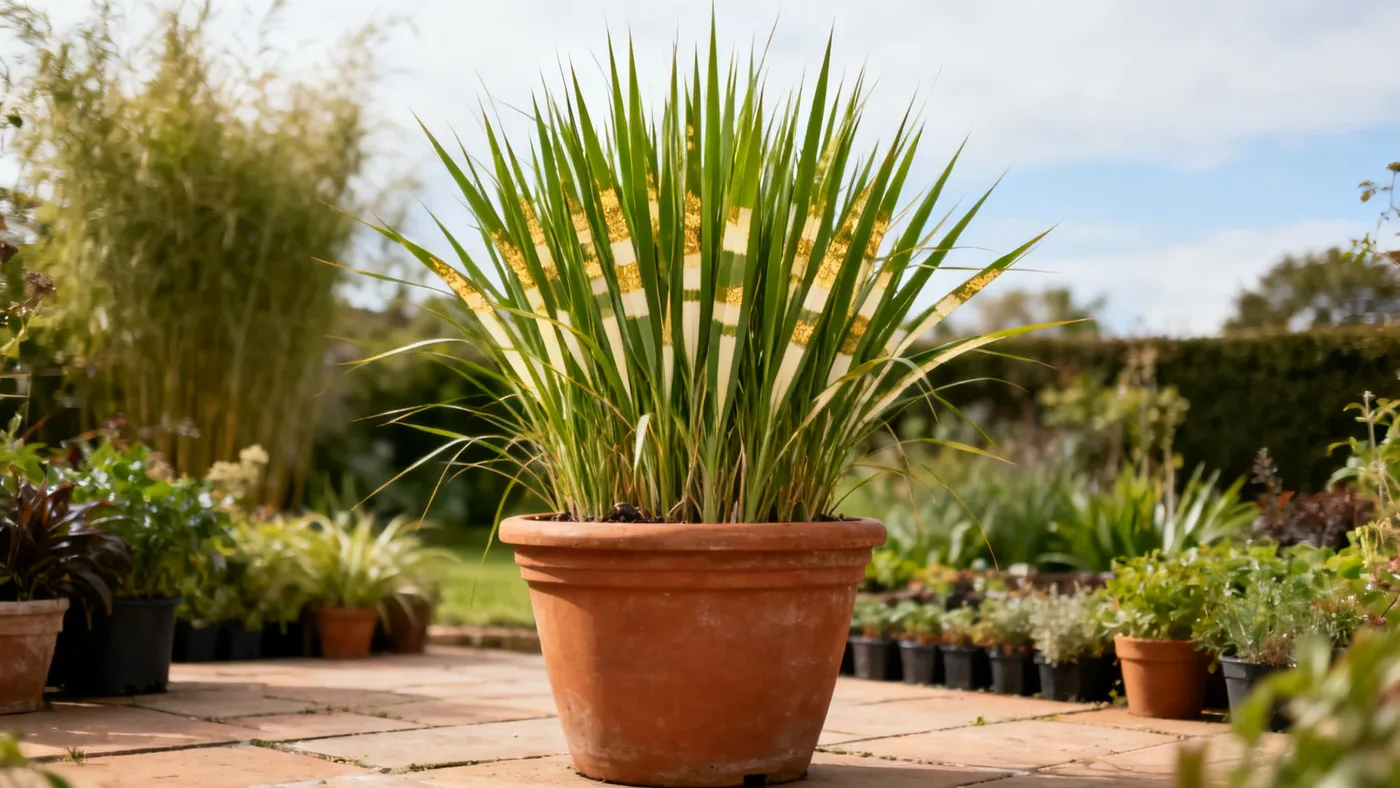
Buying Porcupine Grass: Container Sizes and What to Look For
Porcupine Grass (Miscanthus sinensis 'Strictus') delivers striking vertical form and distinctive horizontal gold-to-cream striping that sets it apart from softer ornamental grasses. If you're ready to add this 5 to 7 foot accent plant to your landscape, buying the right plant at the right size matters. A healthy specimen planted at the right moment in your growing season will establish faster, flower sooner, and cost you less in failures.
Understanding Container Sizes
Nursery-grown Porcupine Grass is typically sold in three container sizes, each with different timing, price points, and establishment needs.
Quart Containers
A quart-size plant is the smallest commonly available option and usually the most affordable. These young plants stand 6 to 12 inches tall and fit easily into a car. Most reach flowering size and full clump form within 2 to 3 growing seasons from a quart-size start. Expect steady height gains of roughly 1 to 2 feet per year once the plant is established. Quart containers are ideal if you're willing to wait for a mature specimen or need to plant on a tight budget. They're also the best choice for large-scale landscaping projects where you're spacing multiple plants 3 to 4 feet apart.
#1 Containers
A #1 container (roughly 1 gallon) holds a plant that's typically 18 to 24 inches tall with a fuller clump base. These plants establish faster than quart sizes and may flower within the first or second season. #1 containers offer a middle ground: they're still portable and reasonably priced, but they skip 1 year or more of the waiting period a quart plant requires.
#3 Containers
A #3 container (roughly 3 gallons) holds a mature or near-mature plant, often 3 to 4 feet tall with a substantial clump spread of 2 to 3 feet. These plants may already show plume buds or be on the verge of flowering. #3 plants are ready for immediate landscape impact, which makes them popular for display projects, commercial installations, or homeowners who want a specimen in one season. They're the most expensive option but require minimal waiting and reduce transplant shock.
What to Look for in a Quality Plant
Healthy foliage is your first signal. The blades should display the characteristic stiff, upright form and prominent horizontal gold-to-cream bands running across (not along) the leaf. Any plant with drooping, limp, or pale foliage is either root-bound, under-watered, or stressed and may recover slowly after planting.
Check the base of the clump where shoots emerge from the soil. You should see multiple strong green shoots close together, not sparse or yellowing stems. Gently tip the pot and look at the roots. Roots poking from the drainage holes signal a plant that's ready to move up, but excessive circling or matted roots suggest the plant has been confined too long and may struggle to break free in the soil.
Inspect the foliage from top to bottom for signs of pests or disease. The occasional aphid or mealybug is manageable, but widespread yellowing spots, rust-colored patches, or leaf blight (soft, translucent lesions) are red flags. Because Porcupine Grass thrives in full sun and appreciates air movement, any nursery plant should already look crisp and upright, not floppy or stressed.
Feel the soil moisture. The mix should be consistently moist but never waterlogged or bone-dry. A plant that's been allowed to dry out excessively may wilt after planting and take weeks to recover, even if you water well.
Key Features to Compare
All true Porcupine Grass plants are the same cultivar ('Strictus'), so genetic differences are minimal. What varies is the nursery's growing practice.
Foliage density. Compare two plants side by side. A thicker clump with more shoots packed into the pot indicates better establishment. A sparse, thin clump may take an extra year to fill in after planting.
Shoot vigor. Look for stems that are firm, not hollow or papery. Gently squeeze a blade where it joins the base. It should feel turgid and snappy, not soft or mushy.
Color uniformity. The gold bands should be evenly distributed and consistent across the foliage. If one side of the clump is pale green and the other side is rich with color, the plant may have been positioned away from full sun at the nursery and could take time to rebalance once you plant it in full sun.
Planting season. Spring after the last frost is the ideal planting window. Many nurseries sell year-round, but a plant bought in spring will establish faster than one planted in late fall, even in milder zones. Early fall planting (zone 7 and warmer) can work if you plant by mid-September to allow root establishment before winter.
Red Flags to Avoid
Floppy or splayed stems. Porcupine Grass has a stiff, upright habit by nature. If a plant is already flopping open or leaning dramatically, it's either been over-fertilized (which causes soft, weak growth) or is root-bound and distressed. A floppy plant rarely rights itself once planted.
Persistent yellowing or bleached foliage. If more than 20 percent of the blades show yellowing or pale, washed-out color, the plant is stressed. This could mean nutrient deficiency, root problems, or extended drought stress. A stressed plant takes far longer to establish.
Mushy or foul-smelling soil. Overly wet, anaerobic soil smells sour or unpleasant. If the pot feels heavy and waterlogged, root rot may have set in. Pass on this plant.
Broken or missing shoots at the base. Porcupine Grass establishes from a clump of shoots at ground level. If major shoots are broken, snapped, or missing, the plant has lost growing points it won't readily recover from.
Invasive-species concerns in your region. The parent species Miscanthus sinensis is classified as invasive or a species of concern in parts of the eastern, mid-Atlantic, and southeastern United States due to self-seeding into natural areas. Some states and municipalities restrict sale or planting. Check with your local cooperative extension or invasive plant list before buying, especially if you live near woodlands or waterways.
Where to Buy
Quality Porcupine Grass is available from regional nurseries, mail-order growers, and large garden centers. Regional and specialty nurseries often carry the healthiest specimens because they grow locally and don't ship plants across the country. They can also advise you on planting timing specific to your zone.
Mail-order nurseries ship bare-root or containerized plants to your door. Shipping stresses plants temporarily, but reputable mail-order growers pack carefully and stand behind their products. Ask about their guarantee: a company that replaces dead plants or offers a refund is worth the extra shipping cost.
Big-box garden centers carry Porcupine Grass seasonally, usually spring through early fall. Selection is often limited to quart or #1 sizes. Inspect plants carefully at the point of sale, since big-box stores may not water daily and plants can become stressed on the shelf.
Verify the exact cultivar name before you buy. This guide is specific to Miscanthus sinensis 'Strictus'. The closely related Miscanthus sinensis 'Zebrinus' (Zebra Grass) looks similar but has broader, more arching blades rather than the rigid form of 'Strictus'. Both are excellent grasses, but they have different habits and should not be substituted without intention.
Once you bring your plant home, plant it as soon as possible. If you must wait a few days, water it daily and place it in full sun to prevent stress.
Quick Reference: Buying Guide Checklist
| Buying Step | What to Check | Green Light | Red Flag |
|---|---|---|---|
| Container Size | Plant height and establishment timeline | Quart: 6-12 inches, ready to wait 2-3 seasons; #1: 18-24 inches, flower in 1-2 years; #3: 3-4 feet, immediate impact | Size mismatched to your budget or timeline |
| Foliage Color | Blade striping and tone | Crisp gold-to-cream bands across leaves; rich green base color | Pale, washed-out, or yellowed foliage; missing bands |
| Plant Form | Upright habit and density | Stiff, upright stems packed densely in the clump; no flopping | Drooping stems, wide-open center, sparse shoots |
| Soil and Roots | Moisture and root health | Consistently moist soil; roots visible but not circling; no smell | Bone-dry or waterlogged soil; matted roots; musty or sour smell |
| Pests and Disease | Leaves and stems | No spots, blight, rust, or discoloration; possibly one or two aphids | Widespread yellowing, soft lesions, scale, or heavy pest load |
| Harvest Timing | Growing season | Spring after last frost, or early fall (zone 7 and warmer) by mid-September | Late fall or winter planting in cooler zones |
| Cultivar Name | Label verification | Miscanthus sinensis 'Strictus' or "Porcupine Grass" | Unlabeled, 'Zebrinus', or "Miscanthus" only |
| Seller Support | Guarantee and advice | Money-back or replacement guarantee; can answer care questions | No guarantees; seller unfamiliar with the plant |
Once your Porcupine Grass is in the ground, consistent watering and full sun placement will ensure it thrives. For complete establishment and long-term care details, read our Porcupine Grass Care Guide.