Porcupine Grass Confusion: Miscanthus Strictus or a Different Plant
A seed packet marked Porcupine Grass could grow into a Minnesota prairie bunchgrass, an Australian desert hummock, or an ornamental for your border, and the packet won't say which. Most buyers assume a common name points to one plant. What we see instead is the same two words printed on three very different things.
This article talks about those three plants, how the striped Miscanthus picked up its nickname, and how to read a Latin name on a tag, and it answers the questions customers ask us most. Read on to learn how to confirm which plant you have and what the right one needs.
Getting it wrong costs more than the price of the plant. A border clump takes two to five years to reach full size, so a swap means starting that clock over.
One Common Name, Three Different Plants
Search porcupine grass and the results split three ways. One group describes a tall ornamental with yellow bands across its leaves. Another describes a prairie grass with needle-like seeds. A third describes a spiky desert plant from Australia. All three have a fair claim to the name, and the only thing they share is being grasses.
This table sorts them by the details that matter on a planting plan.
| Plant | Botanical name | Home | Size and habit |
|---|---|---|---|
| Ornamental porcupine grass | Miscanthus sinensis 'Strictus' | Species native to Japan | 48–60 in. in foliage, warm-season clump |
| Prairie porcupinegrass | Hesperostipa spartea | Central North America | 1.5–3 ft, up to 4 ft, cool-season bunchgrass |
| Spinifex | Triodia scariosa | Australia | Stiff, spiky desert hummock |
The trouble is practical. Prairie restoration lists, native seed mixes and plant catalogs all use the name for different plants. Searches that add Minnesota, Wisconsin or Illinois mostly turn up the prairie grass, because that is the one growing wild across the central states. A buyer who wants the ornamental and orders from one of those lists gets a much shorter cool-season bunchgrass.
The mix-up runs the other way too. Someone who wants a true native planting for a restoration plot and buys the striped ornamental has put a Japanese species into ground meant for local plants. Either error is cheap to avoid on paper and expensive to fix in the ground.
One of the most common questions we get is whether the porcupine grass on a native planting list is the striped one we grow. It is not, and the rest of this guide shows how to tell.
How Miscanthus Earned the Name Porcupine Grass
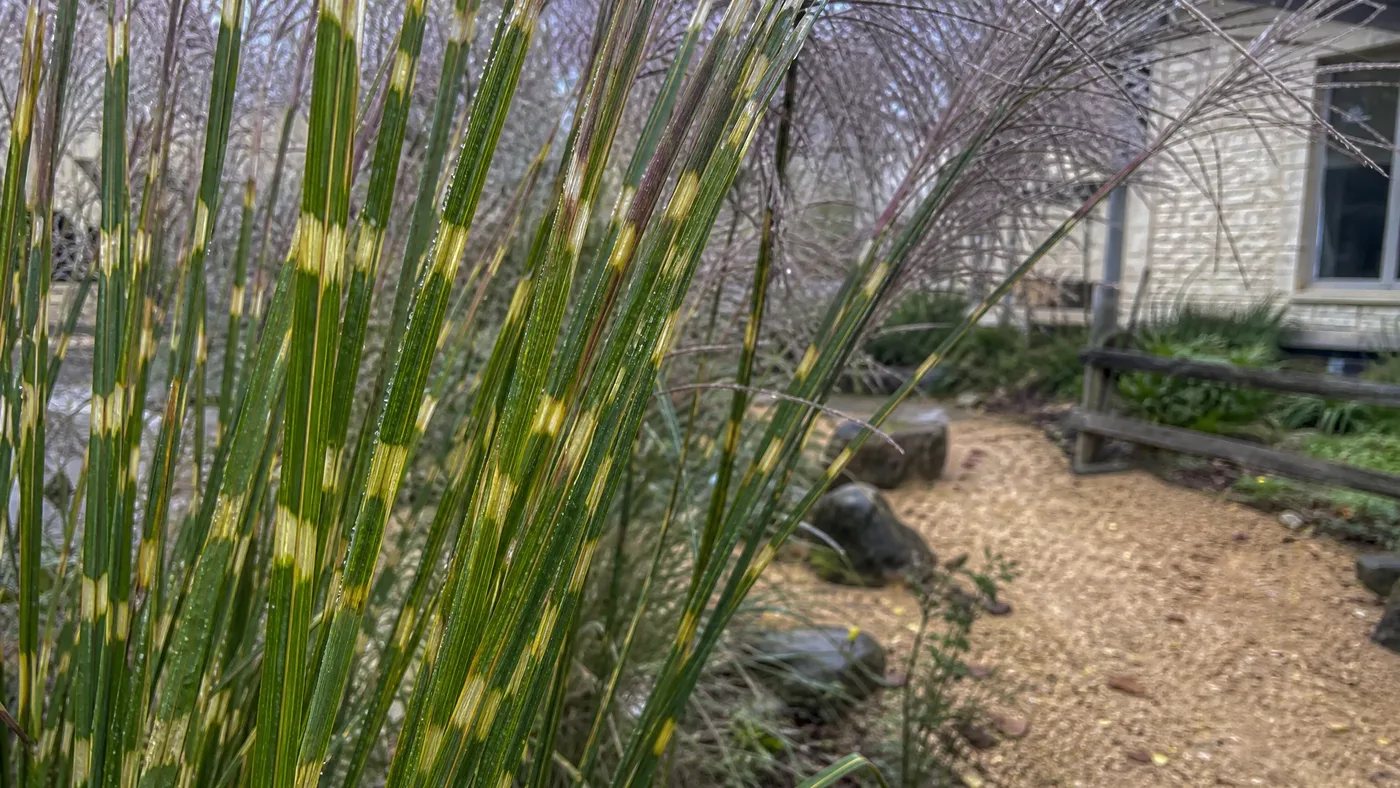
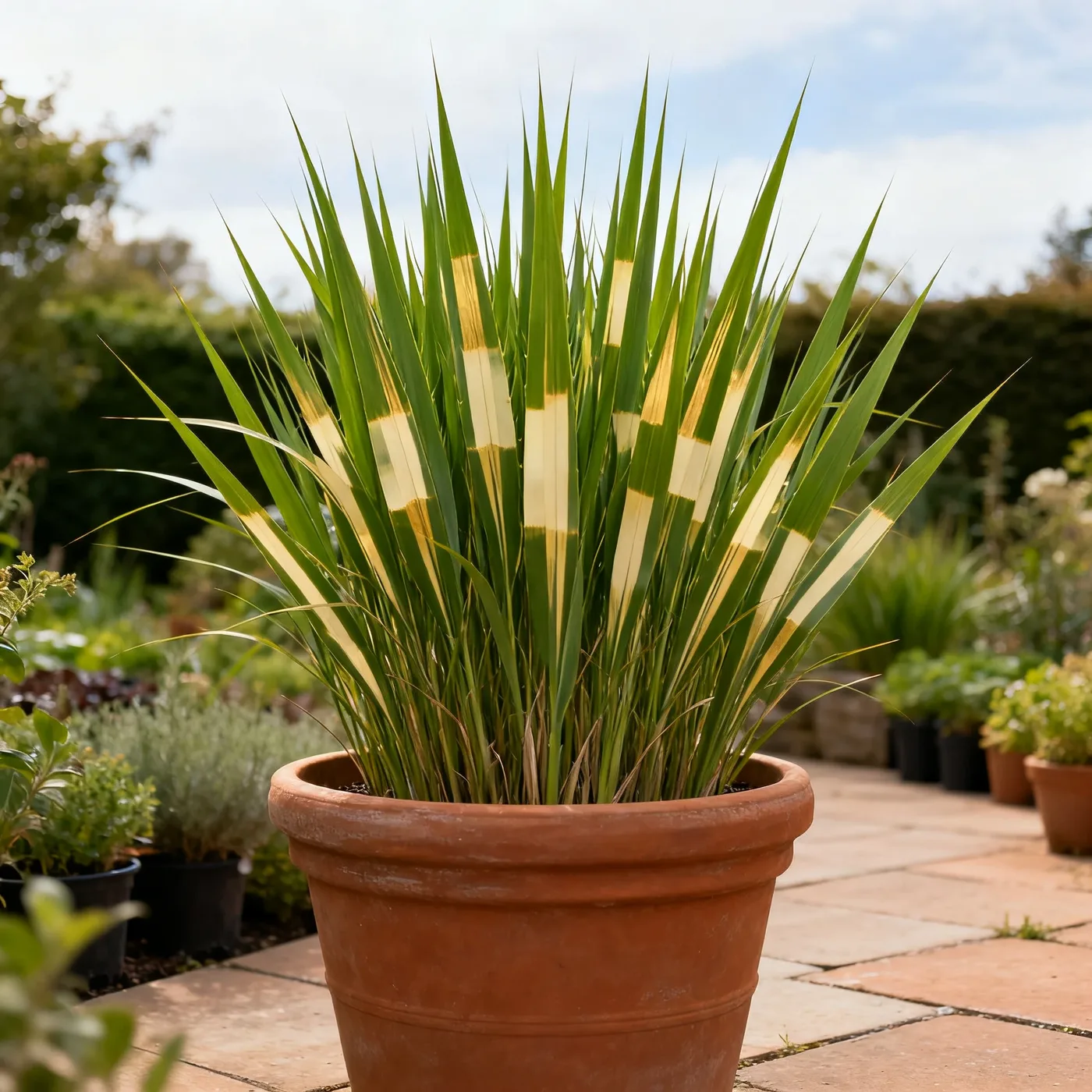
Look closely at a 'Strictus' leaf in midsummer and the nickname explains itself. Missouri Extension points to the bright yellow, horizontal variegation that sets it apart from other Miscanthus sinensis cultivars, and compares the bands to those on a porcupine quill. The name is a plain description of what you see.
A Japanese Species With One Striped Selection
Porcupine grass is a warm-season, clump-forming grass selected from a species native to Japan. That matters for two reasons. The name belongs to one cultivar out of a very large species, so "Miscanthus sinensis" alone does not tell you which plant you are getting. And the nickname is informal, which left it open for other grasses to share.
The leaves are up to half an inch wide and held fairly upright, which gives a stiffly arching clump. That upright habit is part of what makes it a favorite for tight spots.
Banding Across the Blade
The detail to look for is the direction of the markings. On 'Strictus' the yellow runs across the leaf, like rings on a quill, rather than down its length. Some written descriptions get this wrong, so trust the plant in front of you and the cultivar name over a vague description.
The bands are easy to see on a mature clump and harder on a very young plant. If the bands look faint on a small division, give it a season in good light before you judge it.
Look-Alikes That Share the Banding
Zebra grass 'Zebrinus' is banded too, but it has a more graceful, arching habit and is a bit less winter hardy. If you are weighing the two, our guide to telling porcupine grass and zebra grass apart goes through the differences. Both are Miscanthus, so the genus name will not separate them. The cultivar name will.
Porcupine Grass on the North American Prairie
Prairie porcupinegrass, Hesperostipa spartea, is the grass you will meet on a restoration site in Minnesota or Wisconsin, and older books list it as Stipa spartea. Its seeds carry long twisted awns, and that is where the porcupine comparison comes from. It has nothing to do with banded leaves.
A Native Cool-Season Bunchgrass
The USDA Forest Service describes it as a native, perennial, cool-season bunchgrass. It may reach 4 feet, but generally stays between 1.5 and 3 feet. The same review puts its range from British Columbia to Ontario, south through Montana, Wyoming, Colorado and New Mexico, and east through most of the central states to Pennsylvania.
That range is why searches for Minnesota, Wisconsin and Illinois lead here. It is a wild grass of those states, and a native plant list there means this one. The ornamental comes from Japan and would never appear on such a list.
Why It Will Not Act Like the Ornamental
Cool-season grasses grow hardest in the cooler parts of the year. 'Strictus' is a warm-season grass that builds through summer toward plumes in late summer. Put the two side by side and one is a low prairie tuft while the other is a 4 to 5 foot fountain.
The awns are built for sod, not for borders. As they expand and contract with changes in temperature and moisture, the seeds drill into the soil. That works on open prairie, and it is why the grass is sold for restoration rather than for the front of a flower bed.
If you also searched porcupine grass versus needle and thread, you were comparing two prairie natives. Neither is the garden ornamental.
Spinifex: Australia's Porcupine Grass
In arid inland Australia, a spinifex hummock is a dome of stiff, sharp-pointed leaves that you walk around rather than through. Triodia scariosa is one of those spinifex grasses, and Australians sometimes call it porcupine grass for the same prickly look. It reached the garden search results through the shared name, not through any garden use.
Built for Desert, Not for Borders
Spinifex is a wild plant of dry country. The ornamental we grow wants the opposite: Missouri's horticulture program says it prefers full sun in moisture-retentive, fertile garden loam. A plant adapted to poor, dry ground and a plant that rewards fertile soil will not share a bed happily.
The leaves are also a handling problem. Anyone who has gloved up for a spiky agave knows how that goes, and a hummock of sharp leaves is no friendlier in a walkway or beside a patio. 'Strictus' has broad ribbon leaves up to half an inch wide that you can brush past on a path.
What This Means for Your Search
If a listing pairs porcupine grass with Australia, desert or hummock, you are reading about spinifex. Treat it as a plant to admire in photographs, and check with your local extension service before importing any seed or plants from overseas.
Reading Latin Names Before You Spend a Dollar
Picture two tags on a bench. One says "Porcupine Grass" and nothing else. The other says Miscanthus sinensis 'Strictus'. Only the second tells you what you are paying for. The Latin name is the one label that every seller, extension office and botanist uses the same way.
A full name has up to three parts: the genus, the species, and a cultivar in single quotes. Here are the checks we run on any tag, catalog line or seed listing.
- Find the genus. Miscanthus is the ornamental. Hesperostipa (or the older Stipa) is the prairie grass, and Triodia is the Australian one.
- Look for the cultivar name in single quotes. The species runs from 4 to 12 feet, so Miscanthus sinensis on its own could be a very different plant from 'Strictus'.
- Rule out zebra grass. 'Zebrinus' is banded too, so the cultivar name has to read 'Strictus'.
- Match the description to the plant: yellow horizontal bands, about 4 to 5 feet in foliage and flowers in late summer.
- Ask the seller for the botanical name in writing if the listing leaves it out. A seller who knows the plant can answer in one line.
Seed listings deserve extra care. Seed from a prairie supplier sold as porcupine grass is almost certainly the native bunchgrass, and a seed-grown Miscanthus would not be guaranteed to carry the banding of a named cultivar. For the striped ornamental, buying a plant is the safer route.
Common advice says to buy by the photo on the tag. We would not. Photos get reused, and a striped Miscanthus picture can sit on a tag for something else. The name settles it, and the picture only supports it.
What Miscanthus Strictus Needs in Your Garden
A small nursery pot looks modest on planting day, so many buyers underestimate the plant. A few years later the same clump is a stiff, banded fountain. Plan for that final size, not the one in the pot.
Site and Soil
Give it full sun, meaning six or more hours of direct light. It does best in moisture-retentive, fertile loam, though the species is adaptable to many soils. Growth starts late in spring because it is a warm-season grass, so do not worry when neighbors green up first. Sources list it for zones 5 to 9. Our guide to porcupine grass hardiness zones covers the edges of that range.
Size and Years to Maturity
Plan on 4 to 6 feet tall and about 3 feet wide in foliage. In bloom it climbs well above that, and Illinois Extension reports it reaching nine feet in flower. The plumes open rosy-plum and turn silver in late fall.
Reaching full size takes two to five years, so budget in seasons, not weeks. Our guide on how big porcupine grass gets covers the growth curve in more detail.
The Year Ahead
Expect little through early spring, banded leaves building through summer, and plumes in late summer. The flower tassels hold on into winter, so many gardeners leave the clump standing until new growth is near. Our guide on when and how to cut back porcupine grass sets out the timing.
The species is considered invasive in parts of the US, so check with your local extension service before you plant. After that, the care routine is short, and our complete growing guide covers it.
Buying the Right Porcupine Grass Once
Treat the purchase as a three-year plan, not a one-day expense. A wrong plant costs the plant, the planting time, and the seasons spent waiting for a clump that was never going to fill the space. Prairie porcupinegrass stays a few feet tall, spinifex is a desert hummock, and only Miscanthus sinensis 'Strictus' gives you the banded, upright fountain with late-summer plumes.
Check the genus, check the cultivar, and match the description before you pay. Confirm the Latin name before paying, and the common name stops mattering.
Porcupine Grass
Nursery-grown Porcupine Grass in sizes from Quart, shipped to your door.
From $19.99
Shop Now →Porcupine Grass grows on our farms in full sun and a rich loam that stays a little damp, and we trim it once in late winter. Because we run a small business of growers, each plant we send out is one we would put in our own beds. If you now know which form you were after, have a look at the Porcupine Grass we have ready.