Miscanthus Strictus Dwarf vs Standard Porcupine Grass: What Differs
Two grasses share a pot label and a lot of looks, yet one will fit under a window and the other will swallow it. You plant a Strictus beside the porch in spring, and a couple of summers later it is either a compact banded fountain or a screen across the glass. The difference is the Strictus Dwarf, sometimes sold as 'Strictus Compactus', versus the standard Porcupine Grass.
Picking wrong means one of two chores: cutting a big grass back hard to make it fit, or buying a plant too small for the border. Below, you'll find out all about how the two compare, including height, banding and plumes, hardiness, wind and staking, yearly upkeep, price and availability, and which one suits your particular problem.
If Space Is Tight, Check Porcupine Grass Height
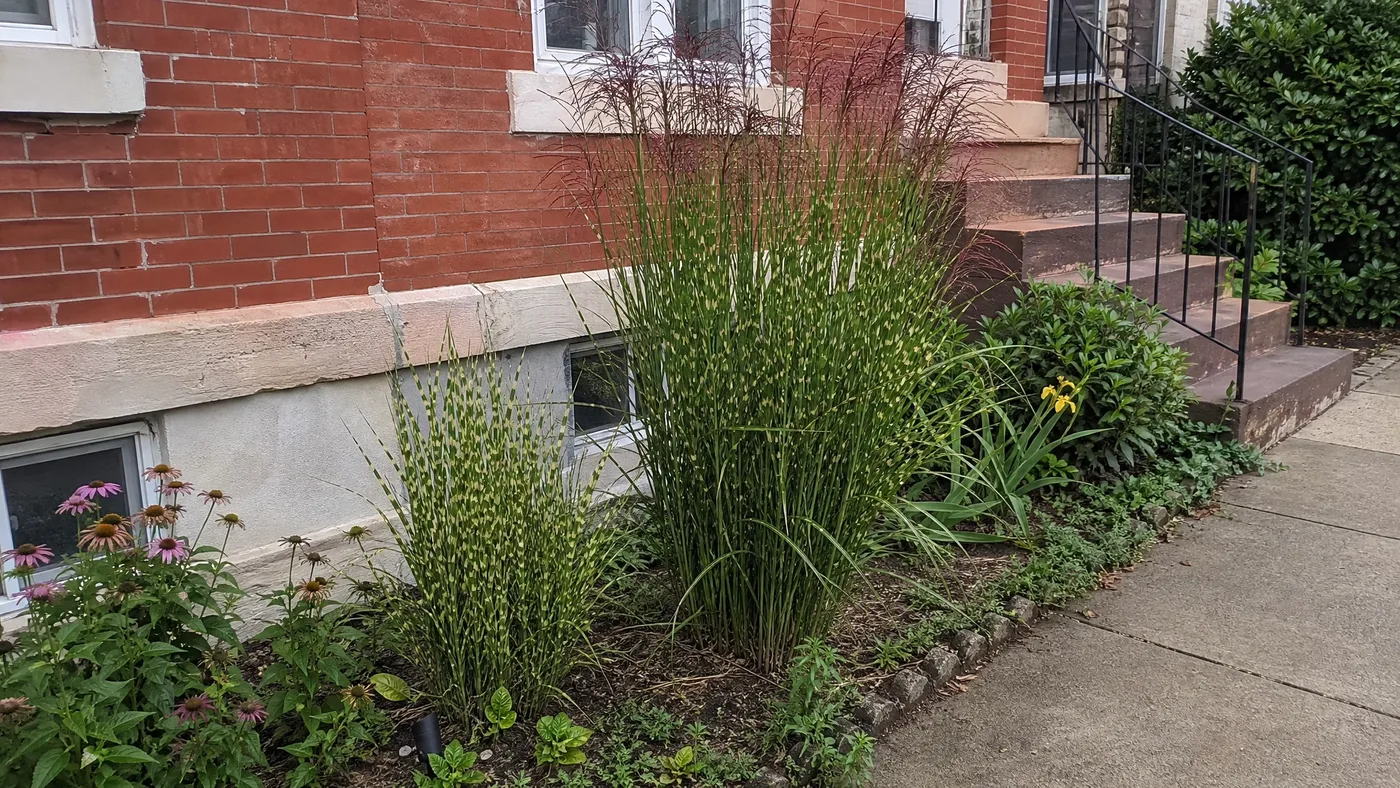
The standard plant makes a clump of about 48 to 60 inches in foliage and roughly 3 feet across. Plumes push it much higher. Illinois Extension says it grows over six feet tall and reaches nine feet in flower, and a Florida extension sheet lists 6 to 8 feet. The figures differ because some measure the leaf mound and some the plume tips, and the tips are what block a view.
The dwarf is a sport of that same plant, sold as 'Strictus Dwarf' or 'Strictus Compactus', and it keeps the upright habit on a smaller frame. We will not quote a height for it, because the sources we trust give none and suppliers vary. Read the tag, ask the seller for the plume height specifically, and measure your spot against that number rather than the leaf mound.
One of the most common questions we get is whether a small standard plant is secretly the dwarf. It is not. A standard Strictus takes two to five years to reach full height, so a young one looks harmless in the pot and then keeps climbing. Our guide to how big Porcupine Grass gets covers that growth curve for the standard, and this guide adds the dwarf.
Verdict: if a window, railing, path edge or small bed sets the limit, take the dwarf. Plenty of people plan to buy the standard and simply cut it short, but a grass cut down in summer loses its fountain shape and its plumes. Size it right at purchase.
Which Porcupine Grass Shows Banding and Plumes Better?
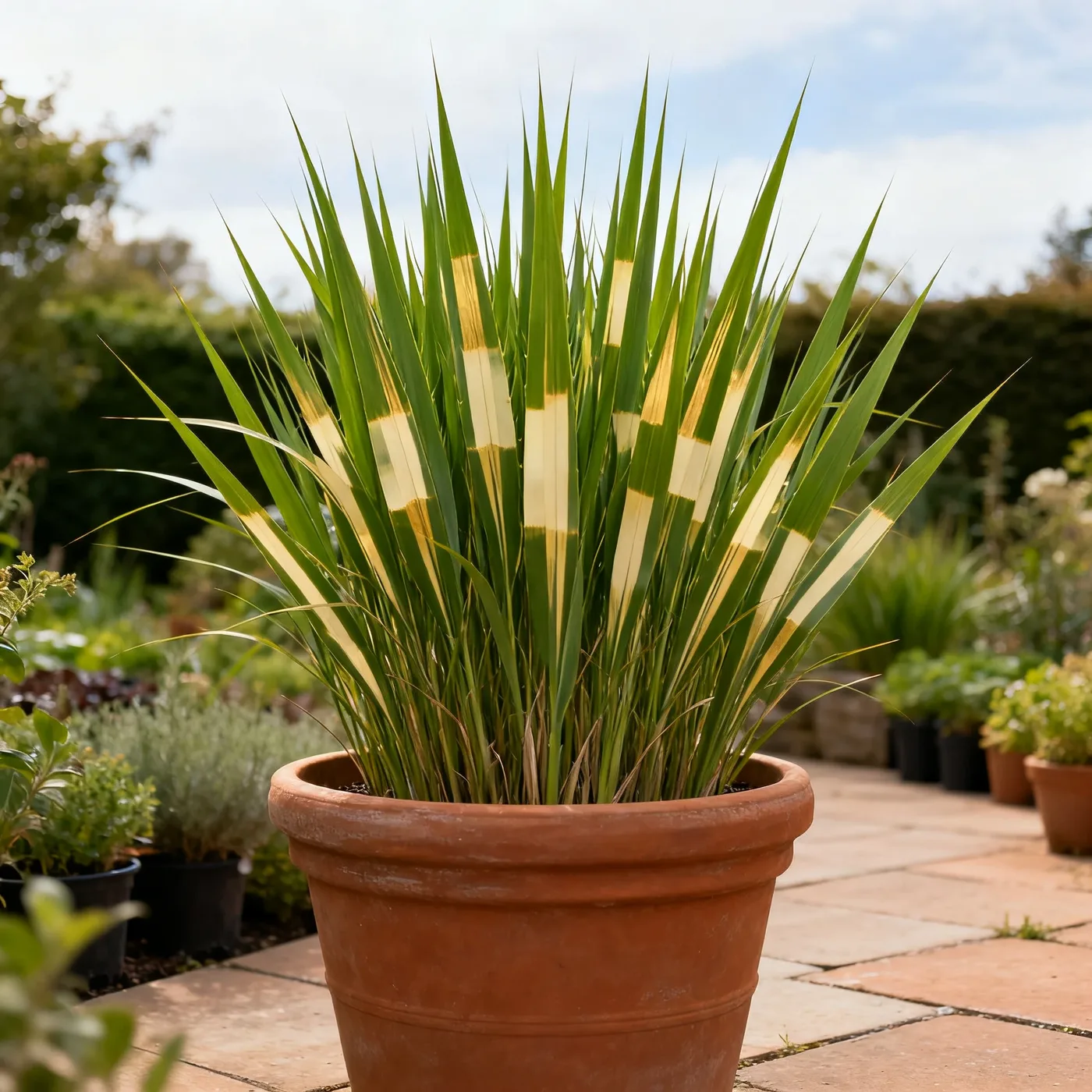
Both carry the trait behind the common name: green leaves crossed by horizontal yellow bands, as Illinois Extension describes them. The dwarf is a sport, so it keeps the pattern on a smaller plant. Because the bands run across the blade, they read best up close. On the dwarf that means at eye level, while on the standard the best banding is low in the clump, with the upper blades striped high overhead.
The plume is where the standard pulls ahead. Its flower is a rosy-plum color that turns to silver in late fall, and it opens in late summer. For the species, the panicle rises 1 to 2 feet above the foliage, so a taller plant lifts its plumes into open sky. The seed heads are reddish and fan shaped, and Colorado State notes the tassels persist into winter.
Blade width is the one detail we will not put a number on, since no source we trust measures it for the dwarf. If it matters to you, set the two plants side by side in daylight and judge the banding contrast yourself.
Verdict: for banding seen from a path or patio, choose the dwarf. For plumes read from across the yard, choose the standard. We would put the standard at the back of the bed and the dwarf by the walk.
Does Porcupine Grass Hardiness Really Differ?
For the standard plant, one garden plant list gives zones 5 to 9, and the species is hardy from 5a through 9b. We found no separate rating for the dwarf. Because it is a sport of the standard plant, we plan around zone 5 as the cold edge for both and zone 9 as the warm edge.
Where cold does bite is the first winter and in containers. A newly planted clump has had less time to root, and a pot exposes roots to freezing from every side. In zone 5, plant in spring so the roots get a full season, and leave the foliage standing through winter. Our guide to Porcupine Grass hardiness zones covers the map in more detail.
Some sellers imply a smaller form is tougher or more tender. Neither claim has a source behind it, so do not pay a premium or skip a plant on that basis. We often see thin spring regrowth traced to a late-fall planting rather than to the cultivar.
Verdict: climate should not decide this one. Across zones 5 through 9, choose on size, and if your winters sit at the cold end, ask your local extension office how the dwarf has done nearby.
Wind, Flopping and Staking for Porcupine Grass
Strictus is the stiff one in the Miscanthus family. The University of Georgia notes that it grows more upright and erect than zebra grass, which is why it gets recommended for small spaces. Stiffness has limits, though, and height is the limit. A stem carrying a plume at 9 feet catches wind and rain like a sail in late summer, when the heads are fully open.
The dwarf has less leverage, so it holds its line in the same storm with far less fuss. We would not expect to stake it in a normal garden. The standard in an open lot is a different case, and a lean usually starts from one of three causes.
Why a Clump Falls Open
Shade is the first. Texas Tech says full sun maintains the best plant form, so a standard in a shady corner is the one most likely to sprawl. The second is rich soil and heavy feeding, since these grasses grow larger and faster in good soil, and lush growth is soft growth. The third is age: Illinois Extension notes that clumps tend to flop with age and die out in the center.
What to Do About It
For a standard in an exposed spot, tie a loose loop of soft twine around the clump in midsummer, before the plumes open, and keep feeding light. A fence or shrub on the windward side also helps. A flop from a dead center is not a staking problem. It is a division problem, covered next.
Verdict: for exposed sites, the dwarf wins.
Yearly Upkeep: Cutting, Dividing and Cleanup
Both plants get the same single haircut a year. The work differs only in scale, and in how long you spend hauling stems to the compost pile.
Cutting Back Once a Year
Plan to cut the foliage down in late winter or early spring, before or just as new blades appear, and Illinois Extension gives 4 to 5 inches as the cutting height. The dwarf is a quick job with hand shears. The standard is a bundle of tall stems, so handle it in order. Our guide on when and how to cut back Porcupine Grass has the full routine.
- Tie the clump with twine in two places so the stems come away as one bundle instead of scattering across the bed.
- Cut through the bundle at 4 to 5 inches with loppers or a hedge trimmer, and carry it off in one piece.
- Clear any leftovers from the crown so new blades come up clean and the bands show from the first week.
Cleanup is a single pass because the seed heads stay standing into winter. You get the winter structure, then one cut ends the season.
Dividing When the Center Dies Out
When a clump flops and hollows out, lift it and split it, and either plant comes back with vigor. Division is also the only sound way to make more dwarf, because it is a sport and is not true to seed. Our guide to propagating Porcupine Grass by dividing clumps walks through it. A standard clump is a heavy lift, while a dwarf comes out in manageable pieces.
The species is invasive in North Carolina because wind carries the seed, so check local status with your extension service. Verdict: the dwarf takes the least effort.
Price and Availability at the Nursery
We will not print prices here, since they change with pot size and season, but the pattern is steady. The standard is the plant most sellers carry, under one name, in the widest spread of container sizes. The dwarf is stocked in fewer places and under two names, so search for both 'Strictus Dwarf' and 'Strictus Compactus' before you decide it is unavailable.
Pot size matters less than people think for grasses. With medium growth and two to five years to reach full height, a modest container of either plant catches up quickly once it is in the ground in full sun. Our guide to buying Porcupine Grass container sizes explains what a healthy root system looks like.
Compare the same pot size between the two, not name against name, and make sure the tag says which form you are getting. A pot labeled only 'Strictus' could be either. Our shop lists what is in stock right now.
Verdict: on a tight budget, buy the smaller pot of the form that fits your site. A cheap standard in a small spot costs more in the end, because the large root mass is difficult to remove once established.
Matching Each Porcupine Grass to Your Problem
Start with the problem that sent you searching and let it pick the plant. The table below turns the comparisons above into direct choices.
| Your problem | Pick | Why |
|---|---|---|
| Window, railing or low fence behind the bed | Dwarf | Plumes stay lower and the view stays open. |
| Open, windy site | Dwarf | Less height to catch wind and rain. |
| Need a screen or backdrop | Standard | Reaches up to 9 feet in flower. |
| Small bed or entry planting | Dwarf | Upright habit on a smaller frame. |
| Tall banded accent in a big border | Standard | Plumes rise clear above the foliage. |
If neither fits, there are other dwarf forms of the species. 'Hinjo' is a dwarf Miscanthus sinensis with horizontal bands of yellow and low seed set, and 'Yaku Jima' is another dwarf with low seed set but no banding. Either is worth a look where reseeding worries you.
Still unsure? Plant the dwarf. You can always add a standard behind it later, but you cannot shrink a standard.
Pick Your Strictus by Site or by Drama
The two plants share their banding, their upright habit and their rosy-plum plumes that turn silver, and as far as anyone has documented they share hardiness. What separates them is height, wind exposure, the work at cutting time and how easy each is to find.
Pick the dwarf if the site is the constraint, the standard if drama is the goal.
Porcupine Grass
Nursery-grown Porcupine Grass in sizes from Quart, shipped to your door.
From $19.99
Shop Now →Porcupine Grass here gets full sun and a fertile loam that holds its moisture, and each late winter we cut it back before the new blades show. Our team is small and made up of growers who tend top-quality grasses on land we farm ourselves. Whether the dwarf or the standard suits your spot, we hope you will choose a plant from our shop for your own garden.