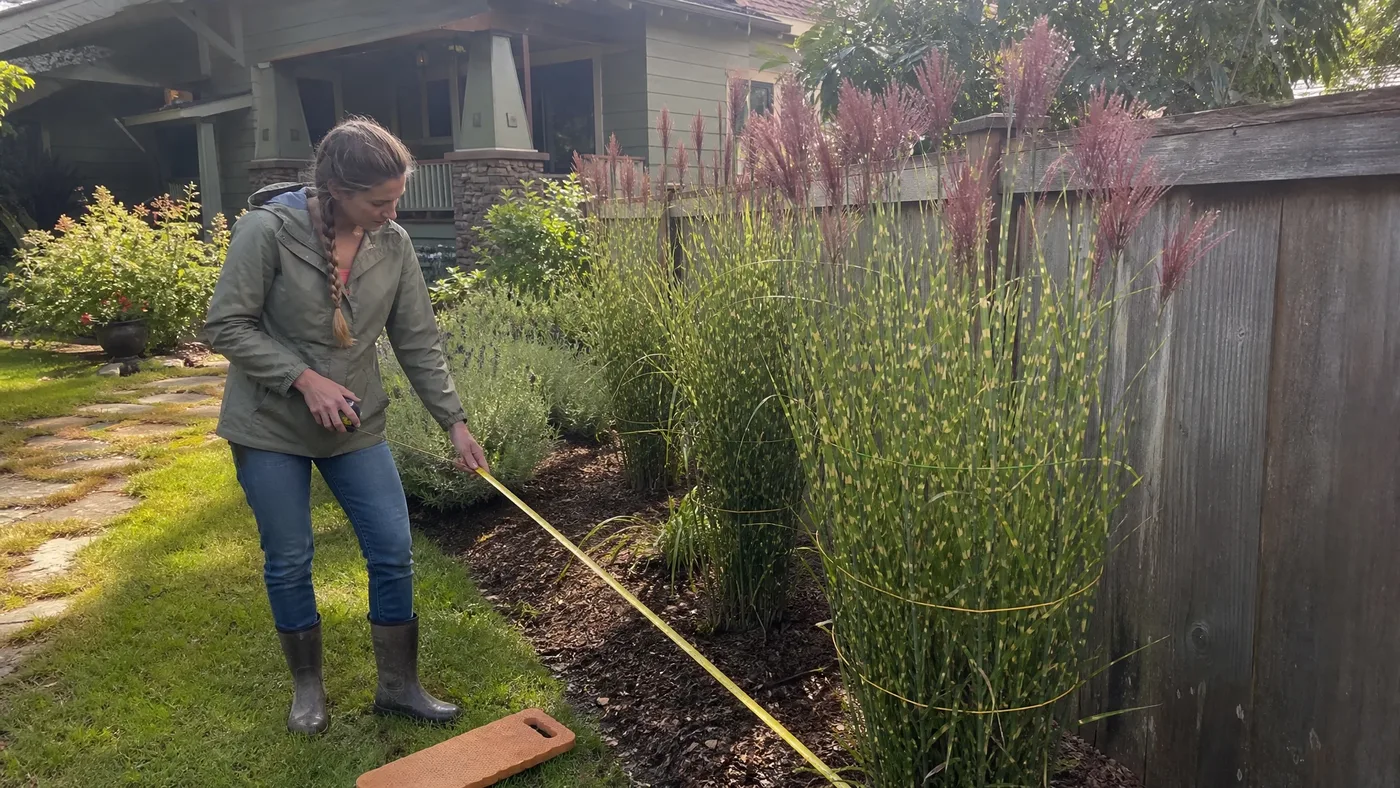
Porcupine Grass vs Gracillimus Maiden Grass: Size and Texture
Start with a tape measure and a stretch of fence: thirty feet of sunny border is the only number this comparison needs. Everything else, from plant count to how the row looks from the street, follows from it.
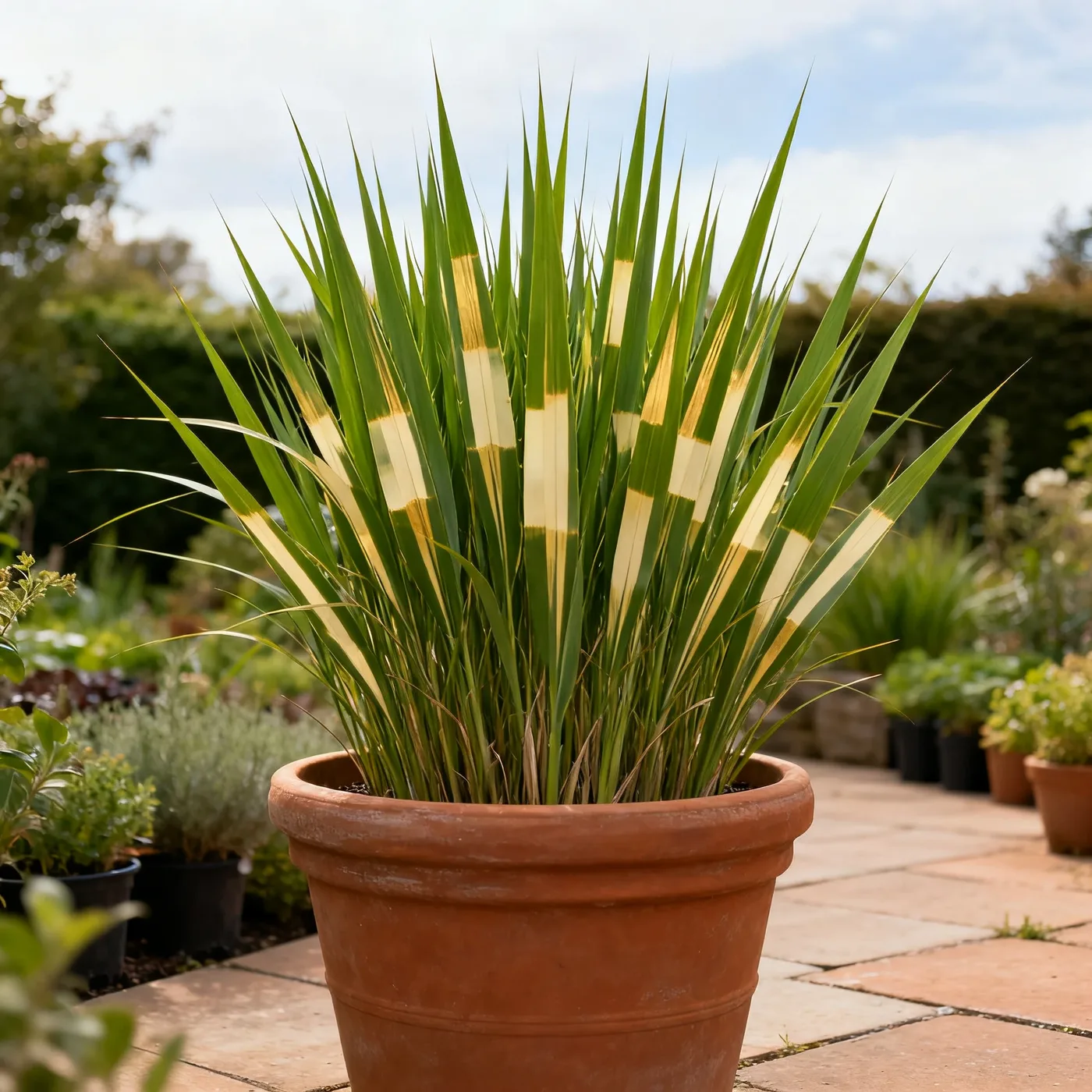
Porcupine Grass (Miscanthus sinensis 'Strictus') and Miscanthus sinensis 'Gracillimus' land on the same shopping lists because both are maiden grasses and both sit in similar pots. Mix them up and you get a row that arches over your walkway when you wanted a wall, or a wall when you wanted a soft edge.
In this article, we'll go through how to tell the two apart on the bench, what banding and blade width do to texture, and the plant count for thirty feet of each.
Measuring the 30-Foot Fence Line First
Our example site is a straight 30-foot run of 6-foot fence with a bed 4 feet deep in front of it. The fence faces the sun, and the goal is a living screen that reaches the top rail and a bit beyond. That is 120 square feet of bed (30 times 4) to plan around.
Check the Sun Before Anything Else
Maiden grasses need at least six hours of sunlight, and a fence that shades the bed by midafternoon will leave either cultivar leggy. Stand at the site at two different times of day to be sure.
Soil is the easy part. Both plants are adaptable, and the species is adaptable to all types of soil and drainage. Good soil still gives bigger, faster clumps than poor soil, so a bed you have loosened and mulched will fill the fence sooner.
Four Numbers to Write Down
Lay the site out in this order:
- Drive a stake at each end of the 30 feet and run string between them.
- Measure the bed depth at both ends and the middle. Ours is 4 feet throughout.
- Write down the target height. Ours is 6 feet.
- Note your hardiness zone. Porcupine Grass is listed for zones 5 to 9, while Gracillimus is listed for zones 6 through 9.
Those four numbers decide the rest. If you are in zone 5, the choice is already made.
Telling Porcupine Grass From Gracillimus on the Bench
One of the most common questions we get is whether the banded one and the one with the white stripe are the same plant. They are not, and the checks take about ten seconds.
Pick up a pot and look across the blades, not along them. Porcupine Grass has bright yellow bands running crosswise, which Missouri Extension calls unique among Miscanthus sinensis cultivars. Gracillimus has plain green blades with a pale stripe down the center.
This table sets the bench checks side by side:
| Check | Porcupine Grass | Gracillimus |
|---|---|---|
| Banding | Horizontal yellow bands | None |
| Blade width | Up to 1/2 inch | About 1/4 inch |
| Midrib | Not the thing that sets it apart | Distinctive white midrib |
| Clump shape | Upright, stiffly arching | Arching, tips drooping |
| Hardiness | Zones 5 to 9 | Zones 6 to 9 |
Banding is the fastest check. An unbanded pot with a clearly pale center stripe is Gracillimus.
Watch for the Look-Alike
Zebra grass (Zebrinus) is banded too, so banding alone does not rule it out. Iowa State Extension notes that Strictus has leaves similar to Zebrinus but is more upright. Look at the whole pot: if the blades fan out and flop rather than stand, ask what you are holding.
Our guide on telling Porcupine Grass from zebra grass covers that pair in detail. Labels can also get swapped in a busy yard, so trust the plant over the tag.
Reading the Bands, Midribs and Blade Width
Texture is where the two plants feel different from ten feet away, and it matters on a fence because the grass is the backdrop for everything in front of it.
Porcupine Grass Is Bold and Patterned
The blades are up to 1/2 inch wide, about twice the width of Gracillimus. Wide blades held fairly upright make a stiff, broad-textured clump. The yellow cross-bands add pattern, and from across a yard they read as a warm gold glow in the green.
That pattern is a strength against a plain fence and a distraction against a busy one. A weathered gray board fence shows it off well, while a fence already covered in vines or trellis will fight it.
In late summer the clump adds rosy-plum plumes that turn to silver in late fall, and the dried tassels last into winter. That gives the fence a second act when most borders are bare.
Gracillimus Is Fine and Quiet
The leaves are narrow, about 1/4 inch wide, with that white midrib. The bases stand mostly erect but the tips droop under their own weight, which the University of Florida describes as a fountain-like sculpture. The effect is soft and fine, with no pattern to compete with.
This is the one to pick if the fence is already the visual feature, or if you want movement over rigidity. A blade this narrow looks airy next to the heavy, upright Porcupine Grass.
What the Difference Means Up Close
Wide, banded blades catch light and throw shade in broken patches. Narrow blades blur together into a single soft mass. If you plan to plant perennials in front, the quieter texture of Gracillimus lets bold flowers stand out, while Porcupine Grass wants plain, mid-green or deep-colored neighbors.
How Many Porcupine Grass Plants Fill Thirty Feet
Porcupine Grass is listed at 4–6 feet tall by 3 feet wide, and that width drives the count. Space plants 3 feet apart, center to center, and the clumps meet at the edges.
The arithmetic for our fence:
- 30 feet divided by 3 feet is 10 plants.
- Set the first plant 1.5 feet from the end stake, so each end clump gets half a spacing of room.
- Centers then fall at 1.5, 4.5, 7.5, 10.5, 13.5, 16.5, 19.5, 22.5, 25.5 and 28.5 feet.
Mark each center with a flag before a single pot comes off the pile. Our guide on Porcupine Grass spacing for hedges and borders goes further on tighter and looser spacing.
The 4-foot bed depth works out well. A 3-foot clump leaves a foot of room, so you can set the crowns about 2 feet back from the front edge and still have space behind them for the fence boards.
The Height Question
Sources do not agree on height. Missouri puts the foliage clump at about 48 to 60 inches, while the University of Florida lists 6 to 8 feet. Illinois Extension says it grows over six feet and reaches nine feet in flower.
What we tell customers is to count on the foliage reaching a 6-foot fence in time, and on the plumes to clear the top rail. The species takes 2 to 5 years to reach full height, so the first summer will look short.
Our size and growth rate guide covers what to expect each year. If the fence is shorter than 6 feet, you have more margin, and if it is taller, plan on the plumes only just reaching the top.
Pricing and Pot Sizes for the Porcupine Grass Order
Price the job before you buy. We will not quote numbers here because they change, but the method is fixed: plants times price per pot, for the pot size you choose.
Choosing a Pot Size
Smaller pots cost less each and leave gaps in the first year. Larger pots cost more and fill the fence sooner. With ten plants, even a small difference per pot adds up, so decide how long you are willing to wait for a full row.
Our guide on container sizes and what to look for helps you decide which is worth it. Whatever the size, look for banding on the blades and a firm, full base.
The Order Checklist
For the fence, work through this list in order:
- Pick the pot size that matches your patience for a full row.
- Multiply the per-pot price by 10 for Porcupine Grass.
- Add mulch or soil amendment for a 30 by 4 foot bed, which is 120 square feet.
- Dig all ten holes before the plants arrive.
- Plant within a day or two of collecting them, and keep the pots in light and watered until then.
On timing, check your local extension service for the best planting window in your zone. Having the holes ready matters more than the exact week.
Our guide on planting Porcupine Grass covers the first weeks in the ground. Collect on a day you can plant the same afternoon, and the pots never sit waiting.
What Gracillimus Does to the Same Thirty Feet
Run the same fence with Gracillimus. It grows 5 to 6 feet tall, and Missouri puts the clump at 48 to 60 inches, so the heights overlap with Porcupine Grass more than the shapes do. The clump arches rather than standing.
We found no width figure for this cultivar. Use the species range of 4 to 6 feet and confirm with your local extension service. At 4-foot spacing, 30 divided by 4 is 7.5, so you would plant 8 at about 3.75 feet.
Here are the two plans side by side:
| Item | Porcupine Grass | Gracillimus |
|---|---|---|
| Spacing used | 3 feet | About 3.75 feet |
| Plants for 30 feet | 10 | 8 |
| Habit | Upright, stiffly arching | Fountain, tips droop |
| Zones | 5 to 9 | 6 to 9 |
Where Fewer Plants Cost You
Two fewer pots is no saving in space. The arching tips swing outward, so each clump claims more ground than its crown. In a 4-foot bed, the outer blades of Gracillimus will lean over the front edge, and you lose the clean line of the upright Porcupine Grass.
Height is the other trade. Arching tips sit lower than the clump's peak, so the visible top of the row will usually fall short of a 6-foot fence. For a screen that tall, Gracillimus works hardest when the bed is deeper than ours.
The Cold-Zone Catch
Gracillimus is listed for zones 6 through 9, against 5 to 9 for Porcupine Grass. In zone 5, that one-zone gap decides the question. In zone 6 and warmer, either plant is on the table.
The Finished Fence With Porcupine Grass
With ten Porcupine Grass plants at 3-foot centers, the finished fence is a gold-banded wall of upright foliage. By late summer the plumes rise above it, rosy-plum at first and turning silver in late fall. In winter the tassels still show against the boards.
Every figure that decided it came from the tape measure. A 4-foot bed suits a 3-foot clump with room to spare. The 6-foot target needs a plant that stands up rather than arches. A zone 5 winter rules out Gracillimus altogether.
The species is also listed as deer resistant, which helps on a fence line that borders open ground. Established clumps ask little of you beyond watering through the first season.
We would still pick Gracillimus for a wider bed in zone 6 or warmer, where soft movement and fine texture are the point. Plan on cutting either plant back each year, which our guide on when and how to cut back Porcupine Grass explains.
Ten Plants, Thirty Feet, One Choice
The two cultivars are easy to separate once you know where to look: banding versus a white midrib, 1/2-inch blades versus 1/4-inch, and upright versus fountain. For a narrow bed against a tall fence, upright wins.
The final tally for our thirty feet: 10 Porcupine Grass plants at 3-foot centers, at a cost of 10 times the per-pot price you choose, against 8 Gracillimus. We chose Porcupine Grass.
Porcupine Grass
Nursery-grown Porcupine Grass in sizes from Quart, shipped to your door.
From $19.99
Shop Now →Porcupine Grass spends its days on our farms in full sun, rooted in a fertile loam that keeps its moisture. Before any clump goes out, we look it over for crisp banding and an upright stance, the very traits that set it apart from Gracillimus. We are a small team of growers working our own land, so if the tidy vertical lines suit your fence line, come choose a Porcupine Grass for your garden.