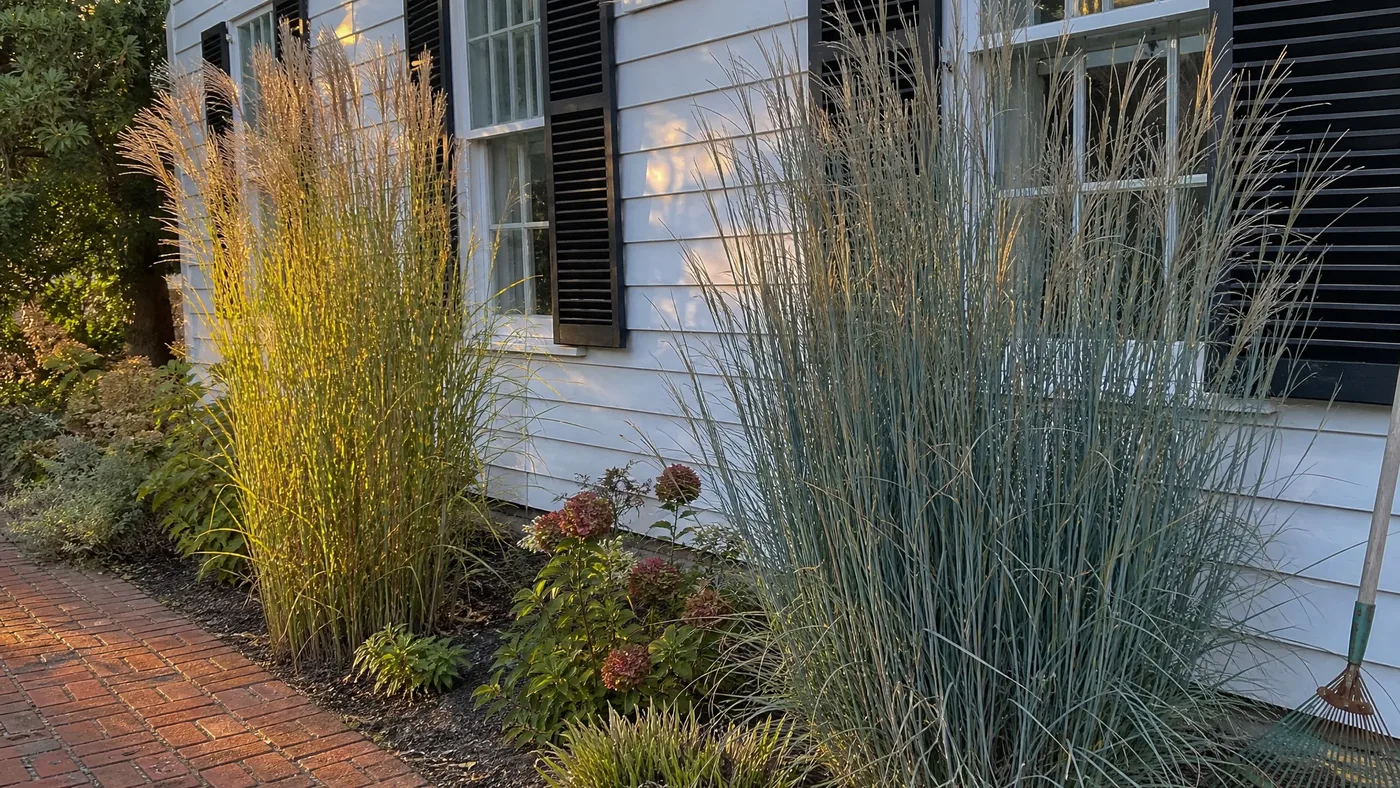
Porcupine Grass vs Heavy Metal Switchgrass: Height and Color
Every September a neighbor's blue-gray switchgrass stood stiff as a fence post while ours at the corner bowed and rustled, and the two households argued about it over the hedge. It is the same argument we hear from customers, with the names attached: Porcupine Grass (Miscanthus sinensis 'Strictus') on one side and 'Heavy Metal' switchgrass on the other.
Both are upright and easy, and both reward you for planting them and leaving them alone. They are not interchangeable, though. The wrong pick leaves you with a screen that stops short, a narrow bed that gets crowded, or a pot that tips in the first big wind. This guide covers everything you need to know about choosing between them, from a side bed along the fence and a windy corner to a deck pot, a privacy line and a border back.
A Narrow Side Bed Along the Fence
A side bed is a numbers problem before it is a taste problem, and the number that matters is width. Heavy Metal grows 4 to 5 feet tall and 1 to 2 feet wide, with stiff, upright, metallic blue-green leaves, so it fits a strip that would swallow most ornamental grasses.
Porcupine Grass is a vertical clump too, but it is listed at 4 to 6 feet tall and 3 feet wide, and it wants that room.
Why Width Decides the Pick
In a bed 2 feet deep, Heavy Metal slips in beside the fence with room left for a path edge. Porcupine Grass in the same strip will push into the walkway as the clump fills out, since it can take 2 to 5 years to reach full size, and the first season is a poor guide to what you will have in the fourth. Give Porcupine Grass 3 feet or more and it behaves. We would not squeeze it into less.
Height Against the Fence Line
Height cuts the other way. Porcupine Grass foliage runs about 48 to 60 inches, but the flowering stalks carry it well past 6 feet, and Illinois Extension notes that it reaches nine feet in flower. Against a 6-foot fence, that means rosy-plum plumes showing over the top from late summer on. Heavy Metal stays under the fence line and never peeks over.
For a bed less than about 3 feet deep, we choose Heavy Metal. If the bed is wider and you want something to see from the street side, we choose Porcupine Grass. Either way, put the clump at the sunny end of the strip, because a shaded fence line is where both of them struggle.
Porcupine Grass on a Windy Corner Lot
Wind is what started the hedge argument, so it deserves a straight answer. Both grasses are warm-season clumps with stiff, upright habits, and neither needs staking in a sensible spot. Heavy Metal is shorter and narrower, so a gust has less of it to grab.
Porcupine Grass is taller, but it holds a tight vertical column, and Extension writers note that it grows more upright and erect than zebra grass. That is why we point wind-prone customers toward it over looser forms.
What Makes a Clump Bow
Height is leverage, and a 9-foot flowering stalk catches more wind than a 5-foot switchgrass blade. Still, in our rows the clumps that lean are almost always the ones getting too little light. Heavy Metal is the documented case: NC State notes that heavily shaded sites may cause the plant to topple over. Porcupine Grass also prefers full sun, so a corner open to the sky helps either one stand.
Standing Through the Cold Months
Here Porcupine Grass earns its place. Miscanthus is known for silky flower tassels that persist into winter, so the clump keeps a shape against snow and low sun, with the plumes fading from rosy-plum toward silver. Heavy Metal turns amber yellow in fall and then tan, and it stays upright, but you get a column of straw rather than a plume. If you leave either one standing, read our notes on winter care and cutting back.
On a sunny corner, we plant Porcupine Grass for the winter show. On a very exposed lot where the tall stalks worry you, Heavy Metal is the lower-risk choice.
A Hot Deck, a Big Pot, and Porcupine Grass
A pot changes the comparison, because roots in a container dry faster and see more heat than roots in the ground. Both grasses want full sun, so a hot deck suits them, and the difference is how they handle the swings.
Heavy Metal grows well in moist, sandy or clay soil and tolerates both wet and dry conditions, which makes it forgiving when a busy week leaves the pot parched or soggy. That forgiveness is the main reason it wins on most decks.
Porcupine Grass is pickier about moisture. It prefers a moisture-retentive, fertile loam, though it is adaptable and is described as good for wet sites. In a pot that means a mix that holds water and a container large enough to buffer the heat of a sun-baked deck. Our guide to Porcupine Grass in containers covers pot sizes and mixes in detail.
Color and Size on a Deck
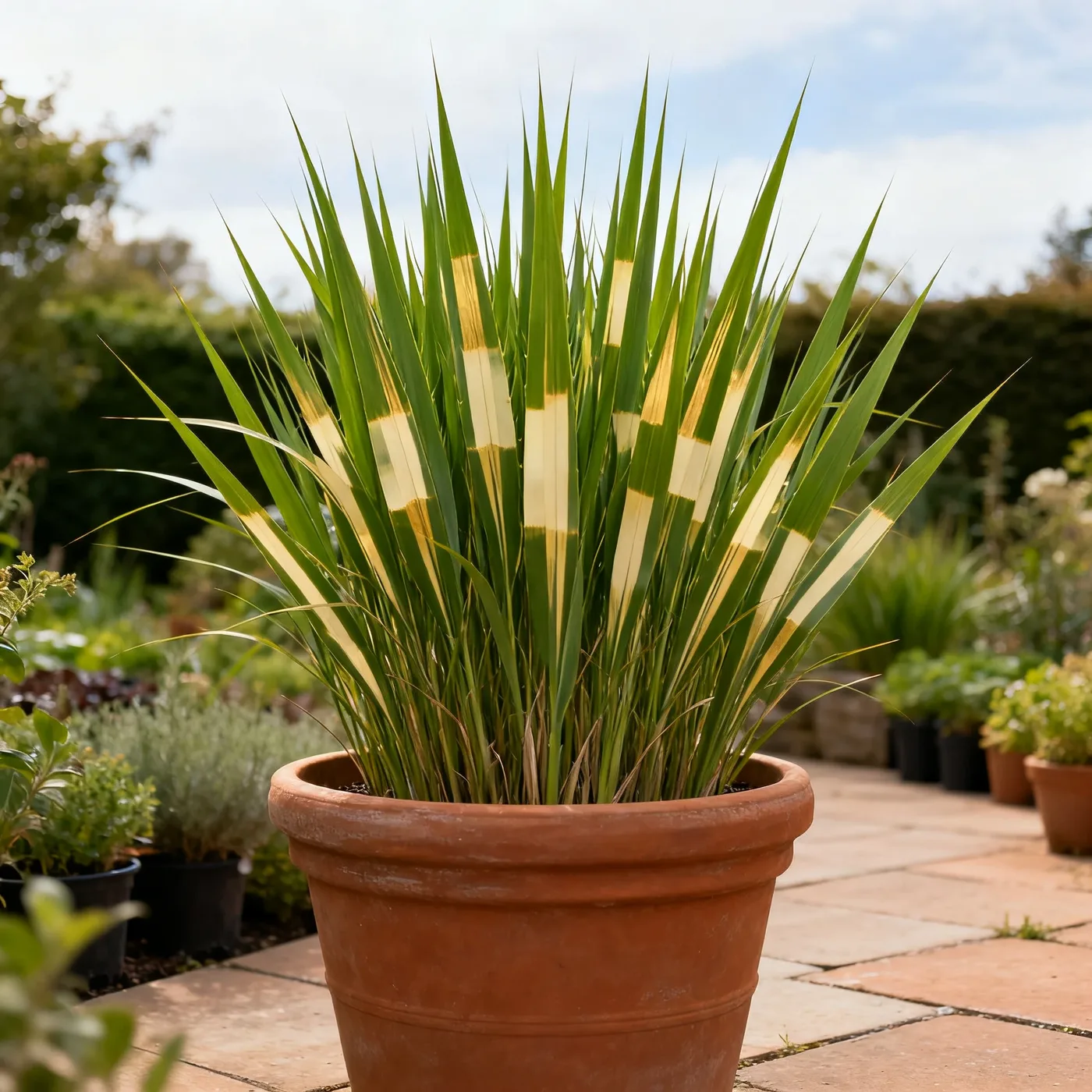
Color is where a deck pot gets fun. Heavy Metal gives you a cool, metallic blue-green that looks calm against warm decking. Porcupine Grass gives you green blades with horizontal yellow bands, a pattern that reads well even at arm's length. Here is how the practical differences stack up:
- Heavy Metal's 1 to 2 foot width fits a pot of ordinary size, and its 4 to 5 foot height sits at eye level when you are seated.
- Porcupine Grass needs the biggest pot you can place, since a mature clump is about 3 feet across and the plumes climb well above 6 feet.
- Pots have less ground insulation than a bed, so check with your local extension service about winter protection. Heavy Metal is hardy to zone 4 and Porcupine Grass to zone 5.
For a deck, we recommend Heavy Metal for most people and Porcupine Grass for those who want a dramatic, tall pot and will water it faithfully.
Screening the Neighbors With Porcupine Grass or Switchgrass
This is the one situation where we do not hedge: Porcupine Grass is the better screen. A screen needs height, width and clumps that fill in side to side, and Porcupine Grass supplies all three. Stalks reach up to nine feet in flower, and clumps about 3 feet wide knit together as they mature. Heavy Metal at 1 to 2 feet wide is a column, so you need many more plants to close the gaps, and it still tops out around 5 feet.
Fall Color Along the Line
A screen is looked at every day, so its fall color matters. Porcupine Grass carries yellow-banded green blades topped with a plume that is rosy-plum and turns to silver in late fall. Heavy Metal goes amber yellow and then tan, which is handsome but quieter. Our page on Porcupine Grass fall color shows what the sequence looks like.
Spacing and a Word of Caution
For a line, set Porcupine Grass on the spacing laid out in our hedge and border spacing guide rather than packing the clumps tight. Crowded clumps lose their shape and make a muddy wall instead of a clean one.
One caution: Miscanthus sinensis is considered invasive in parts of the country, so ask your local extension service about it before you plant a long row. Switchgrass is a prairie native, and that is a real point in Heavy Metal's favor where seeding is a concern.
A Back-of-Border Spot for Porcupine Grass
The back of a border asks for something different from a screen. You want a tall, narrow backdrop that lets the plants in front show off, and you want it to look good without help. Porcupine Grass does that job well because its vertical habit keeps the plumes from spilling over the perennials in front, and its banded blades add a fine stripe behind bolder flowers.
Heavy Metal works in a border too, but at 4 to 5 feet and so narrow, it belongs in the middle rank, where its blue-green leaves can sit between soft pinks and silver foliage. Put it behind a low plant and it is a spire. Put it behind a tall one and it disappears.
Both take clay, sand and damp ground, though Porcupine Grass grows better in fertile soil that holds some moisture. For companion ideas, see our landscape uses and companion plants. In a mixed bed, we use Porcupine Grass at the back and Heavy Metal a step forward.
Porcupine Grass and Heavy Metal in One Table
If you only want the numbers, this table sets the two grasses next to each other using the figures we have been working from, with height, width, color and hardiness in a single view.
| Trait | Porcupine Grass | Heavy Metal |
|---|---|---|
| Height | 48–60 inches in foliage, over 6 feet to 9 feet in flower | 4 to 5 feet |
| Width | About 3 feet | 1 to 2 feet |
| Foliage | Green with horizontal yellow bands | Stiff, metallic blue-green |
| Fall and winter | Rosy-plum plumes turning silver | Amber yellow, then tan |
| Hardiness | Zones 5 to 9 | Zones 4 to 9 |
The pattern is plain. Porcupine Grass is the taller, wider, more ornamental plant, and Heavy Metal is the slimmer, calmer one. Porcupine Grass trades tidiness for drama, and Heavy Metal does the reverse.
Which Porcupine Grass Story Is Yours?
Your yard usually settles the choice before taste does. The table gives our pick for each situation, with the reason in a few words.
| Your Yard | Our Pick | Why |
|---|---|---|
| Side bed under 3 feet deep | Heavy Metal | Only 1 to 2 feet wide |
| Sunny, open corner | Porcupine Grass | Plumes last into winter |
| Deck with a medium pot | Heavy Metal | Forgiving of wet and dry spells |
| Privacy line | Porcupine Grass | Taller, wider, fills in |
| Zone 4 garden | Heavy Metal | Hardy to zone 4, Porcupine Grass to zone 5 |
If your yard fits more than one row, think about what you look at most. A back-of-border or screening job points to Porcupine Grass, and a tight, bright, low-fuss spot points to Heavy Metal. Both love sun and neither wants deep shade, so the real question is how much room and height you have to give.
Why We Would Plant Porcupine Grass Again
Every November, the first hard frost sorts the two out. In our rows, Heavy Metal goes amber and then tan, still standing straight like a fence post. Porcupine Grass is outlined in white, its plumes gone silver and its banded blades catching the low sun. If we could plant only one again, it would be Porcupine Grass, with Heavy Metal kept for a narrow bed or a colder zone.
Choose by width for a tight bed, by height for a screen, and by sun and soil for the rest. Then plant it and leave it alone.
Porcupine Grass
Nursery-grown Porcupine Grass in sizes from Quart, shipped to your door.
From $19.99
Shop Now →Our Porcupine Grass stands in full sun on the farms, rooted in a rich loam that never fully dries out, which is how it earns that crisp banding and upright habit you saw in the rows described here. We are a small business that grows its own top-quality grasses, so every clump comes from our own ground. If you have settled the height and color question, browse what is in stock now.