12 Best Landscape Uses and Companion Plants for Porcupine Grass
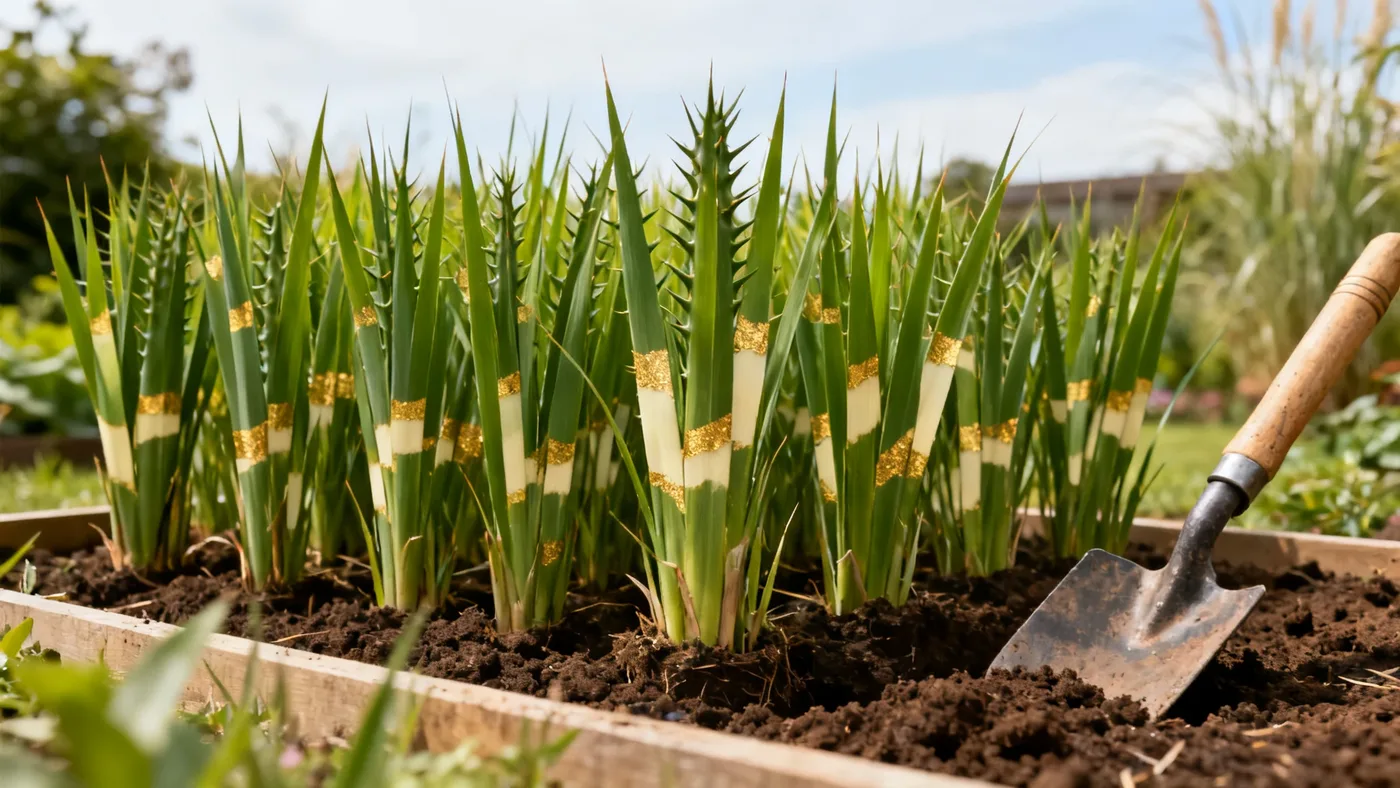
Porcupine Grass (Miscanthus sinensis 'Strictus') stands 5 to 7 feet tall with distinctive horizontal gold-and-cream bands running across its stiff, upright blades. Whether you're designing porcupine grass landscape ideas or revitalizing an existing bed, this warm-season perennial works harder than most grasses in zones 5 through 9. Its rigid, columnar form, coppery-pink plumes in late summer, and year-round texture make it one of the most versatile grasses for both structure and seasonal drama.
The following 12 uses and porcupine grass companion plants show exactly how to use this grass in your garden, with spacing, timing, and practical guidance grounded in real growing conditions.
1. Specimen Plant for Maximum Visual Impact
Porcupine Grass planted alone as a focal point commands attention from early summer through winter. A single clump spreads 3 to 4 feet wide and reaches 5 to 7 feet in height, making it large enough to anchor a corner bed or serve as the centerpiece of a front-yard planting. The upright, almost architectural habit means it won't flop or sprawl even after heavy rain, which sets it apart from broader-leaved ornamental grass landscaping options.
For the strongest effect, position Porcupine Grass where morning sun hits the foliage straight on. This reveals the horizontal striping most vividly and ensures the plumes mature to a silvery-white finish by early fall. In partial shade, the bands fade and stems tend to lean. A specimen plant in full sun requires only light fertilizing in spring with a balanced formula (10-10-10, for example) and consistent moisture during the first growing season until established.
Practical takeaway: Give your specimen Porcupine Grass at least 3 feet of clear space on all sides, and cut it back to 4 to 6 inches above ground in late winter before new shoots emerge. This maintains its shape and removes old foliage that would otherwise shade emerging spring growth.
2. Seasonal Privacy Screen or Informal Hedge
Space three to five Porcupine Grass plants 3 feet apart in a line, and by their second or third season they form a dense, living screen that blocks sight lines while remaining permeable to air and light. This configuration works especially well along property lines or to separate a utility area from your entertaining zone. Unlike evergreen hedges, this screen transforms with the seasons: vivid bands through summer, feathery plumes in late August through October, and persistent tan foliage and seed heads all winter.
Porcupine Grass maintains its upright habit even when spaced for screening, so you won't need to prune it narrow or clip it into a formal shape. A single balanced fertilizer application in spring keeps growth moderate and prevents the soft, floppy stems that come from over-feeding. Water consistently during establishment; once roots are deep (usually by year two), the planting tolerates short dry spells, though it performs best with regular moisture.
Practical takeaway: Plant your privacy-screen row in spring after the last frost in your zone. In zones 5 and 6, allow three seasons for a truly dense screen; in zones 7 through 9, two seasons often suffice.
3. Back-of-Border Backdrop for Shorter Plantings
Porcupine Grass reaches 5 to 7 feet and creates an ideal back layer for mixed borders, particularly when shorter perennials (2 to 3 feet) occupy the middle and ground covers the foreground. The stiff, columnar form frames other plants without casting heavy shade or competing for root space aggressively. Plant it 3 to 4 feet from the middle-layer plants to give both room to mature and air to circulate.
This arrangement handles well in zones 5 through 9, though in cooler zones (5 and 6) expect mature plants to settle closer to 4 to 5 feet rather than the full 7 feet. Position the planting so afternoon sun reaches both the Porcupine Grass and companion plants, reinforcing upright habit and encouraging strong bloom. The coppery-pink plumes (transitioning to silvery-white by September) create a luminous backdrop when backlit by late-summer sun.
Practical takeaway: Pair your Porcupine Grass back-of-border stand with plants that bloom in mid to late summer, such as coneflowers or black-eyed Susans. The tall grass's structure will still be visible after shorter plants decline in fall, extending your garden's visual season.
4. Erosion Control on Slopes and Banks
Porcupine Grass root systems establish quickly and hold soil firmly on slopes, particularly once the clump enters its second growing season. The upright growth habit doesn't sprawl downhill the way some ornamental grasses do, and its moderate water needs make it suitable for slopes that don't receive irrigation. A spacing of 3 to 4 feet between plants creates a tight enough network to stabilize soil while allowing each clump room to develop fully.
For best results on a slope, amend the soil with compost at planting time to improve water retention, then establish a mulch ring around each clump. Once established, Porcupine Grass tolerates the drier conditions typical of south-facing slopes, though spring establishment in consistently moist soil produces stronger root systems. Avoid planting on slopes where water runs off completely after rain; the grass will decline without reliable moisture during its first year.
Practical takeaway: Combine Porcupine Grass on slopes with other groundcovers and smaller companions to create a layered, stable bank that requires minimal maintenance once established. Space plants 3 to 4 feet apart, and plan for year-two improvement as root systems deepen.
5. Large Container or Patio Planting
Porcupine Grass grows well in large containers (typically 20 gallons or more for a mature clump), making it a striking option for patios, terraces, or entryways where in-ground space is limited. Young nursery plants, often sold in quart-sized containers, transplant readily into larger pots. Container-grown Porcupine Grass requires consistent moisture (more frequent than in-ground plantings) and weekly fertilizing during the growing season, since container soil drains nutrients faster.
Position your container planting in full sun to maintain the upright habit and distinct horizontal banding. The clump will eventually reach 3 to 4 feet wide and 5 to 7 feet tall, so choose a location with overhead clearance and sturdy neighboring plantings to absorb wind load. In zones 5 and 6, consider moving large containers against a sheltered wall or into a garage over winter, as potted grass is more vulnerable to freeze damage than in-ground plantings.
Practical takeaway: Use a quality potting mix (not garden soil) and ensure the container drains freely. Plan to divide the clump every 3 to 5 years once it reaches mature size; this rejuvenates the planting and prevents the center from dying out.
6. Winter Interest and Year-Round Garden Structure
Few plants in zones 5 through 9 offer the visual payoff of Porcupine Grass in winter. After frost, the foliage turns tan and beige, and the dried seed plumes persist, catching frost crystals and winter light. Leave the entire plant standing through winter to maximize texture and movement in the sleeping garden, then cut it back to 4 to 6 inches above ground in late winter (March in zone 5, February in zone 9) just before new shoots emerge.
This late-season interest works especially well as a specimen against a dark evergreen backdrop or when backlit by morning sun. The plumes persist through most winters in zones 7 through 9 and typically survive into January in zone 6, adding structure and wildlife shelter long after other perennials have collapsed. The upright habit means the dried plant won't lodge or rot in wet snow the way some grasses do.
Practical takeaway: Don't prune Porcupine Grass in fall. Wait until late winter to cut it back, giving birds and small animals winter nesting and shelter all season, and maximizing your garden's visual interest through the coldest months.
7. Companion with Sedum (Autumn Joy/Hylotelephium)
Pairing Porcupine Grass with Sedum 'Autumn Joy' or a similar tall Hylotelephium creates a late-season powerhouse when exploring porcupine grass companion plants options. The Sedum blooms in pink-to-rust tones from August through October, exactly overlapping with the Porcupine Grass plume display. Position the Sedum 3 to 4 feet in front of the grass, so its 2 to 3-foot height doesn't disappear behind taller stems. Both plants prefer full sun and average, well-drained soil, and both tolerate zones 5 through 9.
This pairing offers three distinct phases: summer structure (upright grass foliage against rounded Sedum foliage), late-summer bloom (rust flowers with coppery plumes), and fall-to-winter persistence (dried seed heads and Sedum flower clusters holding their shape and color). Neither plant requires special feeding; one spring application of balanced fertilizer keeps both moderate and compact. Deadhead the Sedum sparingly (leave some dried flowers for winter interest), and allow the grass plumes to mature naturally.
Practical takeaway: Space the Sedum 3 to 4 feet in front and to one side of the Porcupine Grass to avoid crowding as both mature. Divide the Sedum every 3 to 4 years to prevent center dieback.
8. Companion with Rudbeckia (Black-eyed Susan)
Black-eyed Susans reach 2 to 3 feet in height and flower in bright yellow from July through September, creating a warm contrast against Porcupine Grass's upright, striped foliage. Plant Rudbeckia in drifts or small clusters in front of and to the sides of the grass clump, maintaining 3 to 4 feet of spacing to allow each plant to mature fully. Both thrive in full sun and zones 5 through 9, and both tolerate moderate drought once established.
The combination offers an extended bloom season (Rudbeckia blooms ahead of the Porcupine Grass plumes) and strong visual contrast. Yellow flowers against green-and-gold striped foliage create a cohesive, warm palette. Rudbeckia self-seeds readily, which can fill in gaps if desired or be managed by deadheading spent flowers. The Porcupine Grass plumes arrive just as Rudbeckia flowers begin to decline, keeping the display continuous into fall.
Practical takeaway: Deadhead Rudbeckia flowers throughout bloom season to encourage more flowers and tidy the planting. In late fall or early spring, let a few flowers go to seed to fill gaps naturally, or divide overcrowded Rudbeckia every 2 to 3 years.
9. Companion with Echinacea (Coneflower)
Coneflowers in pink, purple, or white complement Porcupine Grass beautifully, blooming in overlapping waves from July through September. Coneflowers mature 2 to 4 feet tall depending on variety, so choose mid-range cultivars (2.5 to 3 feet) to avoid overwhelming shorter companions while staying well clear of the grass canopy. Plant groups of three to five Echinacea plants 2 to 3 feet apart in front of the Porcupine Grass.
Both plants thrive in zones 5 through 9 and full sun, prefer well-drained soil, and tolerate dry conditions once established. The contrast of cone-shaped flowers against upright, striped grass foliage creates visual interest from multiple angles. Like Rudbeckia, Echinacea blooms peak just before Porcupine Grass plumes mature, so deadheading spent coneflowers tidy the early-season display without cutting short any plume development above.
Practical takeaway: Leave some Echinacea seed heads standing through fall and winter for birds and visual interest. Divide congested clumps every 3 to 4 years in early spring, just as new shoots begin to emerge.
10. Companion with Aster
Aster varieties bloom in late August through October, exactly synchronized with Porcupine Grass plume emergence. Dwarf and compact Aster cultivars (1 to 2 feet) pair well in front of and around the grass clump, while taller varieties (3 to 4 feet) work alongside if spaced 4 to 5 feet away. Both Aster and Porcupine Grass prefer full sun and average moisture, and both handle zones 5 through 9 reliably.
The pairing creates a strong fall display: clusters of small aster flowers in pink, purple, or white against the silvery plumes of grass. Aster also provides late-season nectar for migrating pollinators and beneficial insects. Since bloom timing is nearly identical, neither plant fades while the other is at peak, creating a unified, long-lasting fall feature. When using porcupine grass in the garden this way, you extend the ornamental season into October and beyond.
Practical takeaway: Choose Aster varieties rated for your specific zone, as some are zone 6 or 7 only. Plant groups of three to five Aster plants 2 to 3 feet apart, and divide overcrowded clumps every 2 to 3 years to maintain vigor.
11. Pairing with Other Ornamental Grasses
Combine Porcupine Grass with shorter or finer-textured grasses to create layered, movement-rich plantings as part of ornamental grass landscaping. Panicum (switchgrass) varieties reach 3 to 5 feet and flower in late summer, creating a softer texture contrast with the stiff Porcupine Grass blades. Schizachyrium (little bluestem) tops out around 3 feet with fine foliage and reddish fall color, offering a textural and chromatic counterpoint. All thrive in zones 5 through 9 and full sun, and spacing of 3 to 4 feet between clumps prevents crowding.
This grass-on-grass approach emphasizes movement, texture, and seasonal color shifts without competing for visual attention from flowers. Both Panicum and Schizachyrium tolerate drier soils than Porcupine Grass prefers, so pair them in well-drained areas and water Porcupine Grass slightly more frequently if needed. The combination creates a naturalistic, meadow-like feel while remaining compact enough for residential landscapes.
Practical takeaway: Combine these grasses in groups of three to five plants for strongest visual impact. Cut all grasses back to 4 to 6 inches in late winter, and allow the dormant planting to create winter interest before spring regrowth.
12. Mixed Border with Pollinator-Adjacent Plantings
Porcupine Grass anchors mixed borders that also include flowering perennials, shrubs, and groundcovers, creating a framework that benefits the entire planting. The stiff, upright form prevents sprawling and provides vertical punctuation, while its moderate water and fertilizer needs keep the whole border from becoming overfed and weak. Combine it with summer bloomers (Rudbeckia, Echinacea), late bloomers (Aster, Sedum), and evergreen shrubs for year-round presence and four-season interest.
Position the Porcupine Grass toward the back or edges of the border, ensuring all components receive full sun. Space plants according to mature size (3 to 4 feet for the grass, 2 to 3 feet for most companions), and apply a single balanced fertilizer in spring. This approach creates a self-sustaining planting that requires minimal intervention beyond dormant-season cutting and occasional division. It's an excellent way to maximize porcupine grass landscape ideas while building a cohesive garden.
Practical takeaway: Create a rough sketch of your border showing positions, mature sizes, and bloom times before planting. Group plants by water and sun needs to simplify maintenance, and allow the first season for establishment before assessing density or fullness.
Quick Reference: Porcupine Grass Landscape Uses and Companion Combinations
| Use or Companion | Bloom Time | Spacing | Height | Zones | Key Notes |
|---|---|---|---|---|---|
| Specimen Plant | August–October | n/a | 5–7 ft | 5–9 | Full sun for best foliage bands; cut back late winter |
| Privacy Screen | August–October | 3 ft apart | 5–7 ft | 5–9 | Takes 2–3 seasons to densify; tolerates dry spells when established |
| Back-of-Border | August–October | 3–4 ft from companions | 5–7 ft | 5–9 | Reaches 4–5 ft in zones 5–6; provides luminous backdrop |
| Slope Erosion Control | August–October | 3–4 ft apart | 5–7 ft | 5–9 | Establish in moist soil first year; tolerates drier conditions after |
| Large Container | August–October | One plant per 20+ gal | 5–7 ft | 5–9 | Needs consistent water; move to shelter in zones 5–6 winter |
| Winter Interest | Persists December–February | n/a | 5–7 ft (dried) | 5–9 | Cut back in late winter only; excellent shelter for wildlife |
| + Sedum 'Autumn Joy' | August–October (both) | 3–4 ft front distance | Grass 5–7 ft, Sedum 2–3 ft | 5–9 | Complementary rust tones; divide Sedum every 3–4 years |
| + Rudbeckia | July–October (overlapping) | 3–4 ft front distance | Grass 5–7 ft, Rudbeckia 2–3 ft | 5–9 | Yellow flowers contrast with striped foliage; Rudbeckia self-seeds |
| + Echinacea | July–October (overlapping) | 2–3 ft front clusters | Grass 5–7 ft, Echinacea 2.5–3 ft | 5–9 | Leave seed heads for birds; divide every 3–4 years |
| + Aster | August–October (synchronized) | 2–3 ft front clusters | Grass 5–7 ft, Aster 1–4 ft | 5–9 | Peak bloom timing nearly identical; choose zone-appropriate cultivars |
| + Other Ornamental Grasses | Late summer (both) | 3–4 ft apart | Grass 5–7 ft; companions 3–5 ft | 5–9 | Panicum, Schizachyrium offer texture contrast; all cut late winter |
| Mixed Border Feature | May–November (layered) | Varies by companions | 5–7 ft tall structure | 5–9 | Pair with Rudbeckia, Echinacea, Sedum, and shrubs for 4-season interest |
For detailed care instructions on watering, pruning, fertilizing, and dealing with common issues, see the complete Porcupine Grass growing guide.