Is Porcupine Grass Safe for Dogs and Cats? Toxicity and Sharp Blades
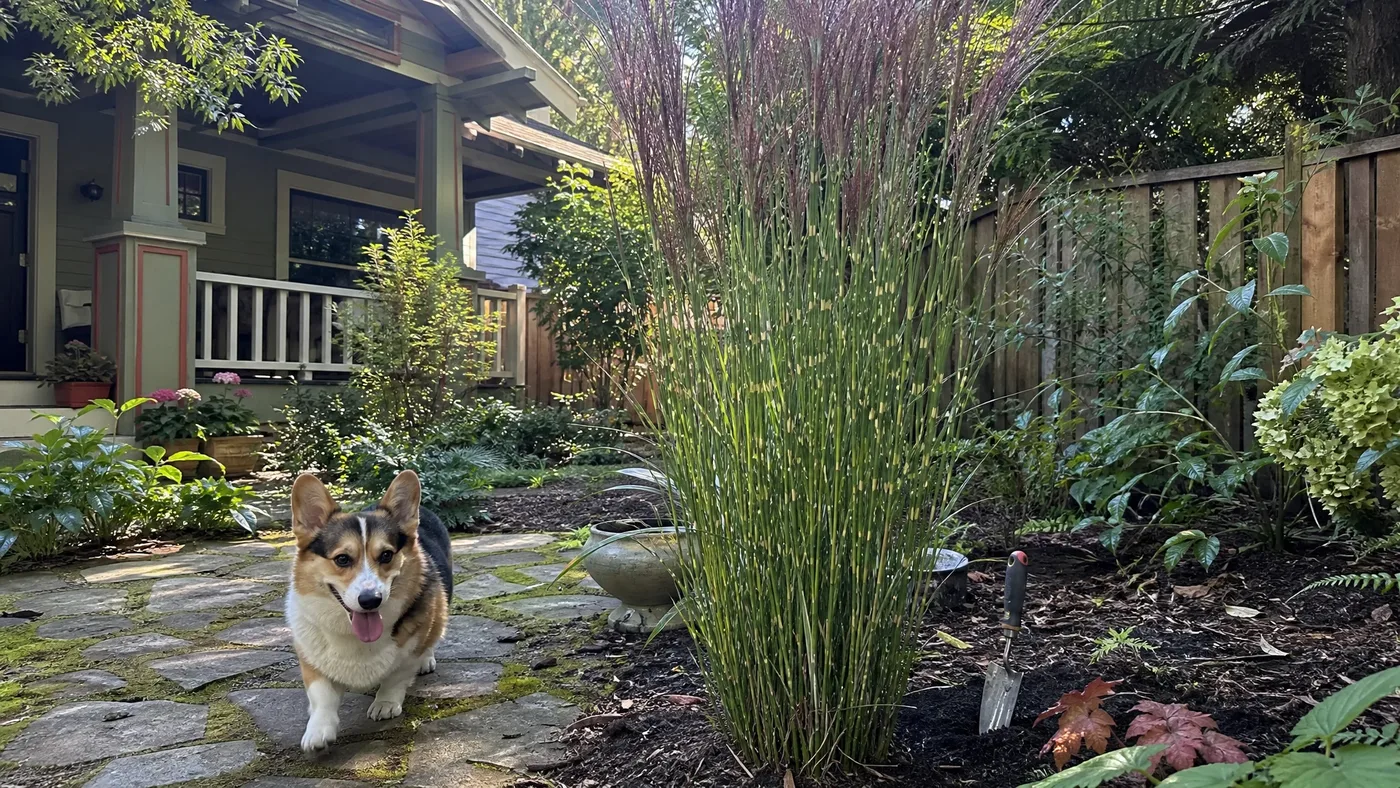
Picture your dog tearing across the lawn past a six-foot fountain of grass. If that clump sits right on the racetrack, it gets flattened, snapped or dug out within a season, and the plant takes the blame for what was really a placement problem. Owners often decide against an ornamental grass for exactly this reason, or yank it after one scratched nose.
The question we hear most is whether Porcupine Grass is poisonous. For this plant the real concern is cuts, not poison, so where you put it matters more than anything else you do. Read on for how to map your pet's routes, where the clump belongs, what we know about toxicity, what a nibble looks like, how the blade edges can scratch, and what to do when one does.
Start With the Whole Yard and Where Pets Roam
Before you pick a spot, spend a few days watching your pet's routes the way you would watch traffic. Dogs wear the same lines again and again: along the fence, from the back door to the gate, and in a loop around whatever they find most exciting. Those lines show you where a tall clump would be brushed against daily and where it would never be touched.
Play zones need the most thought. A ball thrown across the lawn sends a dog at full speed after it, and that dog is not looking at the border. Anything planted along the far edge of a throwing lawn takes the impact. Mark those spots as "keep clear" on your mental map and look elsewhere for the grass. A stiff, upright plant holds its ground, which is lovely in a border and unforgiving on a racetrack.
Cats Choose Different Spots
Cats are less predictable, but they are creatures of habit too. They cut through beds, settle in sunny corners and squeeze through gaps between plants. A clump with a clear, open base is easy for a cat to walk around. A tight planting with no gaps sends them looking for another way through, often straight across your other plants.
Shared Space Counts Too
Think about patios, gates and the places where children and pets mix. Those are the busiest zones in most yards, and they are where you want the clearest paths. Quiet corners, the back of a border and the far side of a bed are where tall grass does best and pets rarely go. Draw the map first, then choose the plant spot from what is left over.
Where Porcupine Grass Fits in a Pet Yard
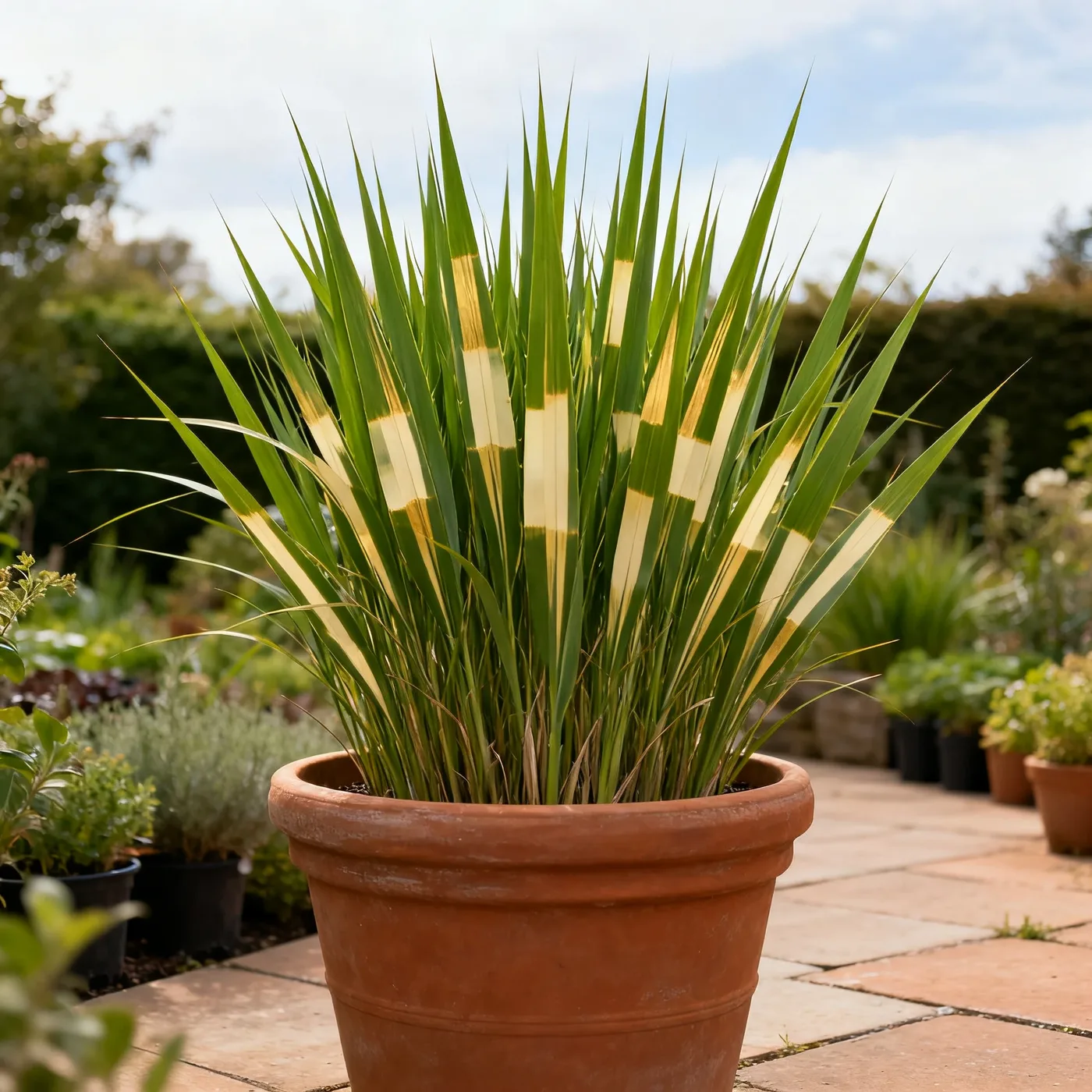
Once you know the routes, narrow down to the clump itself. Porcupine Grass is a narrow, upright grass, and the University of Georgia notes it grows more upright and erect than zebra grass. That tight habit means it takes up little ground, but the blades climb well past six feet in flower, so the danger band is face height, not the base. If you want to know how it looks at full size, our description of the plant covers it.
Distance does most of the work. Set the clump back from paths and play lawns so a pet running past cannot brush the blades, and leave a margin of mulch or low plants between the grass and any route. Because the stems stay upright instead of arching outward, the clump does not reach across that margin the way a floppy grass would. If you are shopping with pets in mind, tell us about your yard and we will talk through placement with you.
Edging and Sightlines
A low edge makes a real difference. A strip of lower plants, a stone border or a mulch band tells a dog where the bed ends and keeps your pet out of the stems. Our landscape uses and companion plants guide has ideas for low partners that work in front of this grass.
Sightlines matter because a full clump is a solid screen. Keep it from blocking the view of your gate, your patio steps or the spot where you like to keep an eye on the dog. A few points to check before you dig:
- Stand where you usually watch your pet and make sure the clump does not hide the gate or a dog run.
- Keep the grass behind a lower layer of plants, not directly beside a path.
- Leave room around each plant using the spacing guidance for borders and hedges, so you are never squeezing between stems to mow or weed.
Is Porcupine Grass Poisonous to Cats and Dogs?
No. Porcupine Grass is not a toxic plant for cats or dogs, and that goes for the cultivar as much as the species. Despite the name, it carries no spines or thorns. The "porcupine" comes from the stiff, upright, banded blades that bristle out of the clump, and the only sharp part is the fine toothing along the blade margins. What you are protecting against here is injury, not poison.
Customers often ask us whether a pet that chews it needs a trip to the vet, and in nearly every case it does not. We do not treat this as medical advice, though. If your dog or cat has eaten a large amount, seems unwell, or you are unsure what they actually ate, call your veterinarian or a pet poison hotline and describe what you saw.
The grass itself is rarely the culprit when a pet falls ill after a garden session. Plant food, slug bait, de-icers and some mulch products are far more likely to cause trouble, so read the labels on anything you spread in the same bed. Porcupine Grass has no major pest or disease worries, so it never needs spraying, which keeps the chemical side of a pet yard simple.
Deer and rabbits tend to leave it alone, which says something about how unrewarding the foliage is to chew. A pet that tries a blade usually reaches the same verdict.
What Happens After a Pet Nibbles Porcupine Grass
Dogs and cats chew grass of all kinds, and Porcupine Grass is no exception. The blades are tough and stiff, so most pets try one, find it unrewarding and walk off. If a pet does swallow some, the usual result is either nothing at all or a mild stomach upset, such as a bout of vomiting or a loose stool. Both tend to pass quickly, and a bit of quiet and fresh water is usually all it takes.
Watch for anything that goes beyond that. Repeated vomiting, a pet that stops eating, seems unusually tired, or paws at its mouth or throat deserves a call to your vet. Long, tough blades can also catch in the mouth, so look inside if your dog is gagging or drooling after a chew. A stiff blade that lodges is a mechanical problem, not a poison problem, and it is the vet's job to remove it.
Puppies and young cats are the most likely to mouth the plant because they explore everything. If yours is a chewer, plant the grass out of reach for a season while the habit passes, or fence it with a low edge. That is far easier than retraining a pet that has found a new toy, and the clump will not mind waiting for the right spot.
Down at the Blade Edge: Cuts and Scratches
This is where the real hazard sits. The blade margins of Miscanthus are finely toothed, which NC State Extension describes as inconspicuously serrulate, and you can feel it when you run a blade through your fingers the wrong way. Most arching grasses give way when something pushes against them. Porcupine Grass does not, because it stands straight and stiff.
Stiff Blades at Shoulder Height
While the clump is growing, the blades are firm and upright, and it grows over six feet tall, reaching nine feet in flower. A dog that runs through the edge of the clump meets a wall of edged blades at about shoulder and face height. Most of the time that means a quick brush and a thin scratch on the coat or nose.
Dry Stems at Eye and Nose Height
The harder time comes after growth stops. Miscanthus is known for flower tassels that persist into winter, and the dry stems and blades stay standing, brittle and sharp. They catch at eye and nose height on small dogs and cats, and a pet that dives into the clump after a ball or a squirrel can take a stem in the face.
The fix is timing and distance. Cut the clump back in late winter or early spring and keep it out of your pet's running zone until you do. Wear gloves and sleeves when you cut, because the same edges that scratch a nose will scratch your forearms. Our winter care guide explains why we leave the stems up for the cold months.
First Aid for Porcupine Grass Scratches
Most grass scratches are minor. In our rows, we hear far more about a thin red line on a nose or a belly than anything worse. The approach is the same as for any small surface scratch. Rinse the area with clean, lukewarm water, pat it dry with a clean cloth, and keep your pet from licking or pawing at it while it closes. We are growers, not vets, so treat the table below as general guidance and ask your vet about anything that worries you.
| What you see | What to do |
|---|---|
| A thin surface scratch, little or no bleeding | Rinse with clean water, pat dry and watch it for a day or two. |
| A deeper cut or bleeding that does not slow down | Apply gentle pressure with a clean cloth and call your vet. |
| Redness, swelling, warmth or discharge later | Book a vet visit, because the cut may be infected. |
| Squinting, tearing or a pet pawing at an eye | See a vet the same day and do not rub or flush hard. |
Eyes are the exception to the wait-and-see rule. A stiff stem tip can scratch the surface of the eye even when the rest of the pet looks fine, so any squinting or watering after a run through the clump needs a professional look. Check long-haired dogs by hand, because a fine cut can hide under the coat on the chest, belly or inside the legs.
If your pet keeps coming back with scratches from the same spot, move the plant or edge it more firmly. That is a placement problem, and it will not fix itself.
A Pet-Friendly Yard With Porcupine Grass in It
Here is the settled picture. Porcupine Grass is not poisonous, a nibble does little harm, and the blade edges are the only real hazard, which you manage with placement. Keep the clump back from play lawns and paths, edge the bed so your pet knows where it ends, and cut the dry stems down in late winter. Do that and the grass stays upright, the dog runs freely and nobody gets a scratched nose.
A little placement thought keeps pets and plant both happy, and you do not need to give up a striking vertical accent to get a safe yard. Set it back, edge it and then leave it alone to do its job.
Porcupine Grass
Nursery-grown Porcupine Grass in sizes from Quart, shipped to your door.
From $19.99
Shop Now →Porcupine Grass does best on our farms with plenty of sun and a rich loam that keeps its moisture, which is how we raise the clumps we sell. We are a small business that grows top-quality grasses on land of our own, and we like seeing a plant placed thoughtfully for pets as much as for looks. When you are ready to plant your pet-friendly bed, we would be glad for you to take a look at what we have.