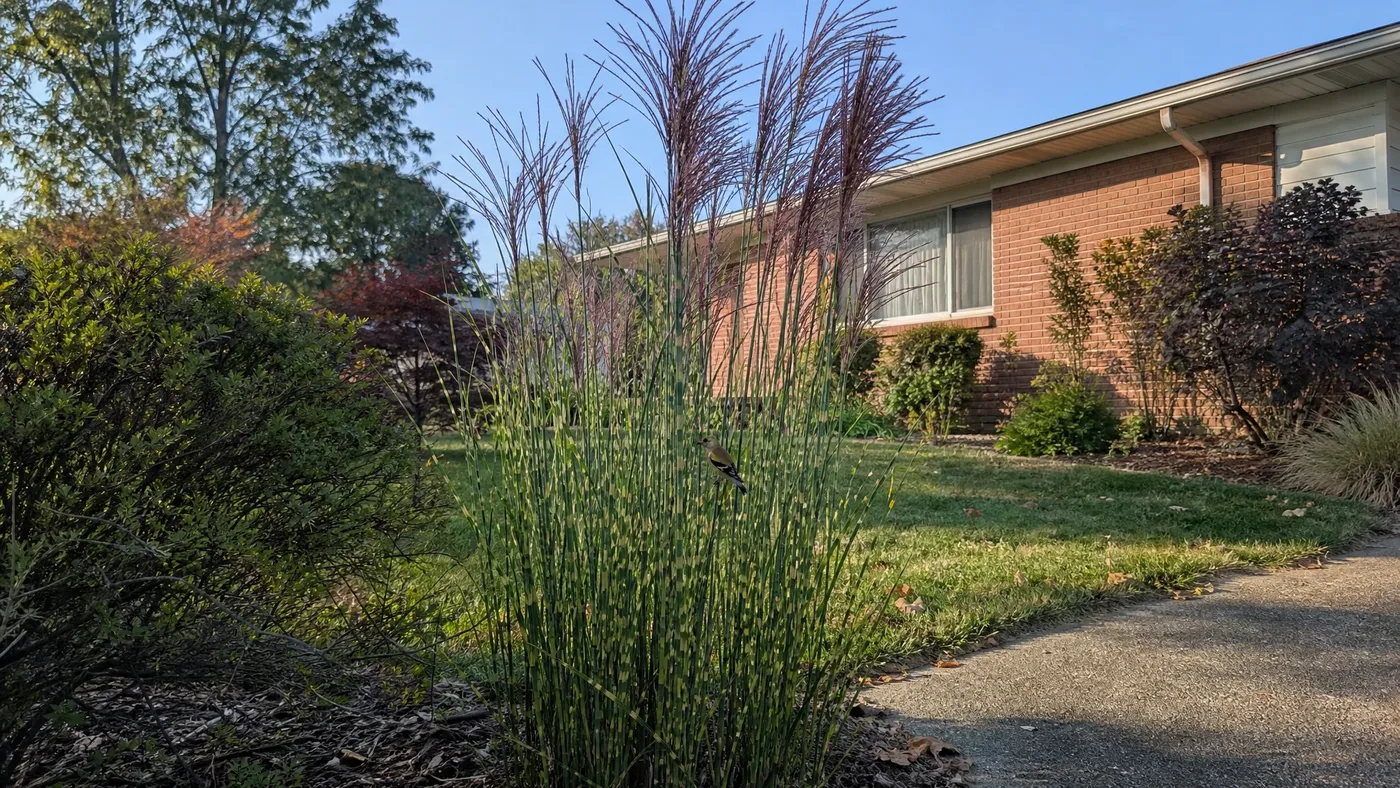
What Does Porcupine Grass Look Like?
Walk a meadow edge in late summer and one silhouette stops you before any detail is clear: a stiff, narrow column of grass standing straight while everything around it leans and sprawls. Many people assume any banded Miscanthus must be zebra grass, with its fountain of arching blades. Porcupine Grass doesn't behave that way, and the difference shows from across the lawn.
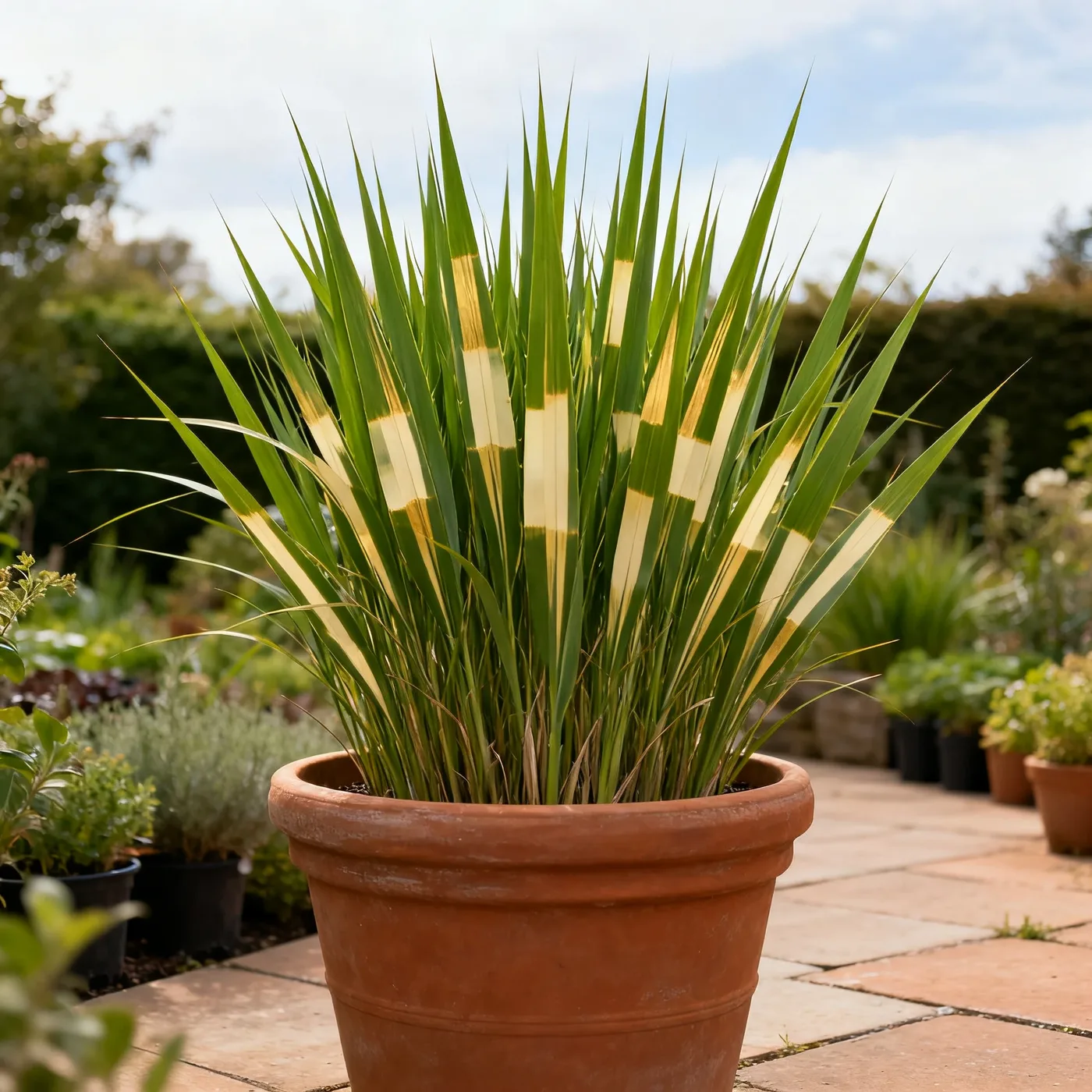
This article talks about how to identify Porcupine Grass (Miscanthus sinensis 'Strictus') and answers the questions customers ask us most. Read on to learn what to carry into the field, how tall and how upright the clump stands, what the banded blades and rosy plumes look like up close, who visits the plant, and which look-alikes to rule out. Get these traits right and you can name this grass from a photo.
Gear for Identifying Porcupine Grass in the Field
You don't need much to confirm this grass, and what you carry matters less than when you look. A short kit and good light settle the question faster than any photo comparison. Put the effort into timing, because a plant seen at the wrong hour or in its first year can pass for several other grasses.
The Short Kit
Four items cover it, and each one answers a specific question about the plant in front of you.
- A tape measure long enough to reach well over your head, since a mature clump in flower stands taller than most people.
- A hand lens for the blades, where the identifying detail is small and sits right on the surface.
- A phone camera, used first from well back to capture the whole outline and then up close on a single blade.
- A notebook for the date and the light, because both change how the plant looks.
Season, Hour and Plant Age
Go in late summer, when this cultivar flowers and the plumes stand open above the foliage. Early morning or late afternoon is best, when low sun rakes across the clump and makes the banding easy to read. Midday glare flattens everything into a green blur.
Age matters too. This species takes 2–5 years to reach its ultimate height, so a recently planted clump will look smaller and thinner than any description. Judge the bands and the stance first, and give the size time to catch up.
A Tape Measure for Height and Clump Shape
Measure the foliage first and ignore the plumes. Missouri Extension puts the mature leaf mound at 48 to 60 inches, which is 4–5 feet, with blades up to half an inch wide held fairly upright. Then measure to the top of the plumes. They push the plant past 6 feet, and Illinois Extension says it reaches 9 feet in flower. Two honest numbers describe one plant.
That explains why references disagree. One University of Florida publication lists it at 6 to 8 feet tall, while other listings stop at 4–6 feet. They are counting different things, foliage versus plumes. If your tape reads 4–5 feet of leaf and 6 or more with plumes, you have the right proportions.
Reading the Clump Shape
Stand back and look at the outline. Porcupine Grass makes a stiff, narrow vase, about 3 feet wide in the garden listings we trust, and the blades arch only toward their tips. Zebra grass splays much wider as its leaves weep. If you can imagine a straight line up each side of the clump and the blades barely stray from it, you're looking at the upright habit that gave this cultivar its name, 'Strictus'.
Width is a useful third number. The species as a whole spreads 4 to 6 feet according to North Carolina State, so a clump that stands 6 feet or more while keeping to roughly 3 feet across is narrow for its height. That slim footprint is part of why the plant reads as a column rather than a mound.
Hand Lens on Banded Blades and Midribs
This is the decisive check. Hold a blade flat, set the lens on it and look at how the color is arranged. Porcupine Grass carries bright yellow bands that run across the blade, repeating along its length like the bands on a porcupine quill. Missouri Extension singles out this bright yellow, horizontal variegation, and the quill comparison is where the common name comes from.
One of the most common questions we get is whether the bands are stripes. They aren't. A stripe runs along the blade, parallel to the midrib. These bands cross it, so if you trace the midrib with the lens, you'll watch the green break into yellow at intervals and then pick back up. Some write-ups say vertical stripes, and one blade under the lens settles it.
Color and Texture of the Blade
Between the bands the blade is green, and in cool or shaded light it can read slightly blue-green. Blades are narrow, never more than half an inch across, and they stand stiff instead of flopping. Take care running a thumb along the edges, which are sharp. Check blades from the middle and the outside of the clump. The banding should repeat on all of them.
Late Light and the Rosy Plumes of Porcupine Grass
Plumes open in late summer, and Illinois Extension describes a rosy-plum color that turns to silver in late fall. North Carolina State's listing adds reddish fan-shaped seed heads. Low sun does the rest. Back-lit in late afternoon, the plumes glow warm and each fan separates from the next, which is why we tell people to look at the plumes early or late and never at noon.
The flower heads rise 1–2 feet above the foliage, so the plant carries two layers at once: a banded leaf mound below and rosy fans above. That layering is part of the identification. A tall grass with banded blades but no second tier of plumes in late summer is either young or something else.
How the Color Fades
Expect a sequence, not a single color. The plum-rose fans open first, then soften toward silver as the season runs out. Timing shifts with your climate and the weather, so our guide to bloom time and plume color covers how long each stage lasts. Silver plumes in early winter don't mean a different grass. They mean this one has finished its color.
Don't be thrown if your plumes arrive later than a label suggests. Sources for the species put flowering anywhere from August through October, and Purdue describes reddish-pink plumes appearing in October. A clump still in bud in early September is on schedule in a cool summer.
Wildlife Visiting a Porcupine Grass Clump
Watch who uses the plant and you learn something about its shape. This is a non-native grass, sold as Chinese or Japanese silver grass, names that point to its East Asian home, so it doesn't play the role a prairie native does. What it offers is structure. The stiff, upright blades hold their form, which gives birds a place to perch and small animals cover at the base of the clump.
Insects tend to treat it quietly. The University of Arkansas calls maiden grasses essentially immune to disease and insect problems, so chewed leaves are no help in identification. In our rows, we often see spiderwebs strung between the upright blades on cool mornings. Deer generally leave it alone as well.
Native-range context helps you read the plant, too. Michigan State's invasive species fact sheet says the species grows in open, sunny places and does best on moist but well-drained soils. A clump leaning toward light or thinning out in deep shade is telling you it was built for open ground, which is also why a healthy one stands so straight.
Winter Cover and a Caution
Colorado State notes that Miscanthus flower tassels persist into winter, and the clump keeps its outline through snow, which is when birds and small creatures lean on it most. Leaving it standing is the kinder habit for wildlife, and our winter care guide explains when to cut it back. Some states treat Miscanthus sinensis as invasive and advise sterile cultivars, so check with your local extension service before planting near open natural areas.
Look-Alikes to Rule Out
Three grasses get confused with this one more than any others, and each gives itself away on a single trait. The hardest is zebra grass, because it carries yellow bands too. Missouri Extension calls zebra grass more graceful and arching, and UGA's Field Report says Strictus grows more upright and erect. The bands match, so the posture decides. Our zebra grass comparison goes deeper.
Missouri Extension also calls zebra grass a bit less winter hardy. In a cold garden, a banded clump that came through the winter and stands ramrod straight is far more likely to be Porcupine Grass. Treat that as a hint and let the posture and the bands make the call.
This table sorts the three by what they share with Porcupine Grass and the trait that rules each one out.
| Look-alike | What it shares | The trait that rules it out |
|---|---|---|
| Zebra grass | Yellow bands across the blade | Leaves droop and weep toward the ground, 6–7 feet tall, a rounder fountain |
| Gracillimus maiden grass | Same Miscanthus sinensis clump of narrow blades | Plain green blades with no bands at all |
| Heavy Metal switchgrass | Stiff, upright stance | No bands, blue-toned blades, and a different genus |
If you're still unsure after the table, our comparisons of Gracillimus maiden grass and Heavy Metal switchgrass lay out size and color side by side.
Porcupine Grass Recognized in Five Checks
Run these in order on any unfamiliar grass, with the lens and the tape in hand. The sequence matters because the first check eliminates most candidates at once and the later ones confirm. If a plant fails the first or second, stop there and move on to the look-alikes.
- Bands. Under a lens, yellow bands cross the green blade rather than running along it.
- Stance. The clump rises as a stiff, narrow vase with blades arching only at the tips, never a weeping fountain.
- Height. The leaf mound reads 4–5 feet on the tape, and the plumes carry it past 6 feet.
- Plumes. Late-summer fans open rosy-plum, sometimes reddish, and fade toward silver.
- Winter. Pale, upright blades and tassels stay standing after frost.
Four out of five is a strong match, and the bands break any tie. The same checks work on a photo, as long as one frame shows a single blade up close and another shows the whole outline.
A young plant is the exception. A first-year clump may not flower, and its leaf mound will be short, so lean on checks one and two and come back the following late summer for the rest.
Why Porcupine Grass Is Hard to Mistake
Porcupine Grass identifies itself with a few plain traits: horizontal yellow bands, a stiff upright clump about 4–5 feet in leaf, and plumes that open rosy-plum and fade to silver. Measure, look closely and wait for good light, and the guesswork goes away. Picture the clump in winter light, its pale upright blades still holding the banded outline.
Porcupine Grass
Nursery-grown Porcupine Grass in sizes from Quart, shipped to your door.
From $19.99
Shop Now →Out on the farm, our Porcupine Grass sits in full sun with a fertile loam that holds its moisture, and that is how the horizontal bands and upright clump come in so clearly. Our small team of growers raises top-quality grasses on land we farm ourselves, and we keep a close eye on each plant's look. If the banded form you just read about is the one you want, choose a Porcupine Grass for your own garden.