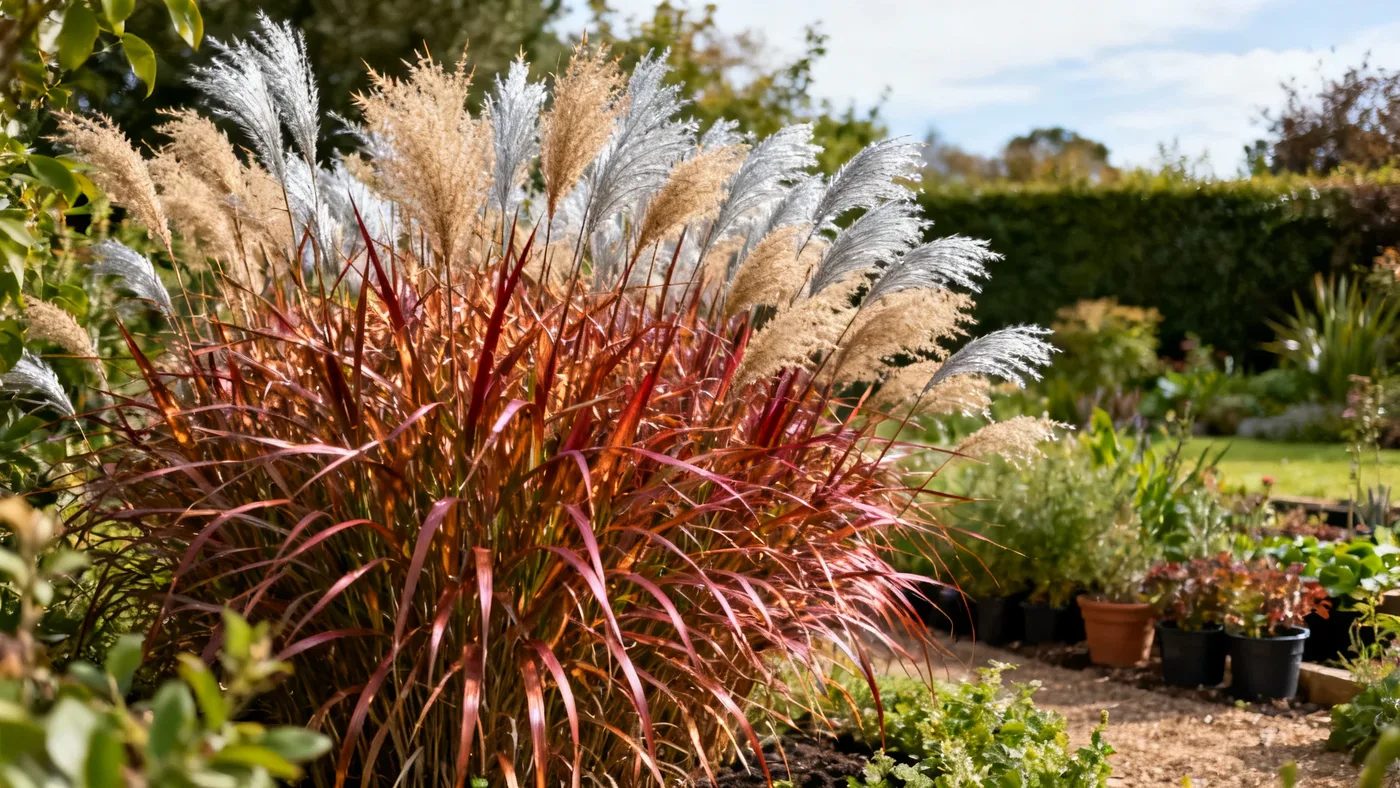
Porcupine Grass Fall Color: What to Expect in Autumn
By late August, Porcupine Grass begins its most dramatic seasonal transformation. The foliage shifts from vibrant green to warm golden tones, and the flower plumes evolve from coppery-pink to silvery-white. For gardeners in zones 5 through 9, this is when your Miscanthus sinensis 'Strictus' becomes a focal point. The dried, persistent texture provides visual interest well into winter, making autumn the plant's finest hour.
When Porcupine Grass Fall Color Begins
Porcupine Grass enters its fall display window from August through October, though the exact timing depends on your location. In zones 5 and 6 (cooler climates), color typically appears by mid-September and peaks through late October. In zones 7 through 9 (warmer regions), the shift may not start until late September or even early October.
The foliage doesn't change overnight. You'll see a gradual fade from the grass's signature green to tan and beige over the course of 3 to 4 weeks. Similarly, the flower plumes start as coppery-pink clusters and slowly mature to silvery-white or tan tones over the same period. This extended transition is part of the charm. It gives you weeks of enjoyment rather than a single peak day.
The Striking Foliage Transformation
Here's what makes Porcupine Grass unique among ornamental grasses in fall: the horizontal banding on each blade becomes increasingly prominent as the base color fades. The grass's irregular gold-to-cream stripes that run across the leaves (not along them) create a multi-toned effect that intensifies as green withdraws.
The foliage height remains impressive throughout autumn. Expect 5 to 7 feet of vertical presence, depending on your zone and growing season length. In cooler zones, plants may stay closer to 4 to 5 feet, but the horizontal striping and upright stiffness still command attention. The tan-to-gold fade takes roughly 3 to 4 weeks from the first color shift to full autumn dress. Unlike many grasses, the dried foliage holds its shape and doesn't become floppy when grown in proper conditions, so the visual impact stays clean and architectural.
Flower Plumes: The Second Layer of Fall Interest
While the foliage undergoes its transformation, the flower plumes tell their own story. Porcupine Grass flowers bloom in late summer through fall, starting as coppery-pink or reddish clusters at the top of the upright stems. These plumes stand well above the foliage, creating a two-tier color display that evolves throughout the season.
By mid to late fall, those coppery tones have matured into silvery-white or tan seed heads. The contrast between faded tan foliage and whitened plumes creates striking visual texture, especially in morning or late-afternoon light. This is when the plant looks most photogenic and draws the eye from across the garden. The plume persistence through winter adds another layer of appeal beyond autumn.
Creating Peak Fall Interest in Your Garden
Full sun is the key to maximizing porcupine grass fall color. The grass grown in partial shade will develop less distinct foliage banding, and stems are more prone to flopping or splitting open at the center. Plant in a spot where the grass receives at least 6 to 8 hours of direct sun daily. This not only enhances fall color; it ensures the upright habit stays strong and architectural.
Pair your Porcupine Grass with companions that peak in fall. Asters, sedums like Autumn Joy, coneflowers, and black-eyed Susans create layered color around the grass's base and extend the season visually. These combinations give the eye multiple focal points and create landscape-scale impact.
Space plants 3 to 4 feet apart for mass plantings. The horizontal stripes and silvery plumes read powerfully when repeated across several clumps. Even a single specimen commands attention as a focal point, but groupings produce stronger visual drama.
Why Your Grass Might Flop in Fall (And How to Prevent It)
One common frustration in fall: Porcupine Grass flopping or splitting open down the center. This happens for three reasons. First, overly rich soil (too much nitrogen from over-fertilizing) produces soft, weak growth that can't hold upright. Second, excessive shade reduces stem strength and causes floppiness even in otherwise healthy plants. Third, heavy rain or wind stress on weakened stems causes the clump to split apart.
Prevention starts in spring and summer. Avoid over-fertilizing. A single balanced application like 10-10-10 in early spring is sufficient. Porcupine Grass is a light feeder and doesn't need much. Keep the plant in full sun so stems develop strength and the upright habit is maintained year-round.
Here's what not to do: do not prune the grass in fall. Cutting it back in autumn reduces your winter interest and invites crown rot into the clump. The dried foliage protects the crown through cold weather. Wait until late winter or early spring, once new shoots emerge, before cutting all foliage back to 4 to 6 inches above ground. This timing protects the plant through the cold months and ensures vigorous spring growth.
The Value of Leaving Your Grass Standing
Porcupine Grass is one of the few ornamental grasses that looks exceptional well past autumn. The dried tan foliage and seed plumes persist through winter, adding texture and movement to the dormant landscape. This isn't just beautiful; it serves wildlife. The standing stems provide winter shelter and nesting material for birds and small animals.
Leave the grass in place through the colder months. It won't deteriorate or rot if left standing. The dried texture softens snow and frost, creating striking visual contrast in winter gardens. You'll also appreciate the way it moves in winter wind and catches morning light.
Spring arrives when it's time to cut. In late winter or early spring, once new shoots begin to emerge from the base, cut all foliage back to 4 to 6 inches above ground. This stimulates vigorous new growth and prepares the plant for another full season of porcupine grass fall color and winter interest.
For a complete overview of caring for Porcupine Grass year-round, check out our full growing guide. It covers everything from planting through spring maintenance.
Fall Color and Timeline Quick Reference
| Timeline | What to Expect | Zones 5-6 | Zones 7-9 |
|---|---|---|---|
| Early color shift | Foliage begins fading green to tan; plumes shift from coppery-pink to lighter tones | Mid-August | Late August to early September |
| Peak fall display | Foliage fully tan/beige; golden bands very prominent; plumes silvery-white; height 5-7 ft | Late September to October | October |
| Winter interest | Dried foliage and tan plumes persist; plant provides wildlife shelter; do not prune | November through February | November through March |
| Spring cutback | Cut all foliage to 4-6 in. above ground once new shoots emerge; before new growth starts | Late February to March | Mid-March to April |
Fall Care Checklist
- Ensure 6-8 hours of direct sun daily for best foliage color and flower plume development
- Avoid heavy fertilizing in late summer; light spring feeding only
- Do not prune or cut back in fall; leave the plant standing through winter
- Watch for flopping after heavy rain in areas with partial shade or rich soil; plant in full sun to prevent
- Enjoy the silvery-white plumes and tan foliage as they mature from August through October
- Leave the dried grass and plumes standing to provide winter shelter for birds and small wildlife
- Plan your spring cutback for late winter/early spring, once new shoots emerge at the base
- Cut all foliage to 4-6 inches above ground before the new growing season fully starts