Why Is My Porcupine Grass Turning Brown?
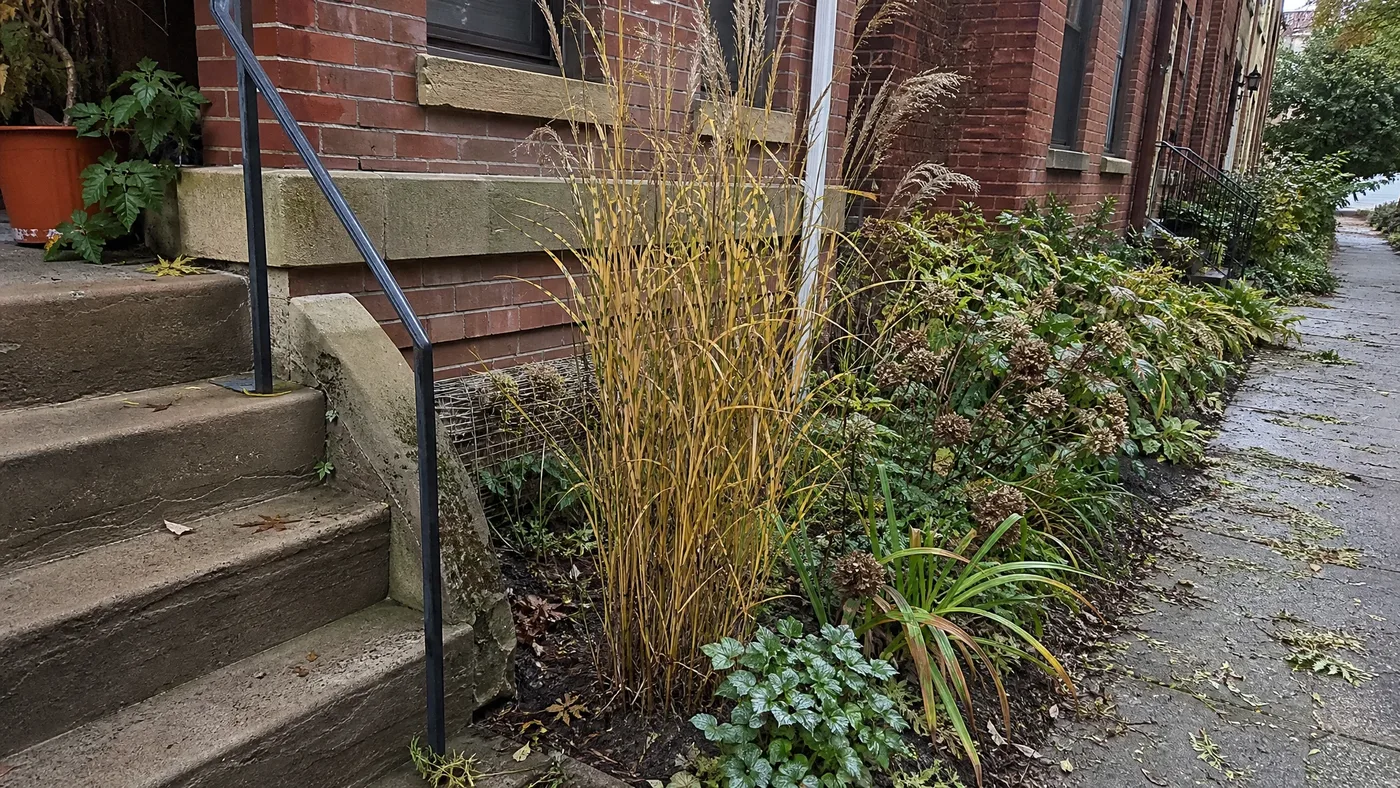
Early October is when the worried messages start. The plumes have opened, the blades are fading, and a clump that stood like a green fountain in July now looks like a mistake. We start with a shrug at the idea that every brown blade is a cry for help. Most of the time the plant is doing exactly what a warm-season grass does.
Still, some browning is real trouble, and treating a healthy clump wastes effort while ignoring a sick one can cost you the plant. We'll walk you through the timing and pattern test, the normal autumn shift, midsummer tip scorch, rust, a hollow center and winter damage, then finish with a ranking of causes and the one check to make before you treat anything.
Is Brown Porcupine Grass Always a Problem?
No, and two questions sort almost every case: when did the color change, and where on the plant is it? Timing tells you whether the clump is keeping to its calendar. Pattern tells you whether the change is even across the whole plant or confined to one spot.
Porcupine Grass is a warm-season grass, so it wakes late in spring, peaks through summer and fades on a schedule. Even tan across every blade in autumn is that schedule. Crisp tips in July, a brown patch in the middle, or a clump still brown in late spring are not.
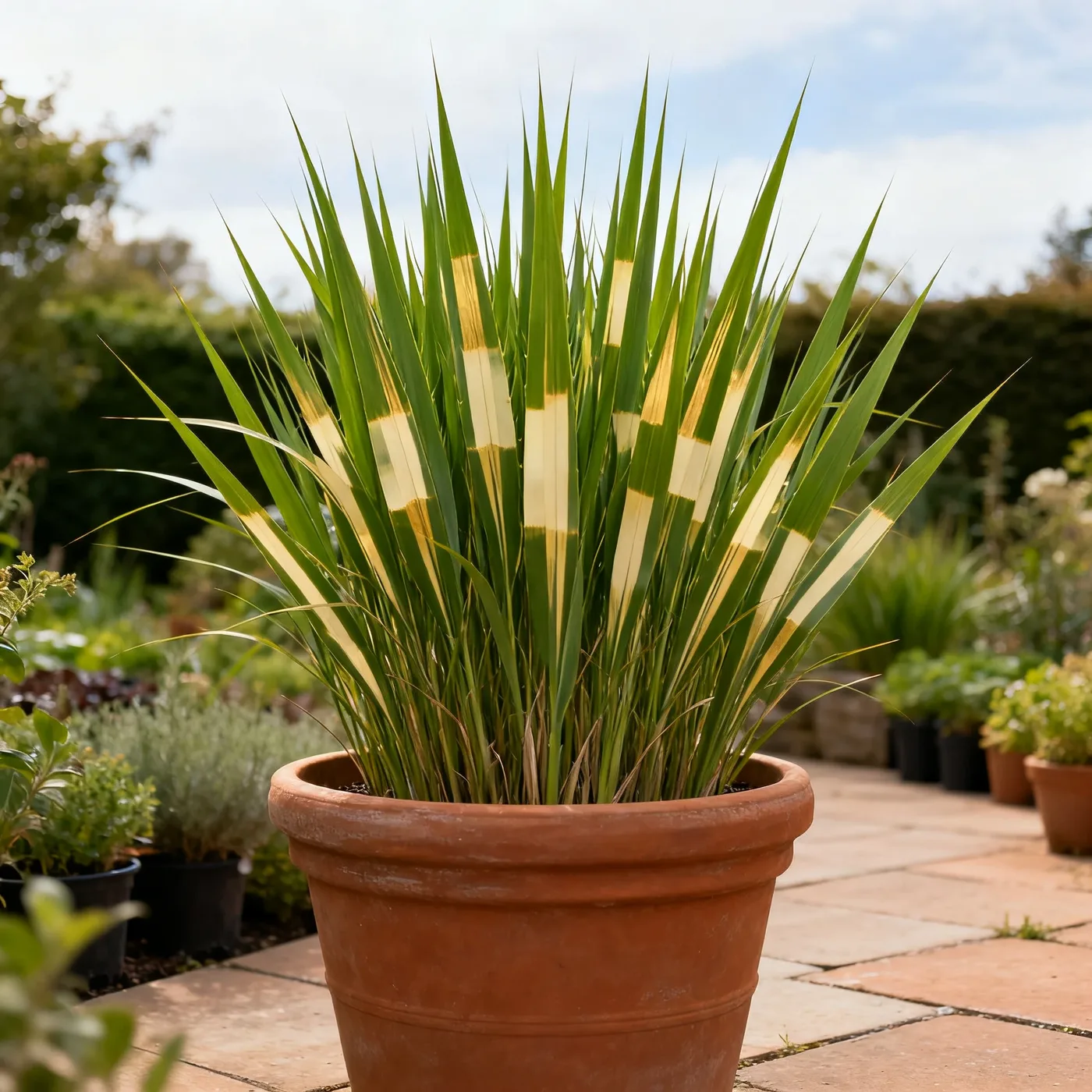
One of the most common questions we get is whether the yellow bands are a sign of sickness. They are not. The horizontal bands across the blades are this cultivar's trademark and stay through summer, so do not read them as early browning.
Before you do anything else, run these checks:
- Note the month. Color change from September onward is expected, while the same change in June or July needs an explanation.
- Look at the whole clump. A uniform shift points to the season, and a localized one (tips, center, one side) points to a cause you can fix.
- Feel the base. Firm, dry stems at the crown are fine, and mushy or collapsing ones are not.
Porcupine Grass Turns Straw and Gold in Autumn
The shift to tan and buff begins in September and moves through the clump over the following weeks. It starts at the tops of the blades and works down, and it happens across the whole plant at once. Meanwhile the plumes, which open rosy-plum, turn silver in late fall. Straw foliage under silver heads is the cultivar finishing its season, and our fall color guide shows a normal progression week by week.
Confirming the Clump Is Healthy
Three checks settle it. The browning should be even, with no dead patches sitting beside green ones. The stems should stay upright and firm, and the plumes should hold on rather than collapsing. Then part the blades and look at the crown, which should be dry and sound with no soft spots.
This cultivar is more upright and erect than zebra grass, so the tan stems keep standing through winter instead of splaying open. A clump that stays upright in straw color is a good sign, not a bad one.
What to Do With the Tan Foliage
Leave it alone. The standing stems and silver plumes are the plant's winter display, and they shelter the crown from the worst of the cold. Cut the whole clump back in late winter or early spring, just before new blades begin to show. Cutting in October throws away months of structure and does nothing for the plant's health.
Brown Tips on Porcupine Grass in Midsummer
Crisp, papery tips on otherwise green blades in July or August are almost always thirst under heat. A clump with foliage around 4–5 feet tall has a lot of leaf surface to feed, and the cultivar prefers moisture-retentive, fertile loam. In sandy or thin soil the tips run dry first.
Young plants suffer most. A clump planted within the last year or two has not filled its root zone, and the species takes several years to reach full size. Check the soil a trowel's depth down. If it is dust, you have your answer, and our drought and heat guide covers the details.
Overwatering and Brown Tips
This is rarely the cause, and the evidence for it is thin. Too much water shows up as yellowing, a floppy clump and a soft base, not dry brittle tips. If the tips are crisp and the soil is dry, the water you gave was too little or too shallow. Soak deeply and less often, and add mulch over the roots.
Fertilizer Burn and Brown Tips
This only counts if you applied fertilizer recently. Granular fertilizer scattered dry against the crown can scorch blades within days, and that is easy to trace. This grass needs little feeding, as our fertilizing guide explains, so if you have not fed it, rule fertilizer out.
Brown tips do not turn green again. Leave them until the late-winter cut and fix the watering instead.
Orange Dust and Rusty Spots on Porcupine Grass
Rust is the one disease people find on this grass, and it is easy to identify. Rub a blade with a white tissue. If it comes away smeared orange or rust-brown, you are looking at powdery pustules, with yellowing around them. Healthy tan fall color does not rub off, and neither do the cultivar's yellow bands. In our rows, rust shows up in humid summers on clumps that are packed tightly or watered from overhead.
Is it serious? Usually not. University of Arkansas extension calls maiden grasses essentially immune to disease and insect problems, and in practice rust spoils the look more than it harms the plant. A clump with rust still comes back the next spring, so skip the fungicide and fix the conditions:
- Cut off the worst blades at the base and bag them, rather than composting them.
- Water at the soil line in the morning so the foliage dries quickly.
- Thin out crowding. Airflow around an upright clump is the best defense.
- At the late-winter cut, clear every old blade so spores do not carry over.
If new growth the following year comes in clean, you handled it. If rust returns every humid summer in the same spot, look at spacing and sprinklers before you look at sprays.
A Dead Center in the Porcupine Grass Clump
A clump that grows outward and dies in the middle is old, crowded, or both. Warm-season grasses spread from the edge, and the oldest crown in the center eventually stops sending up new shoots. After several seasons you see a ring of live blades around a brown or empty hole. Watering and feeding more will not bring the center back.
Telling a Hollow Center From Rot
The rest of the plant is what separates the two. With age, the ring stays green, the outer stems are firm, and the dead middle is dry and papery. With rot, the base is soft and dark and the whole clump suffers. If the edge of the clump is vigorous, you are dealing with age.
Dividing the Clump in Spring
The remedy is division. Colorado State's PlantTalk says spring division, before growth resumes, works best for warm-season grasses such as Miscanthus. Our dividing guide goes deeper, but the steps are short:
- Cut the foliage back to 4–6 inches.
- Dig the entire clump out of the ground.
- Cut or pry sections from the living outer ring, each with roots and a few buds.
- Discard the dead center.
- Replant a section at its original depth and water it in well.
If the whole clump is too heavy to lift, cut wedges from the outer edge and fill the hole with fresh soil. Each healthy section grows into a new clump, so you also end up with extra plants.
Porcupine Grass Browning After a Wet Winter
If the clump never greened up in spring, or came up weak after a soggy winter, the culprit is crown rot or cold damage. This cultivar is hardy in zones 5–9, so cold damage is most likely at the northern edge of that range or in a pot. Rot needs wet feet. Missouri State's plant notes say the species is very adaptable except to very wet soils, and that is where winter losses cluster.
Resistance varies. NC State notes only that some cultivars have shown good resistance to phytophthora, so a waterlogged clump of any kind is at risk. The base tells you which problem you have:
| What you check | Crown rot or dieback | Cold damage |
|---|---|---|
| Look of the base | Dark, soft, slimy stems that pull away | Dry, pale, firm stems |
| Smell | Sour or musty | Clean, like dry straw |
| Pattern | Whole clump or the lowest part, often in a wet spot | Patchy, often on the exposed side |
| Spring behavior | No new shoots, or shoots that wilt | Late shoots from the crown edges |
Wait until late spring before you give up on a clump. We often see plants written off in April that are sending up shoots by June, because warm-season grasses wake late. Cold-damaged crowns recover once you cut off the dead growth.
Rotted ones need to be dug out, the hole drained, and the plant moved to better soil or onto a raised mound. Our winter care guide covers how to keep the crown drier next time.
Weighing the Evidence on Porcupine Grass Browning
Ranked from most to least likely, the causes run like this. Normal autumn color from September onward is by far the most common reason, and it needs nothing. Drought and heat tip scorch comes second and needs a deep soak and mulch. A crowded or hollow center comes third and needs division. Rust is fourth, cosmetic, and fixed by airflow and cleanup. Crown rot after a wet winter is the rarest and the most serious.
The claims that did not hold up are the popular ones: that brown blades always mean disease, that overwatering burns tips, and that more fertilizer brings back color. Before reaching for any treatment, do one check. Part the blades at the base and press the crown. If it is firm and dry, the plant is alive, and the browning is almost certainly the season, thirst or age.
Porcupine Grass
Nursery-grown Porcupine Grass in sizes from Quart, shipped to your door.
From $19.99
Shop Now →We grow Porcupine Grass on our farms in full sun and moist, well-drained soil. As a small grower, we care about reading browning correctly, because a healthy clump pulled out by mistake is a loss for everyone. We are a small business of growers who raise every grass we sell, so when you want a new clump, start with one of ours.