Can You Grow Porcupine Grass From Seed?
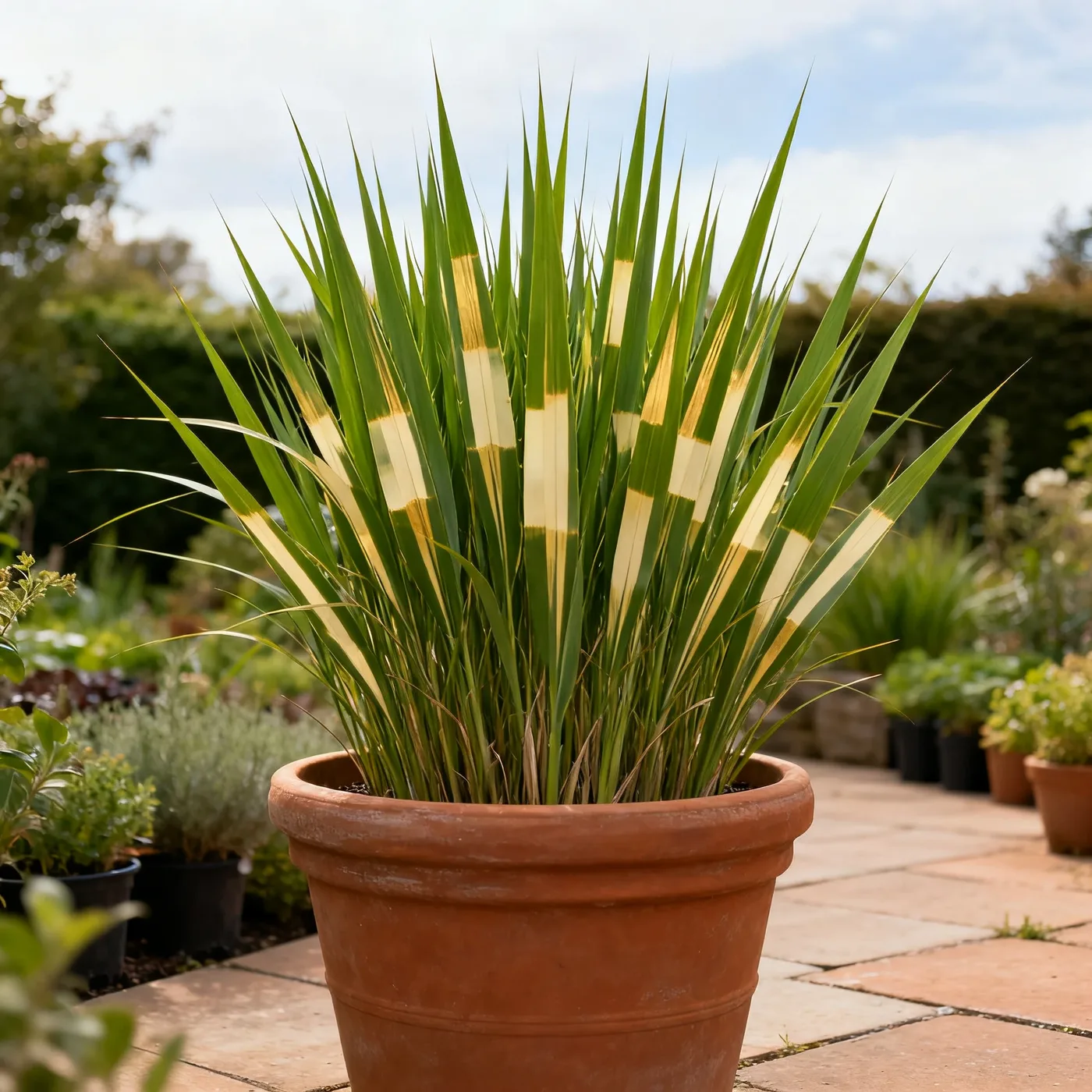
A packet of seed costs less than a sandwich, and that is exactly why the gold-banded plant on the label rarely turns up in the bed. The photo shows an arrow-straight clump striped across every blade. What comes up in the tray is a handful of green seedlings, and some of them will never wear a band.
So yes, you can grow porcupine grass from seed, but what you grow is not reliably Miscanthus sinensis 'Strictus'. Get it wrong and you spend several summers nursing a plain grass you could have bought in a pot. We'll walk you through why the banding does not come true and what a seedling gives you next to a divided clump, then how to read a seed pack, when and where to sow, how many years you will wait, and when seed is worth the bother.
Is Seed-Grown Porcupine Grass Still Strictus?
Mostly not. 'Strictus' is a cultivar, a single selected plant that someone noticed, liked and then multiplied by splitting it. The horizontal yellow bands across the blades belong to that one clone and to its divisions. Seed shuffles the genes of two parents, and the pollen parent is usually some other Miscanthus growing nearby, not 'Strictus' at all. The offspring drift back toward the wild species.
What a Cultivar Name Promises
The name promises an upright clump, gold crossbands, and rosy-plum plumes that turn silver late in the season. It also promises predictability, which is the real reason to pay for a named plant. The species itself runs 4 to 12 feet tall and ranges widely in color and habit, so a seedling can land almost anywhere in that spread. 'Strictus' sits in a much narrower band, and that narrowness is what you are buying.
What Seedlings Do Instead
Expect a mixed tray. Some seedlings will show faint banding, some strong banding, and plenty none. Height, posture and plume color vary too, and a floppy seedling beside an upright one is common. We often see customers hold up a green seedling and ask where the stripes went. They went where seed always sends them: into the genetic lottery.
Seedlings also cannot be judged by their parent. A banded mother does not guarantee a banded child, and a plain-looking seedling may still carry the form you want. Go in expecting variation, and treat any banded seedling as a bonus rather than a promise.
A Seedling Set Against a Divided Clump
A division is a piece of the mother clump with crown, roots and buds already attached, so it carries the same genes and the same bands. University of Florida extension notes that Miscanthus sinensis is propagated by division in the spring, and that is how every true 'Strictus' on the market got made. A seedling is one thin stem of unknown parentage with none of that head start. The table below sets the two side by side.
| Trait | Seedling | Division |
|---|---|---|
| Gold banding | Strong, faint or absent, and you will not know for a while | Matches the parent clump |
| Upright habit | Varies, some arch or flop | Holds the stiff, vertical form |
| Plume color | Anywhere in the species range | Rosy-plum, turning silver |
| Wait for a real clump | Several seasons | Shortest wait, since the crown is established |
| Cost per plant | Low | Higher, and it pays for the guaranteed result |
A mature clump of 'Strictus' runs about 48 to 60 inches in foliage and can climb over 6 feet, even to 9 feet, in flower. A division gets you toward that picture faster and with fewer surprises.
If the point is the plant on the tag, buy a division. Our guide to container sizes and what to look for covers what to choose, and the dividing guide shows how to make your own later once you own a good clump.
Why Seed Packs Promise More Than Porcupine Grass Delivers
A pack is marketing first and a plant source second. It is printed with the best photo of the best plant, a germination claim made under ideal conditions, and a name that sells. None of that tells you what will stand in your border in four years, and the cheap price hides how many tries it takes to get there.
What the Pack Photo Leaves Out
Pack photos show the mother plant at its best, in full plume, shot at a flattering angle. They do not show the offspring. Seed counts are counts of seeds, not plants, and germination, survival and sorting out the keepers all come after the count. A packet that sounds generous for a few dollars turns into a modest number of survivors, and only some of those resemble the picture.
Where the Seed Really Comes From
The bigger problem is the source. Named cultivars of this grass usually set little or no seed, and University of Minnesota guidance tells growers to sell only vegetatively propagated, named cultivars. So a packet labeled 'Strictus' deserves suspicion. It was likely collected from open-pollinated heads or from the species, with a cultivar's photo on the front.
Mix-Ups With Native Prairie Grasses
The common name adds its own trouble. "Porcupine grass" is also used for unrelated native prairie grasses, so a search for the seed can land you on something that is not Miscanthus at all. Our guide to the confusion sorts out which is which.
Seed from the species can also reseed, and Miscanthus sinensis is listed as invasive in some states. Check with your local extension service before sowing anything.
Our advice is not to trust the label. Read "porcupine grass seed" as "Miscanthus sinensis, parentage unknown," and pay accordingly.
Sowing Porcupine Grass Indoors or Straight Outside
If you go ahead, remember this is a warm-season grass. It sits dormant while the soil is cold and grows hard once the weather warms, and it wants full sun. That decides the timing: seed has no business outdoors until the soil has warmed, and in the colder end of its hardiness range of zones 5 to 9 a short season makes a head start worthwhile. Check your local extension service for your last frost date and count back from that.
Starting Under Cover
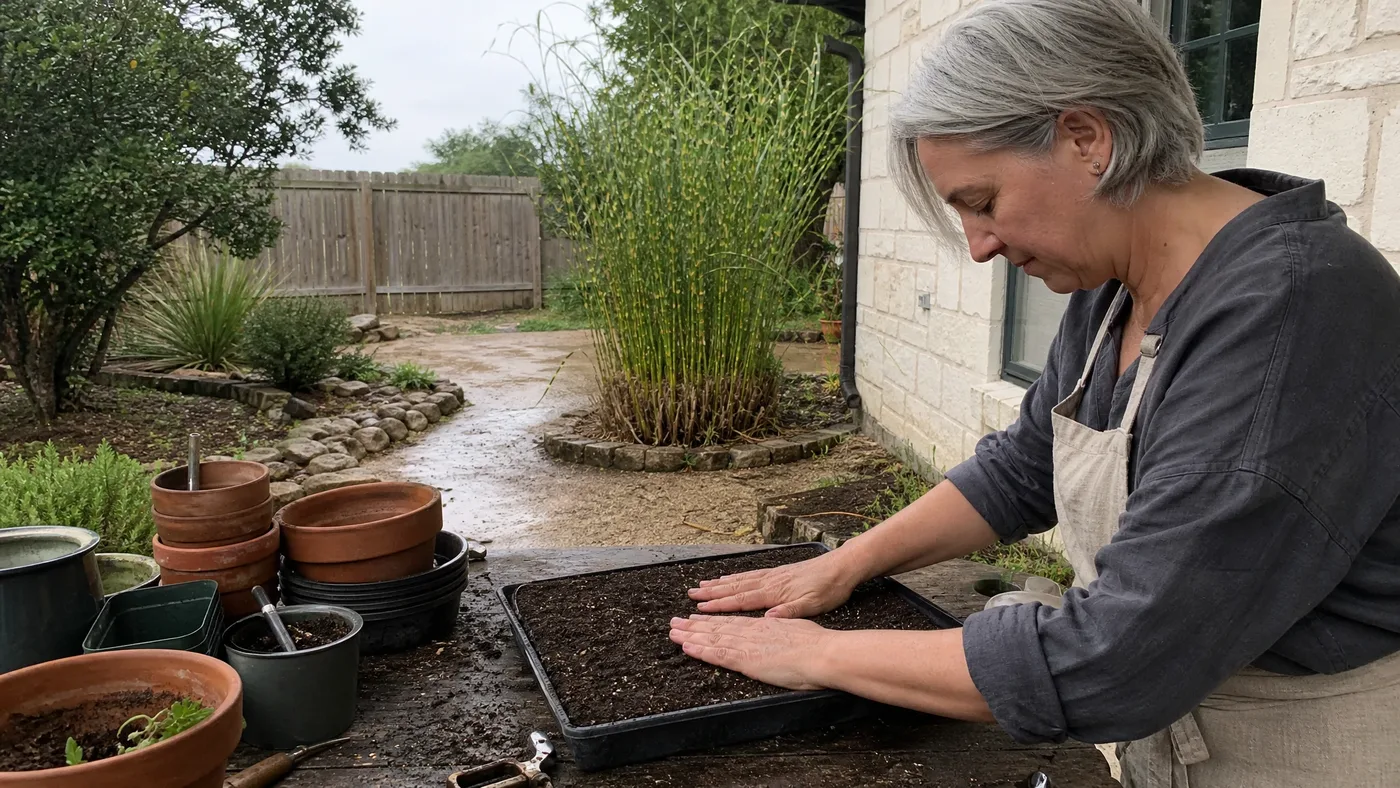
Indoors gives you control, and it is what we'd pick. Seed is fine and light, so it needs a gentle hand and a warm, bright spot.
- Fill trays with fresh seed-starting mix and moisten it before sowing.
- Press the seed onto the surface and cover it barely or not at all, as with most fine grass seed.
- Keep the tray warm and bright, and never let the surface dry out.
- Thin to the strongest seedlings once they have a few true leaves, then pot them on.
- Harden them off gradually before planting out after your last frost.
Sowing Where It Will Grow
Direct sowing works if you have a clean, weed-free patch and patience. The trouble is that tiny seedlings lose to any weed that gets going first, and you cannot tell a stray grass seedling from your own at that stage. Rain can wash fine seed into a corner of the bed too. Outdoors suits a spare nursery row, not a border you want to look good.
Planting Seedlings Out
Whichever route you take, the grown seedlings want the same place a bought plant does: full sun and fertile, moisture-retentive soil. Our planting guide covers site and first weeks. Keep them watered through the first summer, since young roots are shallow, and mulch to hold weeds down. Indoors is the method to pick. You get tidier results and you can watch each tray.
Years of Waiting Before the Clump Looks Right
Seedlings grow slowly at first. USDA Forest Service notes record wild-collected seedlings reaching an average of about 18 inches 15 weeks after planting, and 'Strictus' at maturity is several times that, upright and wide at the base. The species takes 2 to 5 years to reach its ultimate height, and a seedling has to build the crown first. Plan on several seasons before a seed-grown plant stands like a real clump.
Reading Each Season
The first year gives you leaves and little else. Plumes arrive in late summer on established plants, so do not hold your breath for them early. By the second or third season the clump thickens and the habit shows: upright, arching or somewhere between. Banding is the best reason to wait. Bands show as the blades grow, so judge them in summer on new growth, not on a spring sprout. In our rows, a seedling that looks plain in June can show its colors by August, so give it the season before you decide.
What to Keep and What to Cull
Keep the seedlings with clear horizontal bands that hold through the season, an upright posture, and plumes in the rosy range. Cull the plain green ones, the floppers and anything with a loose, arching habit. Upright growth is the other tell, and our comparison with zebra grass shows how banded sorts differ in form. Cut off the plumes of anything you keep before the seed ripens, since every seedling you grow is a potential reseeder.
Even your best keeper is a new plant, not 'Strictus'. It may be handsome, but it is its own thing, so name it in your notes as a seedling. If several summers of waiting sounds like a lot, buy a division, and see our guide on how big porcupine grass gets to know what you are waiting for.
Porcupine Grass From Seed, Decided
Here is the verdict on when seed makes sense and when it does not. It comes down to what you want from the plant and how much of the result you are willing to leave to chance.
- Seed makes sense if you enjoy the process, have a spare corner to sort seedlings in, and would be pleased by any decent grass that turns up.
- Seed makes sense if you want many plants for a rough screen and do not care whether the bands show.
- Seed is the wrong route if the gold crossbands are the point, since the cultivar cannot be counted on to repeat them.
- Seed is the wrong route if you want a clump of stature soon, because a division starts years ahead.
- Seed is the wrong route if you will not cut the plumes, given the reseeding risk in some regions.
Most people who search for the seed want the plant in the photo, and for them the answer is a division.
What We'd Do With a Packet of Porcupine Grass Seed
Seed will give you Miscanthus sinensis, and sometimes a banded one, but it will not give you 'Strictus' on demand. Packs promise more than they deliver, seedlings take years, and the seed itself is hard to trace to a real cultivar. Grow seed for the experiment, buy a division if you want the plant on the tag.
Porcupine Grass
Nursery-grown Porcupine Grass in sizes from Quart, shipped to your door.
From $19.99
Shop Now →Seed is a fun experiment, but the Porcupine Grass in our rows comes from divisions, planted in full sun and a fertile loam that keeps a bit of moisture. We grow and sell top-quality grasses as a small business with farms of our own, so the clump you plant is one we raised ourselves. Once you have decided whether seed or a division suits you, come and look through our Porcupine Grass.