Porcupine Grass vs Porcupine Sedge: Habit and Growing Needs
Plant names borrow from animals all the time, and "porcupine" has been lent to two plants that share nothing but a prickly impression and a spot in the same search results. One is a tall ornamental grass for a sunny border. The other is a low native sedge that grows with its feet in mud.
Mixing them up is not harmless. A grass planted in a bog sulks, and a sedge planted in a dry border withers. Read on for how the two differ in size, flower and fruit, water and light, the right home for each, and how to buy the one you actually want.
Two Plants Sharing One Prickly Nickname
A common name is the everyday name people use for a plant, and nobody regulates it. A Latin name is the botanical one: a genus, a species and sometimes a cultivar name in single quotes. Think of two people in one office who are both called "Red." The nickname tells you nothing about who is who, but their full legal names always do.
That is exactly the situation here. Miscanthus sinensis 'Strictus' is the ornamental grass we grow and call Porcupine Grass. Carex hystericina is Porcupine Sedge. They are not close relatives, they do not look alike, and they do not want the same garden.
What Each Name Points To
Porcupine Grass is a cultivar, meaning a selected form of a species that is propagated to keep its traits. 'Strictus' is known for stiff upright stems and horizontal yellow bands across the leaves. The species it comes from, Miscanthus sinensis, is a large clump-forming grass, but the cultivar is more disciplined than most of its kin.
Porcupine Sedge is a wild species, not a cultivar. A sedge is a grass-like plant in the genus Carex, and the usual clue is a stem that is triangular rather than round. This one belongs to wet ground, which sets up almost every difference in the sections below.
Why the Search Results Blur Them
One of the most common questions we get is whether "porcupine sedge grass" is just another name for our grass. It is not. If you searched that phrase and want the tall, banded, plum-plumed plant, you want the grass. If you want a low native for a wet corner, you want the sedge, and this guide will help you tell which is which.
A Six-Foot Porcupine Grass Fountain, a Two-Foot Sedge Tussock
Habit is the overall shape and manner of growth of a plant. A clump is a plant that widens from one crown rather than running underground to form a lawn-like carpet. Both of ours are clumpers, but the outlines could hardly be more different.
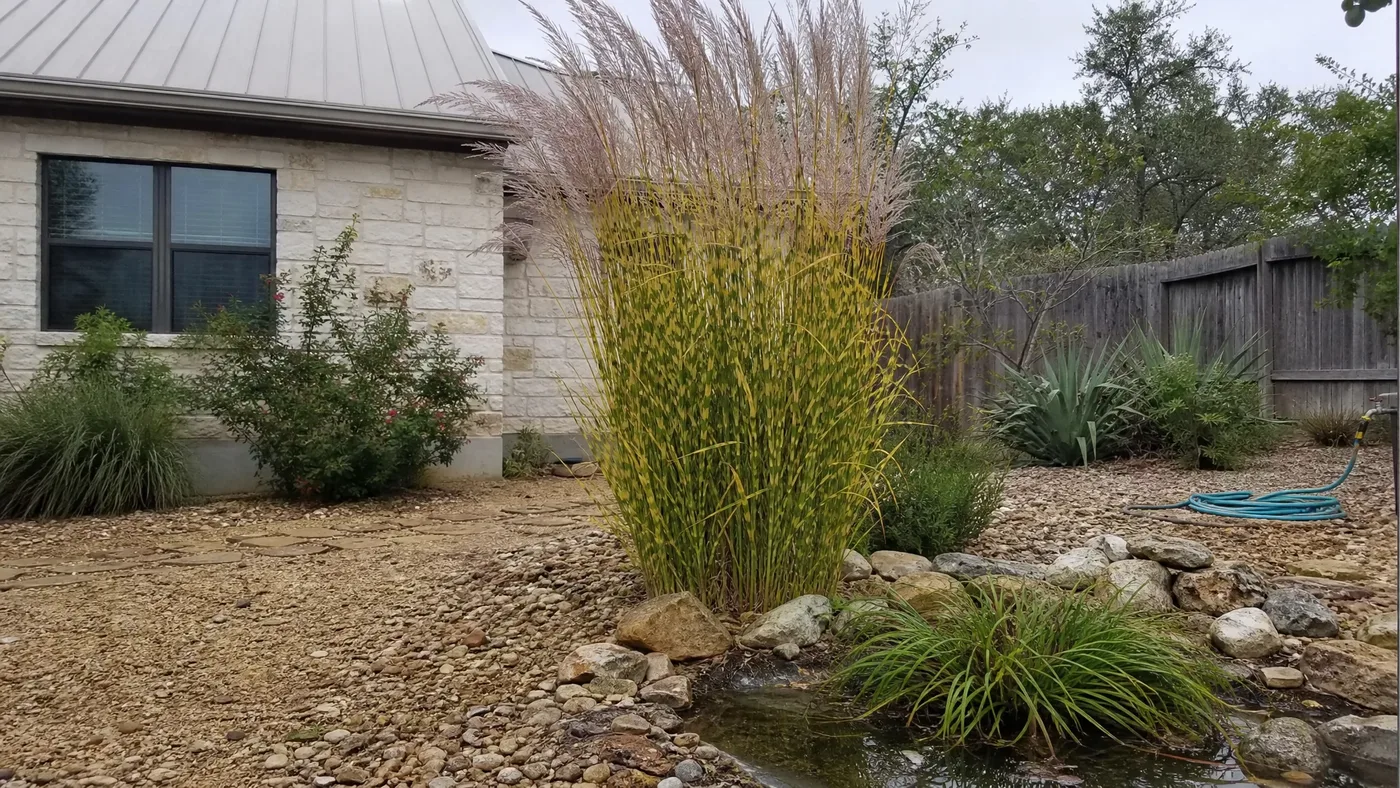
Porcupine Grass rises in a tight, upright vase. The University of Florida lists 'Strictus' at 6 to 8 feet tall with an upright habit, though the foliage alone is about 48 to 60 inches. The plumes carry it higher still, over 6 feet and up to about 9 feet in flower. The blades arch outward only at their tips, which is why we call the outline a fountain.
The sedge is a tussock, a dense, low tuft of arching leaves that looks a bit like a shaggy hummock. The University of Minnesota Extension gives Porcupine Sedge 2 to 3½ feet and lists it among the lower grasses and sedges that grow well in shade. It also self-seeds, so expect a few seedlings nearby.
Width follows the same logic. A mature 'Strictus' clump stays fairly narrow for its height, and one reference lists it at about 3 feet wide. That narrowness is why it works where a typical Miscanthus would sprawl across a bed. The sedge makes a low mound at the front of whatever it sits beside.
Where They Sit in a Planting
Put the grass at the back of a border or as a vertical screen, where its height is the point. Put the sedge at the edge of water or the front of a damp bed, where you want a green mound rather than a wall. Swapping them gives you a hidden sedge or a grass blocking the view. For companions that suit the grass, our landscape uses and companion plants guide is the place to start.
Bristly Sedge Heads, Banded Porcupine Grass Blades
Each plant earns its nickname in a different place. The sedge gets it from its flowers and fruit, and the grass gets it from its foliage. Knowing which part to look at is the quickest way to tell them apart across a garden.
The Sedge's Bristly Fruit Heads
A culm is the flowering stem of a sedge or grass. On Porcupine Sedge the culm carries a spike, a narrow cluster of tiny flowers that later turn to fruit. Each seed sits in a small sac called a perigynium. On this species the sacs are tipped with points and stick out in every direction, so the finished spike bristles like a quill-covered tail. Fertile culms are usually over half a meter, so more than about 20 inches.
These heads are small and green or tan. Nobody buys this plant for a floral display. You buy it for texture and for the habitat it gives in wet ground.
The Grass's Banded Blades
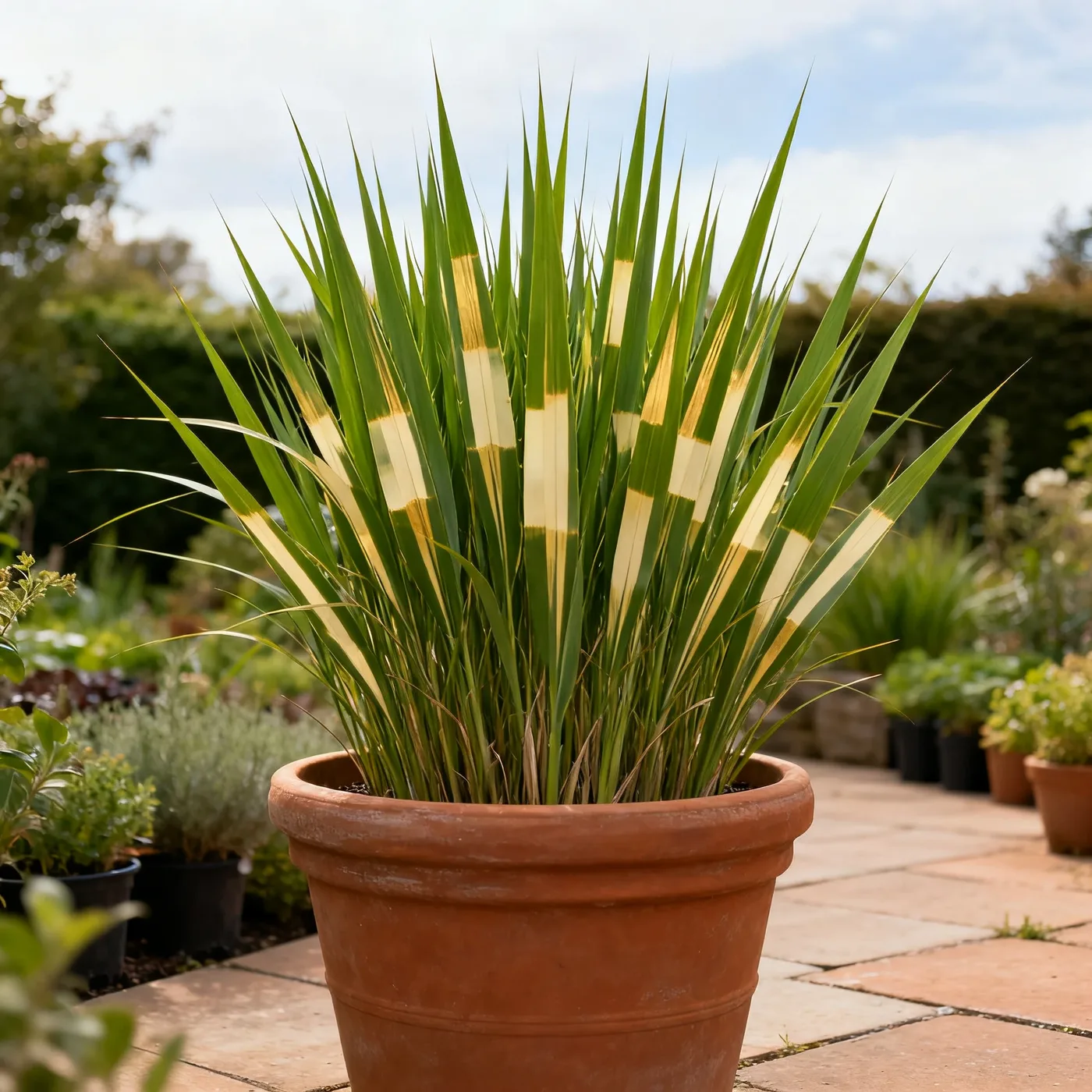
A blade is simply a grass leaf. 'Strictus' has horizontal bands of yellow running across the green blades, like stripes on a barber pole turned sideways. From a few feet away the bands break up the outline and give the clump a spiky, quill-like look. That is where the "porcupine" comes from.
The banding is the cultivar's signature, and the species does not have it. Our plants show it most clearly in full sun, and it fades in deep shade. Because the bands run across the blade, you can tell them from the vertical stripes of other variegated Miscanthus.
Then in late summer 'Strictus' sends up fan-shaped plumes that open rosy-plum and turn silver by late fall. Our bloom time and plume color guide covers how long they hold. If a plant has green seed spikes and no color to speak of, it is not Porcupine Grass.
Standing Water Suits Sedge, Not Porcupine Grass
Moisture is the sharpest divide between these plants. The Illinois Natural History Survey records Carex hystericina in spring-fed, swampy meadows. It is a wetland plant with fibrous roots and rhizomes (underground stems) that hold it in saturated soil.
Porcupine Grass wants moisture, but not a swamp. Missouri State University says Miscanthus sinensis prefers moist but well-drained soil and is very adaptable except to very wet soils. We describe it to customers as a plant that likes a drink and then wants the water to leave.
What Goes Wrong in Wet Ground
Plant the grass where water stands for days, and the roots lose air. Growth stalls, the clump leans, and the bands fade into dull green. The same bed would suit the sedge perfectly, which is the whole lesson of this section.
Plant the sedge in an ordinary dry border, and it fails the other way. Leaf tips brown first, then the whole tussock thins out. Extra watering can save it, but you will be rescuing it all summer.
A Test You Can Do Before Planting
Dig a hole about a foot deep and fill it with water. If it drains within a few hours, you have a Porcupine Grass site. If it is still full the next morning, you have a Porcupine Sedge site, or a site that needs drainage work first. Our soil guide for Porcupine Grass explains how to fix a heavy bed if you want the grass there anyway.
Border Bed or Pond Margin for Each Plant
Each plant has a clear ideal home. For Porcupine Grass it is a sunny ornamental border with decent loam. The University of Missouri says 'Strictus' prefers full sun in a moisture-retentive, fertile garden loam, and the species needs at least six hours of sun a day. Give it that and it stands upright without staking.
For Porcupine Sedge the home is a pond margin, a stream edge, a rain garden or a low spot that never fully dries. It tolerates light shade, so it can sit under taller shrubs where the grass would stretch and flop. The table puts the two side by side.
| Trait | Porcupine Grass | Porcupine Sedge |
|---|---|---|
| Height | About 4–5 ft in foliage, 6–8 ft with plumes | 2–3½ ft |
| Light | Full sun, at least six hours | Sun to light shade |
| Soil | Moist but well drained | Wet to swampy |
| Hardiness | Zones 5–9 | Check with your local extension service |
| Best spot | Back of a sunny border | Pond or stream edge |
If You Have Both Conditions
Many yards have a dry sunny bed and a soggy corner. Use both plants, each in its own place. The grass can sit on the bank above the water, a step or two up from the wet line, and the sedge can fill the muddy margin below. Together they make a natural-looking edge without either plant straining.
Light is the one place the grass cannot compromise. In too much shade the stems lean toward the sun and the clump loses the tight, upright shape that makes 'Strictus' worth growing. The sedge shrugs off that same shade, so let the shade decide which plant goes where.
Wrong Order, Right Order for Porcupine Grass
The wrong order is to shop by the common name. You type "porcupine," pick whatever turns up first, and sort out the site afterward. Sellers use the name for both plants, so you can end up with a sedge for a dry border or a six-foot grass for a bog.
The right order starts with the Latin name and works toward the plant.
- Decide the site first: sunny and well drained, or wet and part shade.
- Look for the full botanical name on the tag. You want Miscanthus sinensis 'Strictus' for the grass and Carex hystericina for the sedge.
- Check the stated mature height against the space you have.
- Match the plant to the site only after the name checks out.
We label every plant with its botanical name, so what is in the pot is what the page describes.
Once You Own the Grass
From here the work is light. Plant it in full sun, water well through the first season, then mostly leave it alone. We often see new growers fuss over a clump that simply needs time. For site, timing and first weeks, use our planting guide, and find everything else about the grass in the complete growing guide.
Keeping Porcupine Grass and Sedge Apart for Good
Four checks separate the two plants. Height: about 4–5 feet of foliage topped by plumes means the grass, while 2–3½ feet means the sedge. Leaves: horizontal yellow bands are the grass's, and plain green is the sedge's. Flower: plumes are the grass, and bristly green spikes are the sedge. Site: dry border with full sun suits the grass, and mud suits the sedge.
If you remember one thing, make it that the nickname tells you nothing and the Latin name tells you everything. Read the tag, then read the site. If it stands in a ditch and the stem feels three-sided, it is the sedge, not the banded grass.
Porcupine Grass
Nursery-grown Porcupine Grass in sizes from Quart, shipped to your door.
From $19.99
Shop Now →Because this grass wants full sun and a loam that stays a little moist without ever turning soggy, that is the bed we give it on our farms. Being a small grower-run business, we only ship top-quality grasses we would put in our own ground. If the upright, banded form is the one your border needs, come and see the Porcupine Grass we have ready.